Feeds:
Posts
Comments

In the past year or so, we have looked at several of the stories of the kings of Judah that come from 2 Chronicles: King Asa, King Jehoshaphat, King Joash, King Uzziah and now today we begin to look at King Hezekiah. Specifically the reforms he enacted in 2 Chronicles chapters 29-31 to renew and restore God’s people.

Some basics

  • Hezekiah began to reign when he was 25 and reigned for 29 years – 29:1
  • He “did what was right in the eyes of the Lord, according to all that David his father had done.” – 29:2

Indeed, in Chronicles he is presented as the most righteous king since David and Solomon. And he is also given the most attention since David and Solomon, 117 verses in all.

Background

The northern kingdom of Israel had just been destroyed and taken off into captivity by the Assyrians in 722 BC. And Judah itself was in a precarious position.

King Ahaz (Hezekiah’s father) was horribly unfaithful:

  • He practiced all manner of idolatry, including child sacrifice, and he shut the temple down
  • The results were multiple military defeats and deportations of the population. They were heading down the path of the northern kingdom.

But then comes . . .

A Time of Renewal

This begins in the heart of Hezekiah:

“For our fathers have been unfaithful and have done what was evil in the sight of the Lord our God. They have forsaken him and have turned away their faces from the habitation of the Lord and turned their backs. They also shut the doors of the vestibule and put out the lamps and have not burned incense or offered burnt offerings in the Holy Place to the God of Israel. Therefore the wrath of the Lord came on Judah and Jerusalem, and he has made them an object of horror, of astonishment, and of hissing, as you see with your own eyes. For behold, our fathers have fallen by the sword, and our sons and our daughters and our wives are in captivity for this. Now it is in my heart to make a covenant with the Lord, the God of Israel, in order that his fierce anger may turn away from us.” – 2 Chronicles 29:6-10

How different he is than his father!

First of all 1. He restored the temple – During his first year, in the first month of the year, he acted. “He opened the doors of the house of the Lord and repaired them” – 29:3. (The first month seems to refer to the first month of the calendar – see 30:2-3, but this may have also been the first month of his reign)

– He then charged the priests and Levites to purify themselves – 29:5-15

– And they then proceeded to purify the temple – 29:16-19. It had been ‘trashed.’ So, they carried out the “filth” it says, and they put it in the Kidron valley, the city garbage dump.

– After 16 days the temple was rededicated – 29:20-30

  • they gave offerings to atone for sin to seek forgiveness for Judah and even all Israel
  • and they worshiped with offerings, music, singing and bowing down.

The response of the people was overwhelming – 29:31-35. They brought so many sacrifices that there weren’t enough priests consecrated to handle them, so the Levites had to help the priests.

The result of this reform is articulated in vs. 35–36 – “Thus the service of the house of the Lord was restored . . . And Hezekiah and all the people rejoiced” at what God had done and that it had happened so quickly.

But Hezekiah didn’t stop here, 2. He restored the celebration of Passover

This was certainly appropriate – As 30:9 makes clear. With the dominance of the Assyrian empire, the northern kingdom of Israel was conquered, and many in Judah had been taken away. Passover, you remember, celebrates God as their deliverer from the empire of Egypt. This was an expression of hope and trust in God against all empires that would destroy them.

But there was a problem. Since they didn’t finish cleansing the Temple in time during the first month, which is when Passover is supposed to be celebrated (they were two days too late), they had to celebrate it in the second month – 30:2-4.  (Perhaps they were drawing on some of the provisions for individuals from Numbers 9 about celebrating Passover the next month if you were ritually unclean or not able to assemble.)

– Hezekiah sent out a letter inviting all Israel to come – 30:1; 5-10. Not just Judah, but even those who were left of the northern kingdom of Israel. He was trying to reunite all Israel again. His letter was a powerful call to repentance and renewal.

– “A very great assembly” came. Even though many in the north had scorned the invitation, some did come, and all Judah turned out – 30:11-13

– They put away the idol altars in the city of Jerusalem – 30:14, throwing them into the garbage dump of Kidron to prepare the city.

– And then they celebrated the Passover and the associated feast of unleavened bread – 30:15-16

Then there was another problem, however, many ate the Passover “otherwise than prescribed” – 30:18. That is, they were not ritually clean, especially those from the north. This was an offense that could bring serious judgment (Leviticus 15:31).

But Hezekiah prayed and the Lord answered, “’May the good Lord pardon everyone who sets his heart to seek God, the Lord, the God of his fathers, even though not according to the sanctuary’s rules of cleanness.’ And the Lord heard Hezekiah and healed the people” – 30:18-19. God looked at their intention, even if it didn’t meet the letter of the law, and had mercy.

Again, the response of the people was overwhelming. After the initial seven day feast, they decided to celebrate another seven days – 30:23

The result of all this was . . .

  • Great joy – 30:25-26. For it says “Since the time of Solomon the son of David king of Israel there had been nothing like this in Jerusalem.” Both northern Israel and the people of Judah together worshipping God in the temple.
  • God heard their prayers and blessed them – 30:27
  • As they left the city, the people cleansed the countryside of idol altars – 31:1

Finally, 3. He restored the priestly, Levitical system

– He reorganized them – 31:2

– He himself gave to support the temple – 31:3, providing regular burnt offerings

– He called the people to support the priests and Levites. As 31:4 notes, that they might be free to “give themselves to the Law of the Lord.” He called them to fulfill what Moses commanded concerning material support for the temple workers.

This part of the story may seem anti-climactic to us or mundane talking about priests and finances. But we have to understand that this was to sustain the reforms that had begun.

The priests and Levites could only continue to lead the people in faithfulness if they were supported. This was necessary to maintain the renewal that Hezekiah had begun.

And again, the response of the people was overwhelming. 2 Chronicles 31:5 says, “the people of Israel gave in abundance . . . they brought in abundantly the tithe of everything.”  Notice the emphasis on the word “heaps.”

  • “heaps” – v. 6
  • “heaps” – v. 7
  • “heaps” – v. 8
  • “heaps” – v. 9

The priests and Levites ate all they could and there was still this abundance (v. 10). They are like, ‘What should we do with all these heaps?’ And so Hezekiah ordered them to build storage chambers – v. 11.

A summary of Hezekiah’s reforms

“Thus Hezekiah did throughout all Judah, and he did what was good and right and faithful before the Lord his God. And every work that he undertook in the service of the house of God and in accordance with the law and the commandments, seeking his God, he did with all his heart, and prospered.” – 2 Chronicles 31:20-21

Some Lessons on Renewal

1.We learn how to deal with sin. Hezekiah is an excellent example here.

  • You need complete honesty. He begins right away with a brutally honest assessment of their sin. He said, they “have been unfaithful and have done what is evil in the sight of the Lord.” – 29:6. This is why God’s anger againt them in judgment.
  • You need actions of repentance to make things right.

He was urgent in his actions of repentance: He started right away when he came to power and he observed Passover even though the timing was off. Within seven months it was all done. The temple restoration in the first month; the Passover restoration in the second month; and the gathering of support for the priests and Levites in the third through seventh months.

He was diligent in his actions of repentance: He did not leave it for others to do. He initiated and oversaw each step as the text makes clear at every point.

And he was thorough in his actions of repentance: He dealt with the temple itself, the Passover celebration, and the priestly system to sustain this. He moved from the temple to the city to the countryside even into northern Israel. From the inside, out.

In the same way, when we have sin in our life:

  • We need complete honesty. This is the biggest obstacle to Christian renewal. We are not honest and don’t take responsibility for our wrong actions.
  • We also need actions of repentance. And these actions need to be urgent, diligent and thorough – from the inside out covering every part of us from inner attitudes to outward behaviors.

We need all this in order to be right with God and to receive his blessing.

2. We also learn what renewal looks like. Hezekiah provides the pattern:

  • We get rid of the “filth,” and recommit to God. They got the filth out of the Temple, the city and the countryside and renewed their covenant. So, also, we need to get rid of the filth in our lives and begin again to do God’s will. When you see this happening then you know that renewal is happening.
  • We experience a renewed relationship with God. They found forgiveness from God and worshipped God in the Temple and had joy. So also, we need to find forgiveness, to be in relationship with God through prayer and worship, and to experience joy. When you see this happening then you know that renewal is happening.
  • We reach out to others. They invited the northern tribes to turn back to God. And when we are renewed, we will take a concern for others and their relationship with God. When you see this happening then you know that renewal is happening.
  • We give to God’s cause. Just as they gave many sacrifices and gave an abundance for the priests and Levites that left great heaps, So we give to the work of the kingdom. Renewal, if it is real, will affect our purses and our wallets. When you see this happening then you know that renewal is happening.

3. We learn that God is the source of renewal

First of all, it comes from God’s mercy. God wants to renew us; God is willing to forgive us when we turn and repent.

As Hezekiah said in his letter of invitation to the Passover, “For the Lord your God is gracious and merciful and will not turn away his face from you, if you return to him.” – 30:9. And as an example o this, the Lord was merciful on those who were unclean at Passover, but had a right heart – 30:18-19.

Second, renewal comes from God acting. Hezekiah initiated each aspect of the renewal: the temple, the Passover, and the Levitical system. But in each instance they all had to acknowledge that it was God at work:

  • The temple: With regard to the generous sacrifices of the people, “Hezekiah and all the people rejoiced at what God had brought about for his people” – 29:36 (NIV).
  • The Passover: “The hand of God was also on Judah to give them one heart to do what the king and the princes commanded by the word of the Lord.” – 30:12.
  • The temple support: “When Hezekiah and the princes came and saw the heaps, they blessed the Lord and his people Israel.” – 31:8.

God was the one doing all this, working in people’s hearts.

May God, in his mercy, so act among us, in our individual lives and in our church community, to bring us renewal and blessing. William
I want to share with you a short devotional this morning. It’s really an invitation to prayer, and we will have time of prayer afterwards. The title, comes from Psalm 55:22, as we will see. We can all become burdened by . . .

The troubles of life

In contrast to some teachers today, Scripture is very honest in talking about life. It is not all rosy, easy and comfortable. And so we shouldn’t expect this, or be surprised when life isn’t all painless. Scripture teaches us that we will experience lots of hardships.

Psalm 90:9-10 says, “Our years come to an end like a sigh. The days of our life are seventy years; or perhaps eighty, if we are strong; even then their span is only toil and trouble.”

From the New Testament, Jesus tells us in Matthew 6:34 that “each day’s trouble is enough for that day.” He’s talking about taking one day at a time, but he is also saying that each day has trouble in it.

These scriptures are talking about troubles like:

  • health problems, the pains and weaknesses of our bodies
  • relationship difficulties
  • tragedies, including the death of loved ones
  • family difficulties, tensions and brokenness
  • and job stresses, which our current situation has made worse for some.

Any one or more of these can cause us to be burdened, weighed down, weary and weak.

But we are not only burdened with our own troubles, we also feel the weight of the burdens of other. And this is right and good, as Paul says in Galatians 6:2, “Bear one another’s burdens, and so fulfill the law of Christ”

Jesus taught us to love our neighbor as our self, which is what Paul means by “the law of Christ.” And a part of what this means is helping others, standing with them when they are overwhelmed by burdens to help lighten the load.

But as we “bear one another’s burdens,” we do feel the weight of need of those that we love and seek to help.

So, when we are burdened with our own needs and the needs of others, we need to remember that . . .

God loves us

 . . . with an incomprehensible love. We know this because God gave us his Son.

As Paul says in Romans 8:32, “He who did not spare his own Son but gave him up for us all, how will he not also with him graciously give us all things?”

If he gave us his most precious Son, how much more will God give us of his love and care as we walk through life’s hardships? God loves us and will take care of us.

Another thing to remember when we are burdened is that . . .

God is able to help us

We sometimes become overwhelmed by our troubles. We feel weak and unable to do anything. And often we are. But God is not helpless.

Jeremiah 32:17 says, “Lord, it is you who made the heavens and the earth by your great power and by your outstretched arm. Nothing is too hard for you!”

 Our God is the God who created the world! If God can create the heavens and the earth, how much more can God act in our situations to help us.

As our verse says, God has “great power” and “nothing is too difficult” for God. God is not overwhelmed. God is able to help us.

Finally, when we are burdened, we need to remember . .

God’s promises to us

Promises to help us in our hardships and difficult situations. These remind us that God is able and willing to help us and we need to keep them before us so that they sink into our hearts and mind. Here is one. 

Isaiah 43:1-3 says, “Fear not, for I have redeemed you; I have called you by name; you are mine. When you pass through the waters I will be with you; and when you pass through the rivers, they will not sweep over you . . . For I am the Lord, your God, the Holy One of Israel, your Savior.”

We had a baptism service last week – a picture of passing through the waters. But we continue to pass through the waters in our Christian lives. We go through deep waters, times of testing and trials. Times of chaos that can cause us to despair.

But this promise teaches us that God is with us in these baptisms of suffering. And so we will not be swept away. But God will bring us through the deep waters. 

This is a beautiful promise that God will bring us up on the other shore of the deep waters and give us new life, a new hope and a future.

————————–

And so this morning, as you think of your burdens, as you think of the burdens that you are carrying for others, as you feel weighed down and weary, I want to invite you to come forward to pray and offer up your burdens to the Lord.

As Psalm 55:22 says, “Cast your burden on the Lord, and he will sustain you.” Pray to receive of God’s presence, love and help; for God’s sustaining mercy.

If you are not weighed down –  give thanks! But would you also pray for those that come forward? And would you pray for the list of needs in your bulletin as well as other needs in our church and in the world? Whether you come forward or whether you stay where you are, let us all now be in prayer. William Higgins

We’re talking about God today; who God is and what God is like. It’s a big topic and we are only delving into a part of it. 

God was seen as a Father in the Old Testament (Deuteronomy 1:31; 8:5; Proverbs 3:12; Jeremiah 31:20; Jeremiah 3:19; Hosea 11:1; Isaiah 63:16; Psalm 103:13). But the prominence of “Father” as a, or perhaps the way of talking about God comes from the New Testament.

God as “Father” in the New Testament

The word “Father” is used 250 times in the New Testament as a reference to God. As one scholar calculates – 43% of all references to God in the New Testament call God “Father.” 

This emphasis on Father language comes from Jesus: 

  • For instance, Jesus uses “Father” 100 times in the Gospel of John as a reference to God.
  • And Jesus addressed God in prayer as “Father” every time he prayed, save one. This was in Mark 15:34 where on the cross he is quoting Psalm 22:1 and says, “My God, my God.” In every other recorded prayer that we have he uses “Father.” 

God as our Father

Now, Jesus’ Father language is certainly connected to the fact that he was God’s unique and beloved Son. And as God’s Son, Jesus called God, “Father.”

But even though he is in a class by himself with regard to being God’s Son, Jesus teaches that God can be our Father too!

When we become a Christian: 

  • we are born of God – John 1:12-13
  • we are children of God – Luke 11:11-13

According to Jesus, our relationship to God is like the relationship between a Father and a young child.

  • And so just as Jesus referred to God as Father, so we also can call God “Father.”
  • And just as Jesus prayed to God as Father, we also are taught to pray to God as “Father” in the Lord’s prayer. 

Now we have to be clear here . . .

God is not male! 

In a Harris poll from 2003, 37% of men and 46 % of women though that God was male. Of the different religious groups surveyed, 49% of Protestants thought that God was male.

  • But God has no gender. God is neither male nor female. It was in the pagan world that the gods had a gender, either male or female.
  • Scripturally, both male and female are created in the image of God, who is our Father – Genesis 1:27 
  • And there are also feminine metaphors for God in Scripture (Deuteronomy 32:18; Isaiah 42:14; 49:15; 66:13; Jeremiah 31:20; Matthew 23:37)

So, when we name God as “Father” – we are referring to a social role with specific attributes. One that is captured by this name and is centrally important to God’s identity. What is at focus is the social role, not the gender. 

The point is that God acts toward us as a loving father acts toward his family. 

So, I want us to look at the attributes of this “father” role, and specifically . . .

The characteristics of our heavenly Father

. . . so we can see what it means to call God, “Father.” We’ll glean this from Jesus’ teaching in the first three gospels:

1. As Father, God is One who is powerful. Just as a small child marvels at what a human father or parent can do, so much more so with our heavenly Father.

  • Jesus spoke of the Father as “Lord of heaven and earth” – Luke 10:21. The Father has all power.
  • And as Jesus said in prayer, “Father, all things are possible for you” – Mark 14:36. God’s power is only limited by his own character and purpose.

2. As Father, God is One who loves us. 

  • The prodigal son’s father presents to us a picture of God as our Father. The Father is characterized by patience, steadfast love and compassion for his wayward son. Luke 15: 20 says, “while the son was still a long way off, his father saw him and felt compassion, and ran and embraced him and kissed him.” 
  • God cares for even the weakest among us. In Matthew 18:14, speaking of new Christians, Jesus says, “It is not the will of my Father who is in heaven that one of these little ones should perish.” 
  • Jesus teaches us that the Father loves even his enemies, caring for their needs – Matthew 5:45. So How much more does he love and care for his own children? 

3. As Father, God is One who is close to us, who is in relationship with us. 

  • Jesus said, “Your Father knows what you need before you ask him” – Matthew 6:8. 
  • And he said that the Father sees us in secret. For instance while we are praying in a closet – Matthew 6:6.
  • The Aramaic word “Abba,” which Jesus used for father [although too much has been made of it – it doesn’t mean “daddy”] means “dear father” – Mark 14:36. 

4. As Father, God is One who has authority over us to teach us how to live. Just as earthly parents teach their children about right and wrong.

  • Jesus teaches us that we are to do the will of our Father in heaven – Matthew 7:21.
  • And we pray, “your kingdom come, your will be done on earth as it is in heaven” – Matthew 6:10. We pray this because God’s will, not our will, is all important. God is the one who is in charge and we submit to him.

5. As Father, God is One who forgives us when we fail.

  • As Jesus tells us, “Your Father is merciful” – Luke 6:33.
  • And we pray to our Father, “forgive us our sins” – Luke 11:4.

6. As Father, God is One who gives us gifts. 

  • Indeed, the Father gives us “good gifts” – Matthew 7:11.  Jesus said, “If you then, who are evil, know how to give good gifts to your children, how much more will your Father who is in heaven give good things to those who ask him!”
  • These gifts include the Holy Spirit. As Luke 11:13 says it, “how much more will the heavenly Father give the Holy Spirit to those who ask.” And these gifts include the coming kingdom. In Luke 12:32 Jesus said, “Fear not, little flock, for it is your Father’s good pleasure to give you the kingdom.” This is our inheritance that God, our Father, gives to us.

7. As Father, God is One who provides for our material needs. 

  • Jesus said, “Look at the birds of the air: they neither sow nor reap nor gather into barns, and yet your heavenly Father feeds them. Are you not of more value than they?” – Matthew 6:26
  • This is why we pray to our Father for “daily bread” – Matthew 6:11.

8. As Father, God is One who watches over and protects us. 

  • In the context of persecution, Jesus said about the Father’s watchful care, “Even the hairs of your head are all numbered”- Matthew 10:30. We know that he watches over our very lives.
  • With regard to protection, we pray to our Father, “lead us not into testing, but deliver us from the evil one.” – Matthew 6:13. Our Father protects us from situations of testing that we can’t handle; that would overwhelm us; that are too difficult for us.

Having looked at all this we have to say that . . .

Human fathers are imperfect

Jesus certainly knew this. In fact, speaking of earthly fathers Jesus says, “you who are evil” in Luke 11:13, in comparison with our heavenly Father.

And many of us have had bad experiences with earthly fathers who were authoritarian, critical, abusive, distant, or not present for one reason or another. Perhaps we never knew our father. (Jesus’ own earthly father apparently died when he was young). And even the best earthly father is lacking. And so to use the language of Father for God can be jarring

But what I want to say is, to use the words of Jesus in Matthew 5:48 . . . 

“Your heavenly Father is perfect” 

We come to understand what a true father is, not by looking at the imperfect copy of earthly fathers, and projecting that onto God. But by looking at the heavenly Father, the perfect original; the one who defines true fatherhood.

And so for many of us, we need to relearn what a true father is and find healing in this for the damage done by our earthly fathers. 

Our heavenly Father is all that we could have ever wanted and yearned for in our earthly fathers. And he exposes evil human fathers for what they are  – imposters; fakes. And then he invites us to own him as our true Father and to find healing in this.

And so let me end by simply saying to you . . .

  • Our heavenly Father is one who deserves to receive honor, just as the fifth commandment tells us to honor our earthly parents. But so much more so – for our Father in heaven’s power and character.
  • Our heavenly Father is one whom we want to be in relationship with. We want to experience his love and closeness and to find forgiveness when we fail.
  • Our heavenly Father is one who is worthy of our obedience and submission.
  • Our heavenly Father is one whom we want to emulate. As they say, like Father like child. We want to be merciful and loving to all, just as our Father is merciful and loves even his enemies. 
  • Our heavenly Father is one whom we can truly trust to give us good gifts, to provide for us, to watch over us and to protect us.

What a privilege it is to be a child of God! I urge you, if you don’t know God as your Father, seek God out, so that you can have such a perfect Father in your life. And if you know God as your Father, look to God in all these ways, and receive all the blessings of his Fatherly care in your life. Let him be a Father to you.

William Higgins

Here is the teaching from the Good Friday service – Jesus’ Death in Psalm 22:1-18

William

Well today is Palm Sunday, the day we remember when Jesus presented himself to Jerusalem as king. 

We are looking today at “How to be ready for the great gathering” that is, the resurrection of the righteous. I think that this is a timely topic for Palm Sunday. Consider this: 

  • At Jesus’ first coming, he presented himself as king, but very few were ready
  • At Jesus’ second coming, when he appears in glory as king, will we be any more ready?

Review

We saw last week why we need to be ready for when Jesus returns and sends out his angels to gather those who claim him as Lord. We need to be ready because the unfaithful will be separated out from the faithful.

We saw how Jesus talks about this a lot. Here are just two examples:

  • Matthew 25 – parable of the bridesmaids: five make it in, five don’t
  • Matthew 25 – parable of the talents: two make it in, one doesn’t 

So there is a sorting process, and some who are gathered, or who seek to be gathered, will not make it into the eternal kingdom. While those who are found faithful will be gathered to Jesus, will be resurrected, and will receive eternal rewards.

Now we know that . . .

The foundation of our salvation is the gift of grace in Jesus 

It is based on what he did for us through his life, death and resurrection. To receive this gift, we must:

  1. Acknowledge that Jesus is the Messiah, whom God has sent to be the Savior of the world.
  2. Turn from our old life of sin and wrongdoing, and commit to live a new life just as Jesus has taught.
  3. Ask for and receive the new life that comes through Jesus. This includes the forgiveness of our sins and also new life by the Spirit; new birth.

Without this you don’t get anywhere! This is the foundation. And this is all assumed in what our Scriptures talk about today, for Jesus is speaking to his disciples – Christians. 

The question that is focused on in our scriptures today is: Have we been faithful with the grace we have received?

It’s one thing to receive the mercy of God’s salvation. It’s another to continue on in that mercy until the end; to be faithful. It is as Jesus said, in the midst of the trials and testings of this life, “The one who endures to the end will be saved” – Mark 13:13

And on that day of sorting we want to be found among those who are faithful! So here are . . .

Three marks of faithfulness 

. . . that Jesus speaks of, that show us how to be alert and ready for his coming.

#1. Be Dead To Your Earthly Life. This comes from Luke 17:28-35 –

“Likewise, just as it was in the days of Lot—they were eating and drinking, buying and selling, planting and building, but on the day when Lot went out from Sodom, fire and sulfur rained from heaven and destroyed them all— so will it be on the day when the Son of Man is revealed. On that day, let the one who is on the housetop, with his goods in the house, not come down to take them away, and likewise let the one who is in the field not turn back. Remember Lot’s wife. Whoever seeks to preserve his life will lose it, but whoever loses his life will keep it. I tell you, in that night there will be two in one bed. One will be taken and the other left. There will be two women grinding together. One will be taken and the other left.”

Jesus teaches us here that the great gathering of the resurrection will be like when the angels gathered Lot and his family out of Sodom. Jesus said, “Just as in the days of Lot (v. 28) . . . so it will be when the Son of man is revealed” (v.  30). So lets look at this comparison:

The Gathering from Sodom:

  1. Angels were sent to gather Lot and his family
  2. Lot’s wife longingly looked back to her home in Sodom
  3. She was attached to her life in Sodom  and was judged. She was sorted out of the faithful remnant.

The End Time Gathering:

  1. Angels will be sent to gather us (as we saw last week)
  2. We should not tarry or turn back. This is what Jesus is talking about in v. 31. In that day don’t seek to grab your possessions, or if you are in the field don’t turn back toward your home.
  3. So this raises the question for us – Are we attached to our earthly life?

As he says in v. 33, in the context of his second coming, “Whoever seeks to preserve his life will lose it, but whoever loses his life will keep it.” This is a warning. Don’t be attached to your earthly life! That is, to your family, possessions, status and earthly plans.  

If you cling to your earthly life on the day of gathering, you will be sorted out, just like Lot’s wife. That’s why Jesus said, in v. 32 – “Remember Lot’s wife.” That’s the lesson here. She sought to preserve her life and so she lost her life. Don’t be like her.

We have to be able to let it all go, to lose it all in a moment – unsaved loved ones, our possessions, our projects and our earthly dreams. 

And the way to prepare for this is to choose now to die to your earthly life. In the words of Jesus “to lose your life.” Already now put God first above all else on this earth. Then you will be ready and not hesitant on the great day of gathering when the angels come for you. 

#2. Do the will of God, just as Jesus teaches. By far, Jesus talks about this the most when he speaks of being ready for the great gathering. 

We will focus in on one example: Matthew 7:21-23 –

“Not everyone who says to me, ‘Lord, Lord,’ will enter the kingdom of heaven, but the one who does the will of my Father who is in heaven. On that day many will say to me, ‘Lord, Lord, did we not prophesy in your name, and cast out demons in your name, and do many mighty works in your name?’ And then will I declare to them, ‘I never knew you; depart from me, you workers of lawlessness.’” 

  • Notice that they confessed Jesus as Lord. They looked to him as the Messiah.
  • They did works by the Spirit of God – prophesying, casting out demons and performing miracles 
  • And they ministered in the name of Jesus

These are disciples that thought all was OK in their lives. Indeed they thought that they were outstanding followers of Jesus, waiting for their commendation. But they don’t make it in!

Why? They did not obey the will of God. Jesus has just taught about this in the Sermon on the Mount, right before this passage – much of it focused on what it means to love our neighbor. They didn’t practice this.

As Jesus says in v. 21 it is “the one who does the will of my Father who is in heaven” who “will enter the kingdom of heaven” on that final day of sorting.

But these people knowingly allowed sin to remain in their lives. They chose not to deal with it. This is why Jesus said, “depart from me, you workers of lawlessness.” They are sorted out due to continued unrighteousness in their lives.

What do we learn about being ready for the great gathering? Obey God in every part of your life. Put into practice all that Jesus has taught and modeled for us. Hold nothing back; no part of your life. 

And when you fail, repent and find forgiveness and move forward again. Endure in your obedience until the end.

#3. Do your work for the Kingdom. That is, whatever God has called you to do, whatever God has gifted you to do, make sure you do it.

Jesus speaks of this in several passages, but we will focus on the familiar Matthew 25:14-30, the parable of the talents. Here’s a summary:

  • Jesus, the master is going away 
  • And so he gives to his servants specific tasks to do according to their abilities, while he is gone
  • Two worked hard at their tasks and were blessed when the master returned
  • One didn’t work. He was lazy and did nothing and was judged. Jesus says about him, “Cast the worthless servant into the outer darkness. In that place there will be weeping and gnashing of teeth.” – Matthew 25:30.

It will work the same way for us on that final day when Jesus returns. If you do nothing to work for the kingdom, you will be sorted out as well.

What do we learn about being ready for the great gathering? Serve Jesus with your life, your gifts, your time, your resources. Find out what Jesus wants you to do, and then get busy! Work hard to advance the kingdom.

A final note

Now, I know it can be a somber thing to think about this business of being sorted, and some being sorted out. But we are given this teaching (and there is a lot of it) so that we can examine our lives and make the changes we need to make in order to be ready. So that we can indeed be found faithful. 

But, having said that, lets end on a more joyful note. For if you:

  1. Die to your earthly lives so that you are ready to go
  2. Do the will of God and 
  3. Work hard for the kingdom – you will be blessed! 

You will hear these words from Jesus, “Well done, good and faithful servant.” We will have Jesus’ seal of approval before all of creation.

He will say, “You have been faithful over a little; I will set you over much.” We will be rewarded for our faithfulness; for all of our troubles and sacrifices for him. It will all be more than worth it.

And he will say, “Enter into the joy of your master.” We will have joy with Jesus for eternity in the kingdom of God. (Matthew 25:21)

William Higgins

We’re continuing on in our series on the second coming today. Last time, two weeks ago, we went through the second half of the Olivet discourse. We looked at what I called “Jesus’ Roadmap to the End” – with its three major points:

1) The destruction of Herod’s Temple and the events associated with this, which happened within a generation of Jesus’ words, just as he said they would.

2) The times of the Gentiles – a time when God is working with the nations of the world for both salvation and judgment, as people respond to the gospel. This is the time we live in, and we don’t know how long it will continue.

3) The return of Jesus and the resurrection of the righteous.

We also saw how once the Temple was destroyed, Jesus could come at any time. Nothing else has to take place in the scheme of things.

And finally we saw how no one knows the time, not even Jesus. The Father will make the call for when the times of the Gentiles are over and Jesus will return.

Today we begin to focus on what Jesus talks about the most with regard to his coming – that We must be ready! Next week we will look at “How to be ready for the great gathering.” In other words, how to be ready for Jesus’ return and the resurrection of the righteous. Today its “Why we need to be ready for the great gathering.”  We begin by looking in more detail at . . .

The resurrection of the righteous

1. It will happen after Jesus returns and the nations experience great tribulation. Matthew 24:30 talks about the second coming and this time of suffering when “all the tribes of the earth will mourn.” And then Matthew 24:31 (the next verse) talks about the resurrection of the righteous. There is a sequence here.

2. The resurrection is called a “gathering” (as in our title today). Mark 13:27 tells us that after Jesus returns, “he will . . . gather his elect from the four winds, from the ends of the earth to the ends of heaven.” 

This gathering language is used in other places:

  • In Matthew 13:30 (the parable of the weeds) speaking of the resurrection, Jesus says, “. . . at harvest time I will tell the reapers, ‘Collect the weeds first and bind them in bundles to be burned, but gather the wheat into my barn’” – a reference to resurrection.
  • In 2 Thessalonians 2:1 Paul says, “Now concerning the coming of our Lord Jesus Christ and our being gathered together to him . . .” – again, speaking of the resurrection of the righteous.

Also, the word “taken” is used for the resurrection. Jesus said in Luke 17:34, “one will be taken, and another left.” The one taken is resurrected. The phrase “caught up” is also used in –  I Thessalonians 4:17.

Whatever the language, the point is that we will be brought to Jesus, from all the ends of the earth and gathered around him.

3. Angels will be involved in this gathering. They are not always mentioned, but they are involved.

Matthew 24:31 tells us that Jesus “will send out his angels . . . and they will gather his elect . . ..” And as Jesus said in Matthew 13:39 (the parable of the weeds) speaking of the resurrection, “the reapers are angels” who will gather us to himself.

4. The resurrection will be signaled by a trumpet blast.

  • Matthew 24:31 speaks of “a loud trumpet call.”
  • I Corinthians 15:52 says that at this time “the last trumpet . . . will sound.”
  • In 1 Thessalonians  4:16 the resurrection is accompanied by “the sound of the trumpet of God.”  

5. The faithful who die before Jesus’ return will be first. At death they go to be with the Lord (as Paul talks about in several places) and they will come with Jesus as he returns in the clouds.

  • They will receive their resurrection bodies first. Their souls and their new bodies will be joined.
  • And then the faithful who are alive will be resurrected. Our current lowly bodies will be made imperishable.   

Paul teaches on this in I Thessalonians 4:13-17 and I Corinthians 15:52.

Finally, and the point we are heading to – 6. Those who are gathered will be sorted. For the dead in Christ, this happened at death. But for those who are alive when Jesus returns – as the angels gather us – there will be a process of separating those who are faithful and those who are not.

The angels will gather in all who profess Jesus as Lord; who look to him as the Messiah (Matthew 7:21; 25:11; Luke 13:25). But not everyone who is gathered, or seeks to be gathered will make it into the eternal Kingdom.

This will be when, in Jesus’ words, “those who are considered worthy to attain . . . to the resurrection from the dead” (Luke 20:35) will be blessed. They will be given resurrection bodies and will receive the rewards of the faithful. And as we will see, those who are not worthy will be cast away from Jesus.

This is why we need to be ready!

This is the moment of our greatest hope, for resurrection life and blessed reward. But it is also the moment of our greatest testing. Have we been faithful to our Lord and King? Or have we squandered his grace and mercy? And the truth is that not all will make it in.

Jesus speaks of this on a number of occasions. Here are some of them:

Matthew 7:21-23. This is Jesus speaking about the final day.

“Not everyone who says to me, ‘Lord, Lord,’ will enter the kingdom of heaven, but the one who does the will of my Father who is in heaven. On that day many will say to me, ‘Lord, Lord, did we not prophesy in your name, and cast out demons in your name, and do many mighty works in your name?’ And then will I declare to them, ‘I never knew you; depart from me, you workers of lawlessness.’”

As Jesus teaches here rather straightforwardly, “many” who confess him as Lord and even do works of the Spirit will not make it in. Rather, Jesus says to them, “’I never knew you; depart from me” – v. 23.  They are sorted out.

The parable of the bridesmaids: Matthew 25:1-13. In this parable about the second coming, there are ten bridesmaids waiting for the groom, Jesus. As we know, five made it because they were ready, and five did not make it in because they were not ready.

When these last five came back later to try to get into the wedding banquet they said, “’Lord, lord, open to us.’ But he (Jesus) answered, ‘Truly, I say to you, I do not know you.’” – vs. 11-12.

The parable of the talents: Matthew 25:14-30. This is a familiar story. The master gave his three servants tasks to do while he was gone.

When the master returned, the second coming, two servants had worked hard and they entered in. But one did not work, and he was excluded.

Jesus said about this last one, “Cast the worthless servant into the outer darkness. In that place there will be weeping and gnashing of teeth.” – v. 30.

The parable of the weeds: Matthew 13:24-30; 37-43. We have already looked at this in part. At the end of the age, as v. 41 says, “The Son of Man will send his angels, and they will gather out of his kingdom all causes of sin and all law-breakers,” that is, all the weeds. And then the wheat, the faithful ones, will be gathered. 

Those who are a part of Jesus’ kingdom, who are not faithful are separated from those who are faithful.

Jesus said about the weeds, “Throw them into the fiery furnace. In that place there will be weeping and gnashing of teeth.” v. 42.

The parable of the fishnet: Matthew 13:47-50. The net of the gospel has collected fish of every kind. Some Christians who are faithful, and some who have responded to the gospel, but are not faithful.

As v. 49 says, “The angels will come out and separate the evil from the righteous.” It concludes by saying of the former, “throw them into the fiery furnace. In that place there will be weeping and gnashing of teeth.” – v. 50.

As we see in all these examples (and there are more) there is a sorting process. Some who are gathered, or seek to be gathered, will not make it into the kingdom. This is why . . .

Jesus calls us to be ready

He calls us to be alert. At the end of the Olivet discourse he says, “Be on guard, keep awake. For you do not know when the time will come.” – Mark 13:33. He also says, “And what I say to you I say to all: Stay awake.” – Mark 13:37. We will look at how to be ready and alert next week.
 
William Higgins

We are continuing on in our series on the second coming of Jesus. Last week we began to look at Jesus’ Olivet Discourse in Mark 13, Jesus’ primary teaching on his return.

Here’s a recap: Jesus predicted that Herod’s temple would be destroyed. The disciples, who saw this as something that must be connected to the end of all things, asked Jesus – “When’s it gonna happen?”

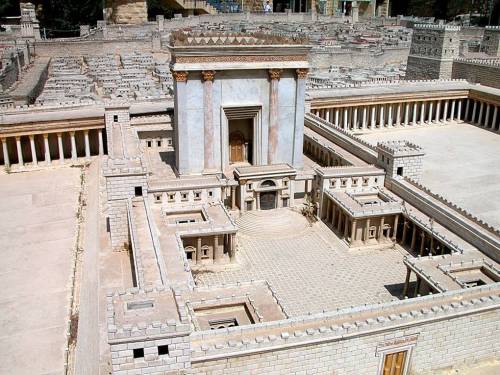
This is a picture of a model of Herod’s Temple:

second temple

But instead of answering their question right away, in vs. 5-13 Jesus talked more generally about how we are to expect  false teachers and persecution as we wait for the end and his return.

Today, we look at Jesus’ answer to the disciple’s specific question of – “When will Herod’s temple be destroyed?” This is where Jesus presents, what I am calling his roadmap to the end.

Stage 1: The destruction of the temple

Jesus talks about four things here:

1. The abomination of desolation.

Mark 13:14a – “But when you see the abomination of desolation standing where it ought not to be (let the reader understand) . . ..”

Jesus is using prophetic – apocalyptic code language – “abomination of desolation.” This is emphasized when Mark invites the reader to understand what is being said. Its like saying – “Do you get it?”

Jesus is drawing on the book of Daniel here. Daniel portrays a pagan king who defiles the temple, most often associated with Antiochus Epiphanes and what he did in 168 BC.

By using this phrase, Jesus is saying that this will happen again (or perhaps he is even saying that this will be the true fulfillment of Daniel’s prophecy).

In Luke 21:20 (Luke’s account of the Olivet discourse) we are given the decoded version of what Jesus means: “When you see Jerusalem surrounded by armies, then know that its desolation has come near.”

This helps us to see that Jesus is talking about events that occurred not long after his death. In 66-70 AD the Roman armies came against Israel.

  • They laid siege to the city and eventually destroyed Jerusalem and the temple under General Titus, who later became emperor.
  • Then they offered up sacrifices to their idolatrous banners on the temple site

In these ways the pagan Roman empire, its armies and emperor, showed itself to be truly an “abomination of desolation.”

In answer to the question – “When will Herod’s temple be destroyed?” Jesus indicates that, it will happen sometime after you see the Roman armies coming ready to attack.

2. Flight to the mountains.

Mark 13:14b-18 – “. . .  then let those who are in Judea flee to the mountains. Let the one who is on the housetop not go down, nor enter his house, to take anything out, and let the one who is in the field not turn back to take his cloak. And alas for women who are pregnant and for those who are nursing infants in those days! Pray that it may not happen in winter.”

The recognition of the Roman armies coming against the city is the cue for the Jewish Christians in Judea to flee. Usually you would flee into a walled city in time of war. But not this time. This time God’s judgment is coming on Jerusalem and the temple. 

Jesus emphasizes the seriousness of the situation. Leave your possessions and extra clothes behind and run! Jesus also speaks to the practical difficulties of fleeing:

  • It will be very hard on women who are pregnant or with small children.
  • He also tells them to pray that it not be in winter, when the rivers are flooded and hard to cross and the mountains have snow.

According to one report the Christians in Jerusalem did in fact flee the city, sometime at the beginning of the war.

3. A great tribulation.

Mark 13:17-20 – “For in those days there will be such tribulation as has not been from the beginning of the creation that God created until now, and never will be. And if the Lord had not cut short the days, no human being would be saved. But for the sake of the elect, whom he chose, he shortened the days.” 

Luke’s version here shows us that this time of tribulation is still speaking of the destruction of Jerusalem and the temple. “For there will be great distress upon the earth and wrath against this people. They will fall by the edge of the sword and be led captive among all nations, and Jerusalem will be trampled underfoot by the Gentiles . . .”  – 21:23b-24.

This was a horrific time of suffering for the Jewish people:

  • They were subjected to the realities of seige warfare being stuck in Jerusalem. Some resorted to cannibalism when the food ran out.
  • Over a million were killed throughout Israel (which was a huge percentage of the population in that day). So many were crucified that it was said that there were few trees left in the region.
  • Almost a hundred thousand were taken away into slavery
  • Their temple was defiled and destroyed, the city of Jerusalem was burned, and their national-political identity was taken away

As Jesus said, if God did not cut short the days for the sake of his chosen ones, followers of Jesus – none would have survived.

Now, when Jesus speaks of suffering beyond what has ever occurred or will occur again:

  • He may be speaking figuratively, as the prophet Joel does in Joel 2:2. This would, then, simply be a prophetic way of describing suffering beyond imagination.
  • With regard to Jerusalem, he could be speaking literally. For it is true that it had never suffered this much before. And, if this is what he meant, then it will never suffer this much again.

4. A time of deception.

Mark 13:21-23 – “And then if anyone says to you, ‘Look, here is the Christ!’ or ‘Look, there he is!’ do not believe it. False christs and false prophets will arise and perform signs and wonders, to lead astray, if possible, the elect. But be on guard; I have told you all things beforehand.”

Jesus already warned of this, as we saw last week. Here he gives a specific warning. During this time of chaos and distress, don’t listen to false messiahs and false prophets. For they will seek to lead followers of Jesus astray through the use of signs and omens.

And this kind of activity – false prophets and talk of omens – did take place during and after the war that destroyed the temple.

This leads us to . . .

Stage 2: An undefined time of geo-political turmoil

Mark 13:24-25 – “But in those days, after that tribulation, the sun will be darkened, and the moon will not give its light, and the stars will be falling from heaven, and the powers in the heavens will be shaken.” 

This is a new section, for he says, “after that tribulation.” We are past the destruction of the temple and that awful time.

But what does all this cosmic language of sun, moon and stars mean? Is it literal? Well, when we look at the rest of Scripture, we find out that this is prophetic speech that was used to describe geo-political change as one empire rises and another falls at the hand of God:

Isaiah 13:10 uses the same cosmic language that Jesus does to speak of God’s judgment of Babylon. “For the stars of the heavens and their constellations will not give their light, the sun will be dark at its rising, and the moon will not shed its light.” As we know, it wasn’t literal here. It was a way of speaking of God’s judgment on this nation.

Isaiah 34:4 also uses some of the same language that Jesus does to speak of God’s judgment on Edom. “All the host of heaven shall rot away, and the skies roll up like a scroll. All their host shall fall . . ..”

The prophets Ezekiel, Joel & Amos  also use cosmic language to speak of judgment on nations.

Luke confirms this understanding. In Luke 21:24 the destruction of Jerusalem is followed by “the times of the Gentiles.” God will be dealing with the Gentile nations now.

Then in verses 25-26 comes the cosmic language with additional statements that help us see what is going on. Jesus speaks of “. . . distress of nations in perplexity because of the roaring of the sea and the wave, people fainting with fear and with foreboding of what is coming on the world.” Why are the nations distressed? Because of “the roaring of the sea and the wave.” And as we saw in our study of baptism this has to do with chaos, turmoil and judgment in the world (see Revelation 17:15).

Jesus here speaks in the most general terms possible about a time when nations will rise and fall in the world at the hand of God.

This section recalls Mark 13:8. “For nation will rise against nation, and kingdom against kingdom.” These are the birth pangs of the end expressed in cosmic language.

This brings us to the last stage . . .

Stage 3: The coming of the Son of Man

Mark 13:26 – “And then they will see the Son of Man coming in clouds with great power and glory.”

After this undefined period of Gentile geo-political turmoil, “then” Jesus will return as ruler and king.

We learn from Matthew’s version that a part of this is that the peoples of the earth will be judged. Matthew 24:30 says “all the tribes of the earth will mourn.” Jesus’ return will bring great woe upon the people of the earth. The book of Revelation expounds on this in some detail.

More hopefully this also involves the resurrection of the righteous.

Mark 13:27 – “And then he will send out the angels and gather his elect from the four winds, from the ends of the earth to the ends of heaven.”

Jesus will send out his angels to gather together his followers. Again, this is a common way of talking about the resurrection of the righteous.

Next we see the connection between . . .

The temple destruction and Jesus’ return

Mark 13:28-31 – “From the fig tree learn its lesson: as soon as its branch becomes tender and puts out its leaves, you know that summer is near. So also, when you see these things taking place, you know that he is near, at the very gates. Truly, I say to you, this generation will not pass away until all these things take place. Heaven and earth will pass away, but my words will not pass away.”

Now notice, the phrase, “these things” in this passage cannot refer to the coming of the Son of Man, for “when you see these things taking place, you know that he is near, at the very gates.” The two are differentiated by Jesus. “These things” must take place first, then we know that “he is near.”

The phrase, “these things” connects back to the original question of 13:4 – “When will these things be and what will be the sign when all these things are going to be fulfilled?” In other words, the phrase “these things” refers to the temple destruction and the beginning of the times of the Gentiles.

Jesus gives us more information about “when” in this section:

1. “These things” will happen within the span of a generation. That is, the destruction of the temple through to the ushering in of the times of the Gentiles will occur in the lifetime of Jesus’ hearers. Jesus said, “Truly, I say to you, this generation will not pass away until all these things take place” – v. 30.

And Jesus stakes his prophetic authority on this prediction. He said, “heaven and earth will pass away, but my words will not pass away” – v. 31. And, in fact, “all these things” did happen by 70 AD, within a generation of Jesus’ words!

2. Once the temple is destroyed, Jesus’ return is imminent. That is, no other event must happen before he returns. Which means he could come at any time!

But, lets be clear as we end . . .

No one knows when Jesus will return

Mark 13:32-33 – “But concerning that day or that hour, no one knows, not even the angels in heaven, nor the Son, but only the Father. Be on guard, keep awake. For you do not know when the time will come.”

Although the other events will be fulfilled in the generation of Jesus’ listeners, no one knows when the Son will come in glory and power.

He could not emphasize this point more. Not even Jesus himself knows when! Only the Father knows.

So if anyone tells you that they know, ask them if they know more than Jesus! Then tell them what Jesus said, “you do not know when the time will come.”

We currently live somewhere in stage two – the times of the Gentiles. And Jesus could come at any time.

Since we don’t know when, as Jesus said, we should “be on guard” and “keep awake.” We should be ready at all times!

William Higgins

We have begun a series on Jesus’ second coming and today we start to look at the Olivet discourse of Mark 13. It’s called the “Olivet” discourse because Jesus spoke these words as he sat on the Mount of Olives.

This is Jesus’ primary teaching on his second coming.

  • There are other places where he talks about this, but not in as much detail.
  • And we have this same Olivet discourse in all three of the first Gospels, with slight differences. So we can use all three of them to help us make sense of what Jesus is saying, which is a real help.

Now, when I look at all the debates and discussions about the end times today, much of which revolve around trying to make sense of the book of Revelation, which is the hardest book to interpret because of its symbolism (because you can read into it pretty much whatever you want), when I look at all this . . .

  • My choice is to start with what Jesus said. And to look at his main teaching on this.
  • And then move from there to make sense out of other passages that speak of his second coming.

So, we start with Mark 13:1 and . . .

Jesus’ prediction of the destruction of the temple

Mark 13:1 – “And as Jesus came out of the temple, one of his disciples said to him, ‘Look, Teacher, what wonderful stones and what wonderful buildings!’”

The temple here is Herod’s temple. It is usually called the second Temple. The first temple was Solomon’s and it was destroyed by the Babylonians. So when the exiles returned to Jerusalem they built another, second temple.

And it was this temple that Herod had extensively remodeled and turned into a wonder of the ancient world. It was justly famous for its size and beauty. The stones were massive – 25’ x 8’ x 12.’ The disciples were certainly impressed by it.

Mark 13:2 – “And Jesus said to him, ‘Do you see these great buildings? There will not be left here one stone upon another that will not be thrown down.’”

He predicts its destruction. Now, this isn’t the only time that Jesus predicted impending doom for Jerusalem:

  • Jesus says in Matthew 23:34-38 that Jerusalem will be judged and its temple (or “house”) left desolate.
  • In Luke 19:43-44 Jesus talks about judgment on Jerusalem for rejecting him – “For the days will come upon you, when your enemies will set up a barricade around you and surround you and hem you in on every side and tear you down to the ground, you and your children within you. And they will not leave one stone upon another in you, because you did not know the time of your visitation.”

Mark 13:3a – “And as Jesus sat on the Mount of Olives opposite the temple . . ..”

After his prediction, Jesus and the disciples went out of Jerusalem and onto the Mount of Olives. It’s just across from Jerusalem and you could see the Temple from there.

The disciples must have been thinking about Jesus’ prediction and so when they got there, they ask Jesus –

When will it happen??

Mark 13:3b-4 – “. . . Peter and James and John and Andrew asked him privately, ‘Tell us, when will these things be, and what will be the sign when all these things are about to be accomplished?’”

The phrase – “these things” refers to the prediction of the destruction of Herod’s temple. They are asking, ‘When will Herod’s temple be destroyed?’ They want to know about the timing of this prediction by Jesus.

In Matthew 24:3 (Matthew’s version of the Olivet discourse) there is the additional phrase “ . . . and what will be the sign of your coming and of the end of the age?”

The disciples saw the destruction of the temple as an event connected in some way to the end of all things. This idea would have been understandable for any Jew. Today we just don’t understand how important the temple was for their faith. For it to go must mean the end of all things.

Well, Jesus does answer their question and he confirms that there is a connection between the destruction of Herod’s temple and the end.

As we will see In vs. 14-33 he tells them:

  • when this temple will be destroyed and
  • the connection of this to the end – his second coming

He gives them what I call – “Jesus’ Roadmap to the End.” But that’s for next week!

Today our focus is on vs. 5-13, which contain Jesus’ initial answer to them, before he answers their specific question. This initial response gives some general teaching on what to expect as we wait for Jesus’ return.  For an outline of Mark 13:5-13 click here: Two Parallel Warnings About The End

The first thing Jesus tells us is to –

Expect false teachers

Mark 13:5-8 – “And Jesus began to say to them, ‘See that no one leads you astray.  Many will come in my name, saying, ‘I am he!’ and they will lead many astray. And when you hear of wars and rumors of wars, do not be alarmed. This must take place, but the end is not yet. For nation will rise against nation, and kingdom against kingdom. There will be earthquakes in various places; there will be famines. These are but the beginning of the birth pains.’”

Jesus is giving us a warning, which we need to hear today. Deceivers, false messiahs will come:

  1. They will use troubling events in the world to alarm people – wars, earthquakes and famines
  2. They will say that the end is here – “Can’t you see it! All these events are taking place!”
  3. They will call people to follow them. And in this way they will lead people astray.

This has happened throughout history, from a Samaritan false prophet who gathered quite a following before the destruction of Jerusalem, all the way to the present and David Koresh and the Branch Davidians.

In contrast to all this – Jesus, the real Messiah tells us:

  1. These things must happen – there will be troubling events – but don’t be alarmed
  2. The end is not yet
  3. So don’t listen to them! They are deceivers who will lead you astray from your faith in him.

Just as a point of emphasis because we don’t always get it: These things (wars, earthquakes, famines) are not signs of the coming of the end. They are simply the beginning of the end. That yes, we are in the last days, (which began in New Testament times) but not that the last day is here, or even around the corner.

Christians today are often the first ones to be alarmed by events in the world. But we of all people should be calm, because we know this stuff must happen, but the end is not yet. Jesus has told us so. And he said “do not be alarmed.”

Jesus says of these in v. 8 – “these are but the beginning of the birth pains.” The metaphor is that of a new world being born out of the ashes of the old. And so the kinds of things we see in newspaper headlines are simply the first hints of labor. The full birth pains will come when Jesus returns.

The second thing Jesus highlights is that we should –

Expect persecution

Mark 13:9-13 – “But be on your guard. For they will deliver you over to councils, and you will be beaten in synagogues, and you will stand before governors and kings for my sake, to bear witness before them. And the gospel must first be proclaimed to all nations. And when they bring you to trial and deliver you over, do not be anxious beforehand what you are to say, but say whatever is given you in that hour, for it is not you who speak, but the Holy Spirit. And brother will deliver brother over to death, and the father his child, and children will rise against parents and have them put to death. And you will be hated by all for my name’s sake. But the one who endures to the end will be saved.”

Jesus gives us another warning: The world will oppose us. Christians will be handed over, betrayed even by relatives. They will be beaten, put on trial, and some will be killed. We will be hated by all people.

This has happened all throughout history since the coming of Jesus.

  • In the first century the Roman emperor Nero persecuted and killed Peter and Paul and many others in the city of Rome.
  • In the 1500’s the first Mennonites suffered one of the most devastating examples of persecution in all of church history.
  • Today there are more martyrs than ever, and persecution abounds in various parts of the world even as we speak.

But he not only told us it would happen, Jesus tells us how to respond:

  1. We must endure, for the one who endures to the end will be saved. He’s saying, don’t let persecution cause you to renounce your faith; to turn away from him.
  2. We must fulfill God’s purpose of spreading the gospel to all nations. Even turning our persecution into an opportunity to witness for him.
  3. We must rely upon the Spirit to help us. For the Spirit will give us the words to say when we are put on trial; when we are put on the spot; when we are afraid.

[Just a note here: Jesus says, “The gospel must first be proclaimed to all nations” and as Matthew’s versions says, “then the end will come.” What I want to say is that this doesn’t set a time for Jesus to return that can be measured, so that we can say, “Hey, its done Jesus has to return now. Lets go sit on a hill and wait for him.” How do you measure this? Is it geographical, is it political – to every nation state, is it social – to every specific tribe? Its unclear. Paul said in Colossians 1:23 that in his own day the gospel had “been proclaimed in all creation under heaven.” So it’s unclear.]

Alright, summing up Jesus’ initial response to the disciples –

What should we expect? The testing of our faith

Scripturally, the danger of living in the last days, like we do, is that we will lose our faith.

  • As Jesus says in Matthew 24:10 (Matthew’s version of the Olivet discourse) – “Many will fall away.”
  • As Paul says in I Timothy 4:1 – “Now the Spirit expressly says that in later times some will depart from the faith . . ..”

As our verses today have shown us:

  • We can lose our faith if false messiahs, prophets or teachers lead us astray, and
  • We can lose our faith if persecution causes us not to endure

So Jesus warns us and encourages us in these verses to:

 Resist false teachers who raise alarm

And remain true to share the gospel amidst persecution

Next week – the “when” question. When will the temple be destroyed, and what is the connection of this to the end and Jesus’ return.

William Higgins

 Today we begin a series of teaching on Jesus’ second coming.

Now there are lots of debates about exactly how this will all unfold. For instance, what happens just before or after Jesus returns. And these discussions will continue on and people of good faith will disagree. That’s not our focus today.

Our focus is: What we have to look forward to when Jesus returns.

Scripture tells us that in our lives in this world we will have trials and tribulations. It will not always be easy.
We will suffer. We will experience disappointment, discouragement, even despair at times.

Yet as Christians we know and believe that there is hope for our future. Lets look at this . . .

1. Jesus will return

As bad as the world is around us; as much as it is broken and full of evil and seemingly beyond hope of repair – certainly with regard to what God’s will is for it – we know that there is one who is coming who will fix it.

Jesus said about himself, “For the Son of Man is going to come with his angels in the glory of his Father . . .” – Matthew 16:27. He also said, “And then they will see the Son of Man coming in clouds with great power and glory” – Mark 13:26.

 Paul said it this way, “For the Lord himself will descend from heaven with a cry of command, with the voice of an archangel, and with the sound of the trumpet of God.” – 1 Thessalonians 4:16.

Jesus has not left us to ourselves. He will come. And he will come through on his promises to us.
 Here are several notes about his coming:

  • It will be a literal, bodily return – Acts 1:11. The angels said to the disciples, ‘Just as you saw him ascend into heaven (with his resurrection body), so will he return in the same way.’
  • Everyone will see him return – as Jesus said in Luke 17:24, “For as the lightning flashes and lights up the sky from one side to the other, so will the Son of Man be in his day.” He is countering here the idea that his coming will be a spiritual or secret return that only a few will know about (Luke 17:23; also Matthew 24:23-26). He is saying there will be nothing hidden about it. No one will be able to miss it.
  • It will be glorious – Mark 13:26 & Matthew 16:27. As we saw from these verses, he will come “with great power and glory” and “with his angels in the glory of his Father . . ..” It will not be like the humble infant born in a manger, who lived in poverty and was unjustly killed. He will come with the splendor and majesty of the king that he is.

2. Jesus will rule over the earth

Jesus said, “Truly, I say to you . . . the Son of Man will sit on his glorious throne” – Matthew 19:28. This throne speaks to his rule as King over the earth.

It is at this time that our prayer – “your will be done on earth as it is in heaven” will be truly and completely fulfilled.

Now a part of his rule has to do with judging. Jesus said, “the Son of Man is going to come . . . and then he will repay each person according to what he or she has done.” – Matthew 16:27.

This is when what Jesus said in Luke 14:11 will come true, “everyone who exalts himself will be humbled, and he who humbles himself will be exalted.”

  • Those who are on top now because of evildoing and oppression will be put down.
  • Those who are on the bottom now because of righteousness and commitment to Jesus will be raised up and blessed.

King Jesus will right all wrongs and bring true justice and peace to the world.

3. We will be resurrected

In Mark 13:27 Jesus says about himself, “And then he will send out the angels and gather his elect from the four winds, from the ends of the earth to the ends of heaven.” The angels will “gather” us up, a common (harvesting) metaphor for the resurrection in the teaching of Jesus.

As Paul teaches in 1 Thessalonians 4:16-17:

  • Christians who have already died will be raised first, and then
  • Christians who are still alive at Jesus’ return will be given new resurrection bodies

Resurrection means that our earthly bodies will be transformed. Paul says that Jesus will “transform our lowly body to be like his glorious body, by the power that enables him even to subject all things to himself.”- Philippians 3:21.

Our resurrection bodies will be like Jesus’ supernatural body and like the bodies that angels have. We will be able to appear and disappear. We can eat food, but we don’t have to.

Resurrection also, of course, means that we will be immortal. Paul said, “For the trumpet will sound, and the dead will be raised imperishable, and we shall be changed. For this perishable body must put on the imperishable, and this mortal body must put on immortality.” – 1 Corinthians 15:52-53.

We will experience the full reality of Jesus’ defeat of death. Our new bodies will live forever, without suffering. What a blessed change this will be!

4. There will be a huge celebration

This is called the Messianic banquet; an end time celebration for the faithful, with Jesus.

Jesus said of this, “I tell you, many will come from east and west and recline at table with Abraham, Isaac, and Jacob in the kingdom of heaven.” – Matthew 8:11. He also talked about his disciples eating and drinking, “at my table in my kingdom” – Luke 22:30.

This is what he said at the last supper, “I tell you I will not drink again of this fruit of the vine until that day when I drink it new with you in my Father’s kingdom.” – Matthew 26:29. Think of it. He is waiting in heaven to celebrate with us!

This is also pictured as a wedding banquet: For instance in the parable that Jesus tells in Matthew 22:1-14 and also in Revelation 19:9 which says, “Blessed are those who are invited to the marriage supper of the lamb.” It’s going to be an amazing party!

5. We who have been faithful will be rewarded

We will be “blessed.” This is the message of the beatitudes in Luke 6 & Matthew 5. As the word indicates, we will be happy, blissful and fully and truly contented. And with good reason!

  • The eternal kingdom will be ours. Matthew 5:3 says, “Blessed are the poor in spirit, for theirs is the kingdom of heaven.”
  • We will see God. Matthew 5:8 says, “Blessed are the pure in heart, for they shall see God.” We will be close to God and be able to be in God’s presence.
  • We will have joy with Jesus. Matthew 25:21 says, “Well done, good and faithful servant. . . . Enter into the joy of your master.”
  • We will inherit the earth. Matthew 5:5 says, “Blessed are the meek for they shall inherit the earth.” [Now, although it is often thought that we will spend eternity in heaven, the reality is that God made us for this earth and it is our destiny to be here. It would be better to say that when Jesus returns – heaven will come down to earth. This is also pictured in another way in Revelation 21. We do not go up to be in the new Jerusalem. It comes down out of heaven, and it says that now God dwells with us, that is, on earth.]

So, all of these rewards will be ours. God will give us the earth, we will have joy with Jesus, we will see God, and possess the kingdom forever. We will indeed be blessed!

6. We who have been faithful will rule with Jesus over the earth

As we see in the parable of Luke 19:17 & 19, those who serve Jesus while he is gone with their various assignments, will receive various levels of rule, based on their service.

Paul says it plainly – “If we endure, we will also reign with him” – 2 Timothy 2:12.

In 1 Corinthians 6:2-3 he gets more specific about this rule. He asks the Corinthians – “Do you not know that the saints will judge the world?” That is, the people that have lived on the earth. And also he asks, “Do you not know that we are to judge angels?” These are beings that are beyond our understanding and yet we will be involved in judging them.

7. All things will be made new

What Jesus will do will extend even to the entirety of the cosmos – the heavens and the earth.

Jesus talks about “the new world,” when he comes in Matthew 19:28. Literally, it means the “regeneration.” Another translation renders it “the renewal of all things.”

Romans 8:21 talks about this and says, “the creation itself will be set free from its bondage to decay and obtain the freedom of the glory of the children of God.” In other words, it will be made new and glorious just like our bodies will be new and glorious.

John saw this prophetically in Revelation 21:1 – “Then I saw a new heaven and a new earth, for the first heaven and the first earth had passed away . . ..”

So the message today is, whatever your circumstances are, and this earthly life can be both difficult and cruel, as Christians we have something to look forward to.

To summarize Paul from I Corinthians 2:9 – what God has prepared for us who love him is:

  • beyond what any eye has seen
  • it is beyond what any ear has heard
  • it is beyond what the human heart can even imagine

That is what we have to look forward to. This is our hope.

And it is this that keeps our current struggles in perspective as we remember the bigger picture.  And this is what gives us the strength to move forward, faithfully following Jesus in the midst of our difficulties.

William Higgins

Seeking Out The Lost

We are planning a special outreach event on March 22nd – Bring a Friend Sunday. That is, a friend who is not yet a Christian, or a Christian who doesn’t already have a home church.

The idea is to bring in some visitors and make some connections. We want to reach out.

So I want to share some teaching this morning to help us get focused on outreach and our need to be thinking, praying and acting to “Seek out the Lost.” This comes from Jesus’ example and his teaching.

1. Jesus’ purpose in coming was to seek out the lost

 This is what Jesus says about himself in Luke 19:10, “For the Son of Man came to seek and to save the lost.”

Jesus is teaching us that God sent him for this very reason. This was Jesus’ mission; the focus of his existence; why he came to earth.

The purpose of Jesus was “to seek out and save the lost.”

2. Jesus was not satisfied that some were lost

Remember the parable of lost sheep? Jesus said in Luke 15:4-5 – “What man of you, having a hundred sheep, if he has lost one of them, does not leave the ninety-nine in the open country, and go after the one that is lost, until he finds it?”

And then remember the parable of the lost coin? Jesus said in Luke 15:8 – “Or what woman, having ten silver coins, if she loses one coin, does not light a lamp and sweep the house and seek diligently until she finds it?”

These parables teach us, among other things, that

  • Jesus was not satisfied with the 99 sheep who were fine
  • Jesus was not content with the 9 coins already accounted for 

-all of us who come here regularly and seek to follow Jesus.

He was not satisfied because one was still missing.

3. Jesus worked hard to seek the lost

To use the language of the parable of the lost sheep, he had to “go after” the lost one – Luke 15:5.

He didn’t stand next to the 99 and yell out to the lost one, “come on over here!” He didn’t say, “that sheep knows where we are, let him come and join us if he wants to.”

As the parable pictures, he had to do something. He had to work. He left the 99. He went after the one, walking and looking, seeking it out.

To use the language of the parable of the lost coin, he had to “seek diligently” to find that which was lost –  Luke 15:8.

He didn’t figure that one day the coin would simply show up. That someone would stumble across it.

As the parable pictures, he did something. He had to work. He lit a lamp, he swept the house and he searched carefully.

Searching for what is lost requires work. It can be tiresome, inconvenient and frustrating, but Jesus did it nevertheless.

Jesus sought the lost even though it was hard work.

4. Jesus sought the lost even though many were undesirable or unlike him 

  • The sheep were no doubt dirty, muddy, bleeding or sick.
  • The coin was no doubt dusty, dirty and covered with cobwebs.

Jesus sought out tax collectors, sinners and prostitutes.

  • These were people that did things that were wrong and offensive.
  • These were people that were different from him; from a different background and a different social setting.

Yet he sought them and welcomed them – Luke 15:2.

Even though the lost were often undesirable and unlike him, Jesus sought them out anyway.

5. Jesus sought the lost even though others didn’t approve

Luke 15:2 says, “And the Pharisees and the scribes were grumbling and saying, ‘This fellow welcomes sinners and eats with them.’” And not only that, since Jesus was with sinners, they began to call him a glutton and a drunkard – Luke 7:34. It ruined his reputation.

But Jesus was not deterred, for though

  • He made some people mad
  • He made the angels in heaven rejoice

As Jesus said in Luke 15:10, “there is joy before the angels of God over one sinner who repents.”

Jesus sought the lost even though others did not approve.

6. Jesus sought the lost even though many rejected him

Mark 6:1-6 tells the story of how his hometown rejected him and they asked him, “Who do you think you are?”

Matthew 8:28-34 tells the story of how Jesus healed a demon possessed man, and how afterwards the people of the town asked Jesus to leave. “Can you leave us alone!”

The truth is most people ended up rejecting Jesus, but he sought out the lost anyway.

7. Jesus sought the lost because he loved them

Matthew 9:36 says, “When Jesus saw the crowds, he had compassion for them, because they were harassed and helpless, like sheep without a shepherd.” Jesus felt for them and their situation; he had compassion.

And so in Matthew 10:6 (right after this) he sends his disciples to “go . . . to the lost sheep of the house of Israel.” His love moved him to send out his disciples to help him find the lost.

Jesus sought the lost because he loved them.

Sisters and brothers, as we see in this last verse . . .

We are to be like our Lord and seek out the lost as well

1. Like Jesus our purpose is to seek out the lost. Jesus sends us out to finish what he came to do. This is our mission statement; the very focus of our existence – to seek out the lost.

2. Like Jesus we cannot be satisfied that some are lost. We can’t be satisfied with the 99 sheep that are found, or with the 9 coins already in the purse. With those who already have found Jesus.

  • We cannot be satisfied because one is missing
  • We cannot be satisfied until what is lost is found

3. Like Jesus we are to work hard to seek out the lost. We have to go out. They will not come to us. They are, after all, lost. Which by definition means they don’t know their way back! They can’t find their way to us.

Searching can be tiresome, inconvenient and frustrating. But nevertheless, we are to do the work that is necessary to seek out the lost.

4. Like Jesus we are to seek the lost, even though many are undesirable or unlike us. They are dirty, as it were, from their very lostness (which, by the way, we were as well in our lostness). They come from different walks of life than we are familiar with.

Yet we are still to seek them out and welcome them.

5. Like Jesus we are to seek the lost even if some do not approve or grumble that we do so, or slander our reputation.

We do this because we know that the very angels of God rejoice when the lost are found.

6. Like Jesus we are to seek the lost, even if it brings us rejection. So that people say to us, “Who do you think you are?” Or, they tell us, “Go away!”

Most people will not respond to us, but we seek out the lost anyway.

7. Finally, like Jesus we are to seek the lost because we love them. They are harassed and helpless and need a Shepherd. And so we must act. And in acting we reveal our love for them.

We show them the path to Jesus and to new life and new hope.
______________

Now I know that many of us are intimidated by this, and so we are reluctant to reach out on our own.

And that’s why we are providing you with, what is a fairly simple way to do this – to invite a friend to church for a special service and a meal.

We want you to begin this week by thinking and praying about who you might ask. And then when you have the person or persons in mind, to begin to pray for them.

This is where you can start, and then next week, I’ll have some more information for you.

William Higgins