Feeds:
Posts
Comments

Posts Tagged ‘Jesus’

camelAccording to Jesus it is hard for those who have more than they need to receive God’s Kingdom salvation. Indeed, it’s impossible, like trying to get a camel through the eye of a sewing needle (Luke 18:24-25). It’s impossible because what God demands is so hard for us to do. Here is what Jesus and his apostles teach about what God demands.

1. Give up greed

Jesus said, “Take care! Be on your guard against all kinds of greed; for one’s life does not consist in the abundance of possessions” (Luke 12:15). Jesus warns us against every kind of greed. Wealth is so dangerous that we should not seek to have it (Mark 4:18-19; I Timothy 6:9). Why is this?

  • First, when we store up earthly treasures we are led to trust in them rather than God (Matthew 6:24).
  • And second, when we store up earthly treasures we are led to enjoy comforts while others suffer (Luke 16:19-31). In other words, seeking wealth leads us to hate God and our neighbor, the opposite of the two greatest commandments (Matthew 22:36-40).

Rather than this we are to trust God for our provision (Matthew 6:25-34). We are to be content with what we have (Hebrews 13:5), simply praying for our daily bread (Matthew 6:11). We know that “one’s life does not consist in the abundance of possessions.”

2. Give up all you possess

Jesus said, “none of you can be my disciple who does not give up all his own possessions” (Luke 14:33). Here are some things to note about this command:

  • It applies to all who have possessions.
  • “Give up” can be translated “renounce.”
  • This covers “all” our possessions, not some.
  • This command primarily has a vertical focus. It has to do with our possessions and God.
  • This command is interpreted by Luke in Acts 4:32, “not one of them claimed that anything belonging to him was his own.”

It means that we accept that our possessions are no longer ours. We renounce them. We give them up to God. They are God’s now. Jesus tells us why we must renounce our possessions. “No one can serve two masters; for a slave will either hate the one and love the other, or be devoted to the one and despise the other. You cannot serve God and wealth” (Matthew 6:24).

3. Give to the needy

Jesus said, “sell your possessions and give to the needy” (Luke 12:33). Here are some things to note about this command:

  • It is addressed to all who are not themselves needy. (But sacrificial giving on the part of the needy is highly commended – Luke 21:1-4; 2 Corinthians 8:3).
  • This command has primarily a horizontal focus, giving our resources to the needy.
  • This has to do with our excess possessions, including our accumulated money, not necessarily all our possessions and money. In Luke 12 the context of this command is the farmer’s surplus crop. Jesus is not saying here “become needy” (2 Corinthians 8:13-14).
  • All such giving is to be done voluntarily and freely (2 Corinthians 9:7). Ananias could have kept what he pretended to give (Acts 5:4).
  • Sometimes an initial dispersion of wealth happened at conversion. Zacchaeus gave half of his possessions to the needy (Luke 19:8).
  • This giving is to be continuous, however. As Paul said, “each of you is to put aside and save whatever extra you earn” for the purpose of meeting needs (I Corinthians 16:2). As long as there are needs we are to keep giving what we can.
  • This command is interpreted by Luke in Acts 2:44-45 and 4:34-35. When there was a need in the community of believers, those who had would give to those who had need.
  • The giving can be done one on one, or it can be given to the common fund of the church to be distributed to the needy (Matthew 6:2; Acts 4:35; 6:1-4).

4. Who are the needy?

There are three categories of the needy:

1) Those who are needy because of God – evangelists, missionaries, pastors and those who are persecuted. These have sold all they have (Luke 18:22), or left it behind (Luke 18:28-30), or have given up earning money (Luke 10:7; I Timothy 5:17-18) or have had their possessions taken from them (Hebrews 10:32-34) – all for the sake of the Kingdom of God.

2) Those who are needy among the people of God – the sick, the oppressed, widows, and orphans (James 1:27; Galatians 6:10). If we are not needy, our salvation depends upon giving to these two groups of the needy (Luke 16:19-31; 6:24). For we cannot love God and ignore a needy brother or sister (I John 3:16-17). When we do give, they will welcome us into the Kingdom of God (Luke 16:9).

3) We are also to give to those who are needy among the unbelievers (Luke 10:30-37; Galatians 6:10; Luke 6:33-36).

We are not to give to the idle, those who choose not to work. Rather we are to teach these to work hard, earn their own living and help others in need (2 Thessalonians 3:6-12; I Thessalonians 4:11-12).

5. How much should we give?

There is no set requirement of how much we are to give; no percentage is given. Those who give much, however, like Barnabas, are honored (Acts 4:36-37).

Love for God and our neighbor should control our giving. Those who give out of love are willing to give sacrificially for others in genuine need. They are not concerned about percentages, but helping the needy. Paul said, “each of you must give as you have made up your mind, not reluctantly or under compulsion, for God loves a cheerful giver” (2 Corinthians 9:7). But remember this, “the one who sows sparingly will also reap sparingly, and the one who sows bountifully will also reap bountifully (2 Corinthians 9:6). How much treasure do we want in heaven (Luke 12:33)?

6. Caring for family

None of this giving to the needy excludes us from our responsibilities to care for our family. It is evil to neglect this (Mark 7:8-13; I Timothy 5:3-8). Caring for family can involve storing up resources for our parents in old age (Mark 7:9-13), and for our children’s needs (2 Corinthians 12:14). Caring for family, however, should not be used as a pretext for greed so that we can live in indulgence.

7. Sharing all that we possess

Jesus said, “When you give a banquet, invite the poor, the crippled, the lame, and the blind” (Luke 14:13). Whatever is not used to support family needs and to give to the needy is still God’s and must be used for God’s purposes. This means being hospitable and sharing what we own.This means blessing the needy with our resources. Philemon had a room for Paul to stay in when he traveled through his area (Philemon 1:22). Gaius allowed his large home to be the meeting place for the church in Corinth (Romans 16:23).

8. Doing the impossible

What God demands of us is impossible because we are evil. We store up treasures for ourselves because we do not believe that God will take care of us. We store up treasures for ourselves so that we can live in comfort while others suffer; because we think it’s alright if others suffer lack as long as we don’t.

But there is hope for us. Jesus tells us that with God all things are possible (Luke18:27). If we truly desire it, God can change our evil hearts. God can enable us to give up all our possessions and be generous with all that we have.

William S. Higgins – 2003

Read Full Post »

The message today is very simple. God is a God of life and a God of blessing. And even though we so often fail and sin and mess things up so that there seems to be no hope, in grace, God offers us a new beginning.

Let’s start off with –

Some examples of new beginnings

– that God has given in the Scriptures.

1. Think of Adam and Eve. God made them and blessed them, and everything was “very good” (Genesis 1:31). But they sinned and rebelled against God and were judged and exiled from the garden.

But God in his mercy offered them a new beginning. For through their son Seth came a new start. As Genesis 4:26 says, “at that time people began to call upon the name of the Lord.”

Things seemed truly hopeless, but . . . (say it all together) “God made a new beginning.”

2. Think of the time of Noah. Genesis 6:5 says, “The Lord saw that the wickedness of humankind was great in the earth, and that every inclination of the thoughts of their hearts was only evil continually.” (NRSV)

But God offered a new beginning through Noah and his family. They survived the judgment of the flood on callous evildoers. And God told Noah and his family, repeating the original commission to Adam and Eve, “be fruitful and multiply on the earth” (Genesis 8:17). Humanity began again.

Things seemed truly hopeless, but . . . “God made a new beginning.”

3. And then there was Abraham. The nations of the earth had forgotten God and were going their own way, worshiping different idols and false gods.

But God revealed himself to Abraham and his family. And God began a plan and made promises to use Abraham and his family to make himself known to the nations.

Things seemed truly hopeless, but . . . “God made a new beginning.”

4. And then there was Moses. Abraham’s lineage was in slavery in Egypt, captive in their suffering and not fulfilling their role.

So God raised up Moses to deliver them and to put into action the plan and promises he gave to Abraham. Moses led them to the promised land as a new nation, Israel.

Things seemed truly hopeless, but . . . “God made a new beginning.”

5. Remember the judges. Israel was unfaithful to God, worshiping idols and false gods and to fulfilling God’s plan. And they were enslaved to the rulers of the people around them.

But God raised up judges like Gideon and Samuel to call them to faithfulness. And he used them to deliver Israel from their oppression.

At many points during these years, things seemed truly hopeless, but . . . “God made a new beginning.”

6. Remember King David. Israel wanted a king like the nations around them, even though this was not of God. And when God gave them their first king Saul, he turned out to be a disaster.

But then God raised up his servant David. And he led the people toward faithfulness to God. And he delivered them from their enemies.

Things seemed truly hopeless, but . . . “God made a new beginning.”

7. Finally, remember when Israel returned from exile. After many years of rebellion and sin, and not listening to the prophets, they were judged and carried away to Babylon for 70 years of exile.

But God acted to bring them back to their land to begin anew. He did this in accord with the promise in Jeremiah 29:11 – “For I know the plans I have for you, declares the Lord, plans for welfare and not for evil, to give you a future and a hope.” And God did give them a new start.

Things seemed truly hopeless, but . . . “God made a new beginning.”

And then we come to –

The new beginning

And this requires us to look at the big picture. God doesn’t just want to give new beginnings within history. God is really leading all things toward a a cosmic new beginning. God created the world, but the world has fallen under the powers of Sin, Satan and Death. But now, God is bringing forth a new creation. As he said in Isaiah 65:17-18, “For behold, I create new heavens and a new earth, and the former things shall not be remembered or come into mind. But be glad and rejoice forever in that which I create”

And God is doing this through his Son, Jesus, whom he sent for this very purpose.

All of the new beginnings we have looked at so far prepared the way for Jesus , who is a descendant of Seth, Noah, Abraham, David and the people of Israel. And Jesus is the fulfillment of all the promises given to Adam and Eve, Abraham, Moses, David and the prophets.

Jesus became a human but he knew no sin. And so the powers of Sin, Satan and Death had not right to him. Yet, even though he was innocent, he was put to death on the cross. And because of this:

  • The powers of Sin, Satan and Death have been put down.
  • And Jesus has been raised up from the dead, vindicated and seated at the right hand of God with all authority over heaven and earth.

And he now gives us the blessings of salvation – the forgiveness of our sins and new life through the Spirit of God living within us. What I am saying is that in Jesus, the new creation has begun. And when he returns in glory he will raise us from the dead and the new creation will be completed.

Things seemed truly hopeless for the first creation, but . . . “God made a new beginning”; a new creation in Jesus Christ.

And so in light of all this, I ask you this morning –

Do you need a new beginning?

This God of new beginnings, who works throughout history to give new starts and who has brought forth a new creation through the resurrection of Jesus – this same God can give you a new beginning!

Have you failed God and others? Is your life a mess? Do you think that things are so bad – your situation, your sin, your guilt and shame – that it’s beyond hope?

Well, 2 Corinthians 5:17 tells us – “if anyone is in Christ, there is a new creation: everything old has passed away; see, everything has become new!” Right now this Easter day he can give you a new start., Your sin and guilt and shame can be wiped away and you can be a part of the new creation that God has begun in Jesus.

And when Jesus returns you will be raised to an unending life of righteousness, peace and joy in the presence of God. As Revelation 21:3-5 says, “And I heard a loud voice from the throne saying, ‘Behold, the dwelling place of God is with man. He will dwell with them, and they will be his people, and God himself will be with them as their God. He will wipe away every tear from their eyes, and death shall be no more, neither shall there be mourning, nor crying, nor pain anymore, for the former things have passed away.’ And he who was seated on the throne said, ‘Behold, I am making all things new.’”

Read Full Post »

Series: Clothe yourselves with humility

Remember with me – humility means “lowliness.” It comes from a word that means the earth, so the idea is that you are low to the ground. It means lowering yourself before others. Not raising yourself up above others.

We also talked about four components of humility:

1. You don’t seek honor and praise for yourself. You don’t need to lift yourself above others – brandishing titles, boasting or trying to get noticed. Rather you lower yourself to give honor to others and lift them up.

2. You put yourself on the same level or lower than others. You don’t need to lift yourself up above others always to be in charge or in control. Rather you lower yourself so that you can follow and submit to others.

3. You don’t seek to be served, lifting yourself above others. Rather you lower yourself to serve and bless others.

4. You don’t insist on what is best or easiest for you, lifting yourself above others. Rather you lower yourself to sacrifice for the needs of others.

The title today is, Humility. It’s worth it! This is important to emphasize because who wants to be on the bottom and not the top? Who wants to be last and not first? Who wants to go without recognition or give up power? Who wants to serve and sacrifice for others – instead of others serving and sacrificing for us?

Humility is a hard sell. It goes against everything the world tells us about getting ahead and being on top. And it goes against everything our flesh tells us, that we are more important than others, and that our needs and comforts should come first.

And so that’s why I want to encourage you today to know that humility is worth it. It really is.

It’s worth it, first of all, because –

God blesses the humble in their humility

For instance, God shows favor to the humble. James 4:6 say, “God opposes the proud, but gives grace to the humble.” (Proverbs 3:34; 1 Peter 5:5). I know I want God to give me favor.

God pays attention to the humblePsalm 138:6 says, “For though the Lord is high, he regards the lowly, but the haughty he knows from afar.” I know that I want God to hear me and have regard for me.

God reveals himself to the humble. Psalm 25:9 says, “He leads the humble in what is right, and teaches the humble his way.” I know that I want to know God’s way and what is right.

God is close to the humble. Isaiah 57:15 says, “For thus says the One who is high and lifted up, who inhabits eternity, whose name is Holy: ‘I dwell in the high and holy place,  and also with him who is of a contrite and lowly spirit . . .’” I know that I want God’s presence in my life.

And God strengthens the humble. Isaiah 57:15 goes on to say that God dwells with the humble “to revive the spirit of the lowly, and to revive the heart of the contrite.” I know that I need God’s strength in my life.

Now, this is not an exhaustive list of the blessings of humility. But it makes the point – it’s worth it! Because God will be with you, God will help you and God will bless you.

But, even more important than this is the fact that –

God will one day exalt the humble

Jesus talks about this in Luke 18:14, as well as in many other places. This verse says, “For everyone who exalts himself will be humbled, but the one who humbles himself will be exalted.”

Three observations: 1) the phrase used twice “will be” is a divine passive. That is, it is a deferential way of talking about God. What Jesus is saying is that God will bring down the proud. And also, God will lift up the humble.

2) The key point here is that if you raise yourself above others – by boasting, by trying to be on top, by trying to be served and sacrificed for, you will be humbled by God. But (and you need to get this) if you give this all up and are humble, God will give these things to you. God himself will act to raise you up – to give you honor, to give you status, to put you in charge and to give you comforts and joy.

Notice that there is a “V” shape of the Christian life.

v shape1We focus on lowering ourselves to where we are sacrificially serving others. And then God acts to raise us up in his good time and way.

3) There is a reference to the resurrection of the righteous in this verse. The word “exalted” can also be translated “raised up,” as in raised up on the final day.

Now, God can raise us up in this life too to give us honor. 1 Peter 5:6 says, “humble yourselves, therefore under the mighty hand of God, so that at the proper time he may exalt you.” There is a time and place even in this life that God does this.

But the real exaltation will come on the final day, at the time of the great reversal when God humbles the arrogant and powerful and raises up the lowly in the resurrection to life eternal.

And let me end by saying that this will happen by looking at the example Jesus. As we saw before in Philippians 2:5-8 Jesus humbled himself step by step making himself lower and lower.

1. He did not seek honor – 6 – “though he was in the form of God, (he) did not count equality with God a thing to be grasped.” He set aside his rightful glory at the right hand of God.

2. He came down to our level – 7 – he “made himself nothing.” He became a mere human being like the rest of us.

3. He came to serve us – 7 – “taking the form of a servant, being born in the likeness of men.” He lowered himself below us to lift us up.

4. He gave up his life for us – 8 – “and being found in human form, he humbled himself to the point of death, even death on a cross.” He sacrificed everything for us.

But then the great reversal came for him, his resurrection from the dead. Philippians 2:9-11 talks about this. It says, “Therefore God has highly exalted him and bestowed on him the name that is above every name, so that at the name of Jesus every knee should bow, in heaven and on earth and under the earth, and every tongue confess that Jesus Christ is Lord, to the glory of God the Father.”

Notice again the “V” shape of this. He lowered himself. And then God raised him up. And what I am saying is that if we follow in our Lord’s footsteps – we too will be exalted on that final day.

When we give up the meager things of this world, the honor and status it gives, God will give us honor and status in the world to come, when it really counts.

  • If you just look at it according to a worldly perspective – it isn’t worth it.
  • If you just look at it from the perspective of the flesh – it isn’t worth it.

But from the perspective of the kingdom of God it is so worth it, because this world is passing away and our lives are like a mist that comes and goes in a day, but the kingdom is eternal.

Read Full Post »

Series: Clothe yourselves with humility

Last time we asked, “What is humility?” To put it briefly it means that we lower ourselves before others to serve and sacrifice for their needs. Today our topic is – a little help as we seek to be humble.

And we begin with Romans 12:3, where Paul says, “Do not think of yourself more highly than you ought to think . . .” This certainly teaches us to be humble. But I also want to be clear as we get started here that this isn’t about saying we have no value. Each one of us has immense value, even beyond our understanding. We are all made by God. We are all loved by God. God has given each of us gifts. And God has a plan and a purpose for each one of us.

So, when Paul says, “do not think of yourselves more highly than you ought to think,” he means have a right view of who you are, that is, use “sober judgment” as he goes on to say. Each of us needs to have a sense of our value before God, without needing then to lift ourselves up in pride over others. In fact, for some of us, our falling into pride may well be an evidence that we don’t have this inner confidence in our value before God, and we are trying to compensate for this lack by boasting or lifting ourselves up to be seen by others.

Whatever the case may be this isn’t about berating ourselves, it is about walking in the truth about ourselves which should lead each one of us to a place of humility. Here are five things to remember that should help us in this.

1. You too have failed

Sometimes we are tempted to think we’re pretty good. Especially when we compare ourselves to others. Right? You can always find someone that’s worse off than you, at least in your mind.

Well, the truth is stated well in Romans 3:23 – “all have sinned and fall short of the glory of God.” Each one of us has missed the mark and still do. In this regard we should all be humble. We are only forgiven sinners.

So don’t put on airs or pretend this isn’t true. Take a good look in the mirror and see the whole picture of your life – not just the good parts. Remember, you too have failed both God and others.

2. You too have weaknesses

All of us have strengths, but also weaknesses – areas where we continue to struggle in our lives or where we don’t excel. And it is human nature is suppose, to see this more readily in others, but not in our own lives. Or we compare our strengths to the weaknesses of others.

Well, the great apostle Paul had weaknesses. He proclaimed the gospel but he was not considered to be a good public speaker. As his critics said in 2 Corinthians 10:10 – “his speech is of no account.” The Spirit of God worked through him in power, but he was considered to be a person of weak presence. As his critics said in 2 Corinthians 10:10 – “his bodily presence is weak.”

If this is true for Paul, it is certainly true for each of us. If we stop looking at others and are honest about ourselves we will acknowledge this freely. When you are tempted to think more highly of yourself than you ought, remember, you too have weaknesses.

3. Your obedience is both required and enabled by God

Do you ever think, ‘Hey I’m doing pretty good. I’m witnessing, serving and following God’s will, even when it’s hard. Hey look at me!”

Well, Jesus says this in Luke 17:7-10 – “Will any one of you who has a servant plowing or keeping sheep say to him when he has come in from the field, ‘Come at once and recline at table’? Will he not rather say to him, ‘Prepare supper for me, and dress properly, and serve me while I eat and drink, and afterward you will eat and drink’? Does he thank the servant because he did what was commanded? So you also, when you have done all that you were commanded, say, ‘We are unworthy servants; we have only done what was our duty.’” If you have done what God wanted, guess what? You only did what you were supposed to do in the first place! This is no cause to celebrate in terms of being proud. You get no extra credit or brownie points.

And then consider also that it is only by grace that we are able to obey God – as the Spirit works within us to do this. Philippians 2:13 says, “it is God who works in you, both to will and to work for his good pleasure.” If we do what is right it is only because God enables us to do so.

So if you are tempted to think more highly of yourself than you ought, remember, you can’t boast about obeying God.

4. Any good thing in your life is from God

Maybe you have musical gifts and people applaud you and praise you. Maybe you have a spiritual gift that everyone admires – you are an encourager or a great Sunday school teacher. Should this lead you to lift yourself above others? No. As Paul says in 1 Corinthians 4:7, “What do you have that you did not receive? If then you received it, why do you boast as if you did not receive it?”

Or, do you think that you are special or better than others because you have succeeded in life, in terms of finances? The world thinks this way. But should this lead you to lift yourself above others? No. As Deuteronomy 8:17-18 says, “Beware lest you say in your heart, ‘My power and the might of my hand have gotten me this wealth.’ You shall remember the Lord your God, for it is he who gives you power to get wealth . . ..”

Are you blessed in other ways? Maybe you have had a unique life journey. Maybe you have experienced things that most others haven’t. Should this lead you to lift yourself above others? No. As James 1:17 says, “Every good gift and every perfect gift is from above, coming down from the Father of lights . . .”

Remember, every good thing you are or have is from God. No matter what it is, it is from God, not us. It is all grace, grace, grace. We have it because of God’s love.

5. Compare yourself to Jesus, not others.

Like I said, if we compare ourselves to others we can always find someone that we think is worse off than us and so we can exalt ourselves over them. But this misses the point entirely. Other people are not our standard. Jesus is our standard!

As the Father said of him on the mountain in Matthew 17:5 – “This is my beloved Son, with whom I am well pleased, listen to him.” He is the one who has pleased God. He is the one who is rightly exalted. Not me, not you, not anyone else who has ever lived. We have to get our focus right.

Remember the powerful effect Jesus had on people as the holy one of God? In Luke 5:8 Peter said “Depart from me, for I am a sinful man, O Lord.” The presence of Jesus points out clearly how unholy we are.

So listen to Jesus. Study his teaching and example. Spend more time in his presence and you won’t have to worry about pride. If you are tempted to think more highly of yourself than you ought, remember to compare yourself to Jesus and be forever humbled.

So just a bit of help from the Scriptures this morning for all of us on our journey to humility. So that we don’t clothe ourselves in pride, arrogance, haughtiness and conceit – lifting ourselves above others wanting to be served and to have others sacrifice for us. But rather that we clothe ourselves in humility, modesty, meekness and lowliness – lowering ourselves before others to serve and to sacrifice for them.

Read Full Post »

A. Is it lawful to divorce and remarry? 3And Pharisees came up to him and tested him by asking, “Is it lawful to divorce one’s wife for any cause?”

B. From the beginning: 4“Have you not read that he who created them from the beginning

C. God’s command – they are one-flesh (Genesis 1 and 2)

– From two to one, the husband holds fast to the wife: made them male and female, 5and said, ‘Therefore a man shall leave his father and his mother and hold fast to his wife, and the two shall become one flesh’?

– Jesus’ explanation: 6So they are no longer two but one flesh.

D. Jesus’ pronouncement: What therefore God has joined together, let not man separate.”

C1. Moses’ command – the divorce certificate (Deuteronomy 24)

– From one to two, the husband sends away the wife:  7They said to him, “Why then did Moses command one to give a certificate of divorce and to send her away?”

– Jesus’ explanation: 8He said to them, “Because of your hardness of heart Moses allowed you to divorce your wives,

B1. From the beginning: but from the beginning it was not so.

A1. It is not lawful to separate a one-flesh union, with one exception: 9But I say to you: whoever divorces his wife, except for sexual immorality, and marries another, commits adultery.”

Read Full Post »

I have started sharing with you the stories of faithful Christians from time to time, people who lived after the time of the Bible. I am doing this to point out that we can be radical followers of Jesus in whatever context we find ourselves in, not just in Bible times. And I am doing this to encourage us to live more radical, faithful lives as Christians. And to that end, in each case, I want to highlight how their lives embody specific aspects of faithfulness to Jesus from the Scriptures.

So far we have looked at Perpetua, who lived in Carthage, North Africa in the 200’s; Felix Mantz, who lived in Zurich, Switzerland in the 1500’s; and today we look at a man named –

Waldo

He was from Lyon France and lived  from around 1140-1206.  This is a statue of Waldo, in Worms Germany. Of course, no one knows what he actually looked like.

waldo

Much about Waldo’s story is shrouded in mystery, coming from his enemies or from later legends about him. I will try to give you some basics.

1. His name was Valdesius, which is Latin, but has come into English, whether correctly or not, as Waldo.

He is usually called Peter Waldo, but it is not at all clear that his name was Peter. All we know for sure is his Latin name Valdesius which he signed in one instance. His name in the local language was probably Vaudes. We’ll call him Waldo.

2. He was a wealthy merchant. The merchant class was emerging at this time and gaining social and economic power, and Lyon was a real commercial center. It is possible that he handled the investments for the archbishopric, which was suspected of charging interest on the poor. If true, he was involved in oppressing the poor to make himself rich.

In terms of real estate he is said to have owned “ponds, groves and fields, houses, rents, vineyards, mills, and fishing rights.” http://www.fordham.edu/halsall/source/waldo1.html This doesn’t include his bank account. He had some serious wealth in a time when most were dirt poor.

3. He gave up his wealth to preach the gospel. He was already concerned for his soul regarding his wealth, and then he heard the story of the rich young ruler and how Jesus called him to give up all his wealth and to come follow him. And he was disturbed that Jesus said, “it is easier for a camel to go through the eye of a needle, than for a rich person to enter the kingdom of Heaven.” (Matthew 19:24). (Which, by the way, doesn’t refer to a small gate in the wall of Jerusalem).

Waldo heard in all this Jesus calling him to give up all his wealth so that he could preach the gospel, and this is what he did.

Regarding his preaching, one source gives this account of what sounds like his first public pronouncement.

He cried, “No man can serve two masters, God and mammon.” Then his fellow-citizens ran up, thinking he had lost his mind. But going on to a higher place, he said. “My fellow-citizens and friends, I am not insane, as you think, but I am avenging myself on my enemies, who made me a slave, so that I was always more careful of money than of God, and served the creature rather than the Creator.

I know that many will blame me that I act thus openly. But I do it both on my own account and on yours; on my own, so that those who see me henceforth possessing any money may say that I am mad, and on yours, that you may learn to place hope in God and not in riches.” http://www.fordham.edu/halsall/source/waldo1.html

He also criticized the church’s accumulated wealth and how many of its officials lived in luxury.

4. He had portions of Scripture translated so that people could hear and understand them. It’s not clear when this happened, but he hired two clergy to do this. This book was called the Sententiae and apparently focused especially on the Gospels. (There were also other portions of Scripture and some sayings of the church fathers as well.)

You have to understand that Scripture was in Latin, which the common person didn’t know. So people were completely dependent on what the church taught them.He brought the Scriptures into the common person’s language so that they could hear them for themselves. He is said to have memorized this book.

5. A movement began – the poor of Lyon, or the poor of Christ. People responded to his preaching. A number gathered around him and also gave up their wealth and began to preach. This would have been around 1170-1175.

They would go out two by two, as in the Gospels. They would share from the Scriptures and call people to repentance. Both men and women went out to preach. They lived off of the support of those who heard and received their message.

As one enemy wrote, they “went from village to village, going into people’s homes and preaching in public squares and even in churches . . .” (Bernard Gui). But this was a real problem because only trained clergy were allowed to preach, and then only under the supervision of the local Bishop.

This is the key that led to their –

Persecution

In 1179 some of his followers appeared before the Third Lateran Council. They sought the approval of their movement by the church.They showed them their Bible translation. There was some openness to them, but they were also ridiculed for their perceived ignorance of theology.

In 1180 Waldo signed a confession of faith to establish that he was orthodox. But they were still eventually forbidden to preach. In 1184 the Council of Verona made excommunication the punishment for those who persisted in preaching. Waldo and his followers were excommunicated and expelled from Lyon.

It is said that Waldo responded to all this by saying, “We must obey God rather than man”quoting Acts 5:29 and Peter’s words to the religious authorities of his day who told him to stop preaching.

Waldo died, apparently of natural causes, somewhere around 1206.

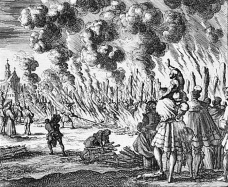
waldensiansLater persecution of the movement

 The poor of Lyon or the Waldensians, spread all throughout Europe with many thousands of adherents. They were also harshly persecuted. Many faced the inquisition. Many
were killed. They were forced to flee into the Alps to find refuge. This is a picture of the burning to death of some of them in  Toulouse in the 1200’s.

From 1487-1489 a Crusade of 18,000 troops was sent against them, to persecute and kill them.


I want to highlight – 

Several characteristics of faithfulness from Waldo’s life

But first let me say, you don’t have to die to be faithful. I don’t want to give the wrong impression with these stories of faithfulness. We all have to lose our lives in this world in various ways by giving them up to follow Jesus. But not all will be killed for their commitment. Waldo died a natural death.

Regarding his faithfulness, 1. His fearless preaching of the Gospel stands out. Jesus said in Matthew 28:19, “Go therefore and make disciples of all nations . . ..” In a time when it was assumed that everyone was a Christian, he preached and called all people to repentance. And when some tried to stop him, he accepted rejection and persecution to continue to do this. He is a model for us of zeal to reach out and share our faith in our much, much easier set of circumstances, where the biggest issues for us are shame, laziness or making time in our busy lives.

2. His rejection of wealth. Jesus doesn’t call all people to give up all their wealth like the rich young ruler or Waldo. But he does call all of us to reject wealth as the source of our security and comfort. This is God’s role in our lives. As Waldo quoted Jesus from Matthew 6:24 – “No one can serve two masters . . .You cannot serve God and money.”

Jesus also tells us all in Luke 12:33 – “Sell your possessions, and give to the needy.” We should all give of what God has blesses us with to help those who have needs. And we can also give sacrificially, even cutting into what we need (Mark 12:41-44). 

3. He obeyed Jesus simply and radically. It is Jesus’ purpose that we do everything that he teaches. As he said in Matthew 28:19, everyone who is baptized is “to observe all that I commanded you,” that is, all that he taught the apostles. As he says in Luke 6:46, “Why do you call me ‘Lord, Lord,’ and not do what I tell you?” We are called to obedience.

Waldo heard what Jesus said, he listened to the Spirit and he acted. He did not need any fancy explanations or pressure, or an inspiring message to act. And he certainly didn’t listen to any who would explain away what Jesus said. He read it and he acted on all that Jesus said.

And he obeyed Jesus even when it was very difficult, giving up everything he had and living off of the charity of others; even when  the authorities, even the church authorities, told him not to; even when it brought him persecution.

Let me end with a call to commitment. We all only have one life to live. Why not give it to Jesus fully and radically? Why not give it as a monument of your love and devotion to him? Why use it up on the mundane things of this world, especially accumulating wealth and trying to live comfortably? Don’t waste your life. It is a gift from God. Don’t let the distractions of this world and earthly pursuits take up your life so that you wake up one day and you are old and you haven’t served or loved God in dramatic ways. What will any of this life’s comforts mean in the context of the final day? Why not choose to do something great for God? Lift up your eyes to see greater things than just living life like everyone else is, or just being a nominal Christian. What is God calling you to do? Do you have the courage to follow him? It is never too late.

[A note: If Waldo did leave his wife behind and put his children in a convent, then this is problematic. Neither Luke 14:26, nor Matthew 8:18-22 condone functionally divorcing one’s wife and orphaning one’s children. Even though he provided for them financially he was bound by his marriage covenant to be with his wife (Matthew 19:4-6; 1 Corinthians 7:3-5) and as a father to raise his children. Although perhaps it is possible that he maintained some contact with his wife and children.]

*I have relied on Gabriel Audisio’s The Waldensian Dissent, and also John Driver’s Radical Faith, who in turn draws on Amedeo Molnar’s work.

William Higgins


Read Full Post »

We are jumping right back into the middle of a really intense encounter between Jesus and his opponents. As we saw last week it is actually a trial scene, at least an informal one.

In the Jewish legal system anyone can bring charges and they have accused Jesus of two things: 1) breaking the law by healing on the Sabbath and 2) making himself equal to God, which is blasphemy, and carries with it the death penalty. Jesus defends himself by claiming to be God’s unique agent who only does what his Father, who sent him, told him to do. (For more see – Why Jesus can heal on the Sabbath). 

Well, Jewish trials were based on testimonies, not investigative or detective work. And the one who had the most impressive or honorable witnesses usually won. And so in our passage today Jesus seeks to lay out the positive case for who he is through the use of testimonies.

Testimonies to Jesus

31If I alone bear witness about myself, my testimony is not deemed true. 32There is another who bears witness about me, and I know that the testimony that he bears about me is true.”

Jesus’ testimony refers to what he has just said about himself in vs. 19-30 regarding who he is and his relationship with the Father. He understands that they don’t accept his words as valid testimony (although they should since he is not an ordinary person 8:13-18).

But the Father bears witness to him. This is what Jesus means when he says “there is another who bears witness about me.” (The present tense here excludes this from referring to John’s witness which is all in the past tense below)

And he presents this as coming through three different avenues, in accordance with the Mosaic Law that says, “A matter must be established by the testimony of two or three witnesses” – Deuteronomy 19:15 (NIV).

1) The testimony of John the Baptist. 33You sent to John, and he has borne witness to the truth. 34Not that the testimony that I receive is from man, but I say these things so that you may be saved. 35He was a burning and shining lamp, and you were willing to rejoice for a while in his light.”

Jesus appeals to John for two reasons: 1) God sent John and spoke through him (1:6). And 2) they themselves went to hear John’s testimony, giving credit to it. They had some openness to John for a time, so Jesus is saying, “remember his testimony to me.”

John told them that the Messiah was in their midst. And he testified to Jesus’ exalted status. He called Jesus the “Son of God” (1:34). And he said, “after me comes a man who ranks before me, because he was before me” (1:30). Even though John was older than Jesus, the Son of God existed before John.

Jesus himself doesn’t need John’s witness because he knows who he is apart from this. But he hopes they will listen to him.

(That this is all in the past tense seems to indicate that John is either in prison or more likely already dead.)

2) The testimony of Jesus’ works. 36But the testimony that I have is greater than that of John. For the works that the Father has given me to accomplish, the very works that I am doing, bear witness about me that the Father has sent me.”

Works here refer to the miracles and healings that he is doing in their midst, and has just done in healing the man who couldn’t walk for 38 years. (Jesus’ “works” can be more broadly construed, as in 5:20 where it has to do with Jesus’ role on the final day in giving life and judging. But here seems to be focused on his signs, as in 9:3) (See 10:37-38; 14:11 for the witness function of his signs)

As the man born blind, but later healed by Jesus says in 9:32-34, “Never since the world began has it been heard that anyone opened the eyes of a man born blind. If this man were not from God, he could do nothing.” And as Jesus himself says in 15:24 he does “works that no one else did.” These testify to who Jesus is. 

3) The witness of the Father’s word. 37And the Father who sent me has himself borne witness about me.”

This refers to the witness of the Scriptures as we will see in a minute (below v. 39, 46-47). (This is not a new witness of the Father, but it is a testimony that he “has” borne to Jesus.) 

But first let’s note that all three of these testimonies establish that the Father sent Jesus – vs. 36, 37, 38; they establish Jesus’ point about who he is; he is God’s authorized agent.

Next Jesus says more about this last witness of Scripture, but he does so in the context of making –

Countercharges against his opponents

In a Jewish legal context, unlike our own, the one who began as a defendant can become a prosecutor of his accusers and successfully bring charges against them. And this is what Jesus does in this section; he turns the tables on his opponents.

Talking about Scripture he says, “His voice you have never heard, his form you have never seen, 38and you do not have his word abiding in you, for you do not believe the one whom he has sent.”

When he speaks of God’s voice and form he is talking about the giving of the Law or Scripture at Mt. Sinai. When God gave the Law the children of Israel heard God’s voice as a trumpet sound, and they saw him as a thick cloud with smoke and fire – Exodus 19:9-11; 16-20 (They didn’t see God’s form per se – Deuteronomy 4:12, but a visible manifestation in fire – 4:36; or his glory –  5:24).

But his opponents have neither heard nor seen God. They haven’t truly received God’s word.It is not abiding in them.

And he knows this by their outward actions – they do not receive “the one whom he has sent;” God’s Word in human form (1:1; 14).

39You search the Scriptures because you think that in them you have eternal life; and it is they that bear witness about me, 40yet you refuse to come to me that you may have life.” “Search” refers to diligent Scripture study, in this case of the Hebrew Bible or the Old Testament. And there is no doubt that his opponents studied the Scriptures carefully.

But they have missed the central point of Scripture. They have a wrong focus and so they have missed the witness of the Scriptures to Jesus, which is the central point.

Here’s an example of this witness, from just before in John 5:27,  Jesus identifies himself as the Son of man spoken of in Daniel 7:13-14 who receives dominion and glory on the final day.

Although they hope that by studying the Scriptures they will  have life, they will not, since they have missed the point; they have missed Jesus who is the one who gives life.

And then we come to their core problem. “41I do not receive glory from people. 42But I know that you do not have the love of God within you. 43I have come in my Father’s name, and you do not receive me. If another comes in his own name, you will receive him. 44How can you believe, when you receive glory from one another and do not seek the glory that comes from the only God?”

In contrast to Jesus, who doesn’t care at all about human praise but only seeks after God and loves God, they do not love God, but do care about human praise.

As was the custom in that day there was great regard for teachers – with various honors, rank and titles given to them. Jesus is saying that they are more than happy to accept these fellow teachers who come in their own name and they will exchange praise with one another. But when God’s unique agent comes, in the Father’s name, they reject him. Why? Because their desire is for human glory and not the glory of the one God. Their pride keeps them from listening to Jesus as he challenges them and corrects their understanding of Scripture. (See Matthew 23 for a similar critique.)

(The phrase in v. 44, “the only God” is a statement of the Shema that there is only one God – Deuteronomy 6:4. So whatever we say about the relationship of the Father and the Son, there is still only one God)

Then the focus comes back to Scripture. 45Do not think that I will accuse you to the Father. There is one who accuses you: Moses, on whom you have set your hope. 46If you believed Moses, you would believe me; for he wrote of me. 47But if you do not believe his writings, how will you believe my words?”

They have missed the witness of Moses to Jesus. A specific example of this comes from Deuteronomy 18:15-18. Here the Lord says to Moses, “I will raise up for them a prophet like you . . . and I will put my words in his mouth and he shall speak to them all that I command him. And whoever does not listen to my words that he shall speak in my name, I myself will require it of him.” God spoke through Moses of sending an agent like Moses, who would speak God’s words and the fate of all would rest on their listening to him.

Although they hope that Moses will defend them on the final day (his role as the intercessor for Israel in Scripture was thought to continue), he will actually accuse them. For he himself wrote of Jesus. But they have not truly believed Moses, which leads them to reject Jesus.

(Notice the correspondence between the Father’s “word” 5:38 and “my words” in 5:47 [an inclusion] as well as how the subtext of Deuteronomy 18:18-19 uses the phrase “my words” for God’s words. Also notice the agency language of this subtext,  including coming “in my name.”)

 A summary of Jesus’ charges:

1. They have not truly received or believed God’s word in Scripture  and Moses.

2. They have missed the point of Scripture and Moses, which is Jesus.

3. Their hearts are focused on seeking after human glory, so they receive those who come in their own name.

4. And this pride leads them to reject God’s promised agent, Jesus, who comes in the Father’s name. They think they know the Scriptures and won’t listen to him.

And in rejecting Jesus they show that they have (or already had) rejected God. Because to reject an agent is to reject the one who sent him.

Some challenges for us

Do you accept who Jesus claims to be? As we saw last week, he is God’s agent. He only does and says what the Father tells him to do and say. He is the one who fully and truly reveals God (1:18). And he is testified to by John the Baptist; the works of Jesus recorded for us; and the word of the Father in the Scriptures.

Do you accept him for who he is? And if so, do you live your life like this is true, according to his words and example? This is the true test of what you believe about Jesus.

Don’t miss the point of Scripture. You can know everything there is to know of the details of Scripture – it background, various theories of composition, what this or that scholar says about any topic – but still miss the point and find no life.

Jesus is the point of Scripture. The Old Testament points to him, which is what Jesus is talking about, and now the New Testament presents him and points back to him. And it is when we see and know Jesus in the Scriptures that we find the life that the Scriptures can give.

Beware of teachers who seek human glory. Those who are seeking human praise are too proud to truly hear and receive from God. They are busy hearing and receiving praise from others.

Whether it is in popular Christian culture with teachers exalting themselves in various ways, or in Academia with its culture of giving and exchanging glory with one another with various ranks and titles – these are not the teachers to listen to. Look for teachers who love God and seeks after the glory that comes from God alone.  They are the humble ones that labor seeking no recognition. These are the ones who receive from God and can teach you the word.

Let’s learn from Jesus’ love for his enemies. They are actively seeking to kill him, making capital charges against him. But he shows his love for them. He certainly speaks the truth to them, calling out their sin. But he does this out of love. In 5:34 he says, “but I say these things so that you may be saved.” Wow! They are trying to kill him and he is trying to bless them with salvation.

May we also love our enemies, even when they make wrongful charges against us and seek to harm us.

William Higgins


Read Full Post »

Last week we covered the healing of the man who couldn’t walk. In an amazing display of power, Jesus healed him. But he did so on the Sabbath. And when the authorities found the man who had been healed, he turned Jesus in. This story sets up what we are looking at today, which begins with –

An overview of the prosecution and Jesus’ defense – 5:16-18

16And this was why the Jews were persecuting Jesus, because he was doing these things on the Sabbath.”

The Jews here interpret Jesus’ healing as work and therefore forbidden on the Sabbath. To save a life was allowed, but if the healing could wait until after the Sabbath, it should wait (see Luke 13:14)

The phrase “doing these things” indicates that Jesus has healed on the Sabbath more than once, although John hasn’t narrated this.

Persecuting can also be translated “prosecuting.” And indeed, this is a trial scene. An informal one, but still the beginnings of Jesus’ later, formal trial.

In a Jewish setting anyone could act as a prosecutor. If the Law was being violated you bring charges against the person by confronting them. This is what is going on here. The case would be decided by witnesses both for or against the defendant – eventually before a judge. (Ben Witherington)

17But Jesus answered them, ‘My Father is working until now, and I am working.’”

“Answered,” both here and in v. 19 can have legal overtones (it is in the middle voice). Jesus is giving a defense to charges made against him. Jesus appeals to common agreement among Jews that God works on the Sabbath. He rested after creation, but continues to sustain the creation. Among other things, since people are born on the Sabbath and only God can give life, God gives life on the Sabbath. And also since people die on the Sabbath and only God attends to their fate, God exercises judgment on the Sabbath.(Raymond Brown)

In this case Jesus has given life on the Sabbath. But he is applying a justification for divine work, to himself. “My Father is working until now, and I am working.” This raises deeper issues about his relationship to God.

18This was why the Jews were seeking all the more to kill him, because not only was he breaking the Sabbath, but he was even calling God his own Father, making himself equal with God.”

So now there are two charges against Jesus . According to them 1) he is breaking the Sabbath, and 2) he is making himself equal to God, grasping after God’s role and glory – which is blasphemy (10:33). [Again, in terms of the first charge, Jesus often contradicted the traditions of the Elders (Mark 7) but he does not break the Sabbath. He is not a Mosaic law breaker or sinner (8:46); he does not annul the Law (10:35)].

The latter charge they see as confirmed in that he calls God “his own Father.” He is claiming a unique relationship with God, which is, in their view, inappropriate.

Jesus’ detailed defense – 5:19-30

This is an amazing speech by Jesus. From the handout you can see its parallelism and symmetry. But also there is an intricate intertwining of themes, as well as an astonishing concision – saying so, so much, in so few words. We will go through by theme, not verse by verse. Let’s begin with the second charge having to do with Jesus’ relationship with the Father because this one explains the first, his work on the Sabbath.

One way to say it, is that Jesus is God’s unique agent. An agent is an authorized representative who speaks for and carries out the sender’s will. In Jewish thought “a person’s agent is as himself.” (See m. Ber. 5.5). So he is to be accorded the honor that is due to the sender. To accept an agent is to accept the sender and to reject the agent is to reject the sender. Often the eldest son would act as a father’s agent, for instance in various business transactions.

That Jesus is God’s agent shows up in a number of ways here: In the Father, Son language in this passage; in that Jesus is sent by the Father (v. 23; 24; v. 30); in the note that those who reject the Son reject the Father (v. 23); and in the phrase the Son of Man (v. 27) who is God’s agent of judgment and rule on the final day in Daniel 7:13-14.

And it is clear in that the Father gives or delegates to the Son his own powers or tasks. And these are the very ones talked about above, that God does on the Sabbath:

  • The Son gives life. v. 26 – “For as the Father has life in himself, so he has granted the Son also to have life in himself.” And as v. 21 says, “the Son gives life to whom he will.”
  • The Son exercises judgment. v. 26 – “and he (the Father) has given him (the Son) authority to execute judgment.”

And both of these powers are exercised now and on the final day. In terms of now Jesus says in v. 24 “Truly, truly, I say to you, whoever hears my word and believes him who sent me has eternal life. He does not come into judgment, but has passed from death to life.” This is referring to receiving eternal life and salvation now by faith. [Jesus judges now (and on the Sabbath) in that when people reject him they are judged – John 3:18-21.]

In terms of the future Jesus says in vs. 28-29 – “ . . . an hour is coming when all who are in the tombs will hear his voice and come out, those who have done good to the resurrection of life, and those who have done evil to the resurrection of judgment.” This is talking about the final day.

(This picture of an apparently simultaneous resurrection of the good and evil is in accord with Daniel 12:2.) (Also v. 25 should be taken as a reference to the final day. This has to do with all the dead coming alive, not some who hear and believe. The phrase “is now here” refers to his soon coming death and resurrection which is the beginning of the final day. So it is brought near.) 

And Jesus testifies that he is a good and faithful agent, or Son of his Father.

– With regard to healing or giving life he says in v. 19 – “. . . the Son can do nothing of his own accord, but only what he sees the Father doing. For whatever the Father does, that the Son does likewise.”

– And with regard to judging he says in v. 30 – “I can do nothing on my own. As I hear, I judge, and my judgment is just, because I seek not my own will but the will of him who sent me.”

In v. 20 Jesus says, “the Father loves the Son and shows him all that he himself is doing.” This is a continuous revelation of the Father’s will to him, so there is no danger that he is out of touch with God. He is the ultimate agent and Son, fully obedient to the mission he has been sent to fulfill.

So Jesus doesn’t make himself God. He is not exalting himself or grasping after a status. He is rather completely subordinate to the Father only doing what he says, and receiving what the Father gives him in terms of giving life and judging. But precisely by being subordinate, he becomes equal to God by being and doing what only God is and does. Because it is the Father’s will to make him equal.

In answer to the charge: He does not make himself anything. It is the Father who makes him equal. The Son subordinates himself to the Father, but the Father lifts the Son up. So, if you think about it, Jesus is both subordinate to the Father and equal with the Father at the same time, the first by his own doing, the second by the Father’s doing.

Jesus doesn’t dishonor God in is claims about his relationship with the Father. Rather they dishonor God in rejecting him. As he says in v. 23 – “Whoever does not honor the Son does not honor the Father who sent him.” They are rejecting God’s authorized agent, which is a rejection of him.

[Also in v. 23 we learn that the Father’s purpose is “that all may honor the Son, just as they honor the Father.” Notice the “just as.” We are to honor and worship the Son just as we honor and worship the Father. This is part of how the Father raises up and exalts the Son as his equal.]

Then we come to the first charge and Jesus’ healing on the Sabbath. In John 7:21-23 Jesus refers back to this same miracle and defends it by saying that making a person whole on the Sabbath is lawful. (It is in keeping with the allowance of circumcision on the Sabbath. If you can make one member of the body whole on the Sabbath, why not the whole person?)

But here his defense is clearly focused on his identity; who he is. Jesus is God’s authorized agent; He is God’s Son. And so just as God gives life on the Sabbath, Jesus also gives life on the Sabbath.

As v. 19 says, speaking of the healing, “The Son can nothing of his own accord, but only what he sees the Father doing. For whatever the Father does, that the Son does likewise.” In other words, it was the Father’s will to heal this man and so Jesus, as God’s agent, healed him.

And as he says in v. 20 they will marvel at greater works than a healing on the Sabbath. He says in v. 28 “do not marvel at this,” marvel that the Son will one day raise the dead. Yes, as God’s agent he told one man to rise up and walk, but on the final day, as God’s agent, he will raise all the dead.

To those who can accept and believe that Jesus is God’s agent, then all this makes perfect sense. For the Jewish leaders who did not accept this, Jesus comes across as a lawbreaker and a blasphemer. As we will see next time, Jesus puts forward his positive case in vs. 31-47, as well as bringing counter charges against his opponents.

Let’s end today with – 

Some challenges for us

1. Do you accept that Jesus is God’s agent? Almost everybody likes Jesus.. But they usually pick and choose what they like and then fill the rest in with what they think is right. A little of Jesus and then a little (or a lot) of what I think is right.

But Jesus is claiming here to be the authorized representative of God. What he says is what the Father says. What he does is what the Father does. There is no separation between Jesus and the Father. As John 1:18 says, “No one has ever seen God; It is God the beloved (the Son) who is at the Father’s side, who has made him known.”

Do you accept Jesus’ claim to fully and perfectly make know the Father? And then do you live your life  by his words and example?

2. Have you received the life that Jesus gives? Jesus said in v. 24,  “whoever hears my word and believes him who sent me has eternal life. He does not come into judgment, but has passed from death to life.” You can receive, right now, the life that Jesus gives. It is not something that comes later. Jesus gives eternal life now by faith. Do you believe? Will you receive the gift that the Father gives through his Son?

3. Are you ready for the final day? As Jesus said, the day is coming “when the dead will hear the voice of the Son of God, and those who hear will live” (v. 25). Indeed “all who are in the tombs will hear his voice and come out, those who have done good to the resurrection of life, and those who have done evil to the resurrection of judgment” (vs. 28-29).

We will be judged by our deed. This is the consistent teaching of Scripture. That’s because our deeds truly reveal what is in our hearts, whether we have faith in God and have been transformed by his gift of grace and life. Will you be raised to the resurrection of life?

William Higgins

Read Full Post »

Easter so clearly proclaims the Christian message – Jesus is raised from the dead and he has provided for us a great hope of resurrection life in the world to come. And this is a time when we gather and sing and celebrate this great truth.

But the question I am asking this morning – Do you really believe in the resurrection? – has to do with whether this belief in our minds makes itself evident in our actions.

Let’s turn to-

1 Corinthians 15

In this passage Paul argues against some Christians who were saying that there is no resurrection.

  • In vs. 1-5 Paul reminds the Corinthians that the gospel he preached and that they believed is based on the resurrection – the resurrection of Jesus.
  • In vs. 12-20 Paul states that if there is no resurrection this means that Christ is not raised, and so our faith is in vain. It also means that we are still in our sins, and so there is no salvation.
  • And then in vs. 30-32 he makes the argument that I want us to look at. Let’s read these verses:

vs. 30-32 – “And why are we putting ourselves in danger every hour? I die every day! That is as certain, brothers and sisters, as my boasting of you—a boast that I make in Christ Jesus our Lord. If with merely human hopes I fought with wild animals at Ephesus, what would I have gained by it? If the dead are not raised, ‘Let us eat and drink, for tomorrow we die.'” (NRSV)

I want to turn this passage around and make Paul’s point in reverse. Paul’ point is that if the dead are not raised, why would Christians be willing to give up their lives in this world? He references his own experience as he talks about being in constant danger and fighting with wild beasts in Ephesus. If this life is all there is they should all be out living it up, enjoying this life, because it’s all anyone has.

So he argues from their current behavior back to a belief that sustains that behavior. He’s saying, it’s our belief in the resurrection that allows us to give up our lives in this world – because there is another, better world to come.

My point moves from a belief in the resurrection to the kind of life that such a belief should produce in our actions and choices. Since we believe that there is a resurrection, we are free to give up our lives in this world. This life is not all there is and what is to come is better. So we don’t need to cling to our lives in this world.

Our belief in the resurrection and new life in the world to come gives us a whole new outlook on this life, which should reorient our everyday decisions. I call this a resurrection perspective. We are not to live for this life, but for the next.

This resurrection perspective is truly liberating

It sets us free to serve God in bold new ways. For instance, 1. We can give up pursuing our own dreams in this world. We can give up our own ambitions; all the things that we seek to find meaning and worth in life.

Maybe your dream is about having a family and enjoying life with them all your days. Or maybe it’s being with your friends and living life with them. Maybe it’s gaining more and more wealth, or making a name for yourself or finding “fulfillment” in life – making of yourself all that you can.

We can give this all up and follow God wherever that may take us. We can let God’s will for us be our dream, our ambition, our meaning – making everything else secondary or even setting them aside to do God’s will.

Paul says in Philippians 3:8 in the context of the resurrection, “I have suffered the loss of all things.” He gave up everything for Jesus.

Paul was not bound by fear of the loss of his own dreams and ambitions connected to this life, because this world is passing away and another is coming that is better than our best earthly dreams.

Belief in the resurrection set him free so that he could pursue God’s call on his life wherever that took him.

Another example of the liberating power of belief in the resurrection is that 2. We can give up being comfortable, secure, and settled in this world. We can give up having all that we want, just like we want it; living life like we always have, where we want to live.

Rather we can endure hard times and suffering in this world in obedience to God’s will. Paul in 2 Corinthians 11:23-27 talks about his many “imprisonments . . . countless beatings, and (how he was) often near death.” He says, “Five times I received at the hands of the Jews the forty lashes less one. Three times I was beaten with rods. Once I was stoned. Three times I was shipwrecked; a night and a day I was adrift at sea; on frequent journeys, in danger from rivers, danger from robbers, danger from my own people, danger from Gentiles, danger in the city, danger in the wilderness, danger at sea, danger from false brothers; in toil and hardship, through many a sleepless night, in hunger and thirst, often without food, in cold and exposure.”

He was not bound by the fear of loss of earthly comfort, security and settledness, because his true comfort and security is waiting for him in the world to come. As he says in 2 Corinthians 4:17, “this slight momentary affliction is preparing us for an eternal weight of glory beyond all measure.”

Belief in the resurrection set him free to obey God radically, even if it means that suffering for doing Gods’ call, will be a part of this.

3. We can literally give up our lives in this world. We can obey God even when others threaten to take away our lives for doing it.

In 2 Timothy 4:6 he says, “For I am already being poured out as a drink offering, and the time of my departure has come.” And indeed he was killed for his faith.

He was not bound by the fear of death. Because he has a life in the world to come he doesn’t’ need not cling to his earthly life.

Belief in the resurrection set him free to obey God boldly, even if that means dying for Jesus.

Now, Paul said that “he dies daily” in v. 30. What he means is that he is prepared to lose all these things each day – earthly dreams, comforts and his own life. And he can do this because there is a resurrection.

What about you?

Do you really believe in the resurrection? Does it show up in your everyday life choices?

When others look at your life, do they see you living like this world is all there is? Do they see you chasing after the good things of this life, wanting more and more, and guarding against the loss of what you already have? In other words, living like everyone else?

Or do they see you living for the world to come? Do they see that you are free to serve God boldly and sacrificially, making life decisions based on your faith in the God who raises the dead, and doing things you would never do unless there was a resurrection?

We can all say what we want this morning, as we sing and talk about the resurrection. But if it doesn’t affect how we live, it’s meaningless.

This is the challenge I leave with you – let’s live our lives like we really
do believe in the resurrection.

William Higgins

Read Full Post »

Series: Jesus and the Samaritan Woman

We’ve been looking at the story of Jesus and the Samaritan woman and the conversation they had, recorded for us in John 4

It moves from the depths (Jacob’s well) to the heights (Mt. Gerizim). It is certainly spirited at times, especially in relation to the differences between Jews and Samaritans. She challenged Jesus with several questions: Why would you, a Jew, ask me to give you water? Are you better than Jacob? Which is the right mountain to worship on? And she raised these divisive issues knowing that they could cut off the conversation.

Although Jesus for his part is clear that the Jews are right on the old issues that divided them,  he invites her to be a part of the new thing that God is doing through him, which transcends the old arguments between Jews and Samaritans.

The conversation also is operating on different levels at points:

• She was focused on which was the better source of water – Jacob’s well or this new well that Jesus seems to be talking about. But Jesus was talking about the living water of the Holy Spirit.

• She was focused on which was the right mountain to worship on – Gerizim or Zion. But Jesus was talking about worshiping in the Holy Spirit and truth.

The conversation also turns on veiled and unveiled identities. For her part, she tried to hide her identity, at least when it came to her personal life. She told Jesus, “I have no husband.” But Jesus revealed her personal story; she has had five husbands and the one she now lives with is not her husband.

For Jesus’ part, his identity is veiled to her at the beginning of the conversation. He says, if you knew who I was you would ask me for living water. But by the end of the conversation, Jesus unveils his identity to her. He says to her in the clearest way possible that he is the Messiah or Christ.

And this is where we pick up the story today in –

John 4:28-42

“28So the woman left her water jar and went away into town and said to the people, 29‘Come, see a man who told me all that I ever did. Can this be the Christ?’ 30They went out of the town and were coming to him.”

The woman is so captivated with Jesus and the revelation of his identity that she sets aside the whole reason she had come to the well in the first place – in order to tell others about Jesus.

She invites those in her city to “come and see.” This is the same phrase that Philip used in chapter 1 when he spoke to Nathaniel. She is taking up the part of a disciple and a sower of the gospel.

When she talks about Jesus as the one “who told me all that I ever did,” well, this is an overstatement. Her whole life was not her various relationships with men. But you can understand her amazement. This was miraculous.

She asks somewhat cautiously, “Can this be the Christ?” The hesitancy isn’t due to unbelief, but because of her lack of standing in the community. She is not exactly an ideal witness given her moral life. So she invites them to evaluate the issue for themselves – Can he be the Christ? As we will see at the end (vs. 39, 42), the people take her words as a positive testimony to her faith in Jesus.

What happens next is that this scene in Sychar moves to the background, and Jesus’ conversation with his disciples at the well moves to the foreground. Jesus is preparing them for the Samaritans that are coming to him. As it says in v. 30 – “they were coming to him.”

Delmar and Harold will cover this material. As you can see from your handout, there are two parts to it, and Delmar will now teach us about the first part.

[Delmar Lehman] Vs. 31-34 say, “Meanwhile the disciples were urging him, saying, “Rabbi, eat.” 32 But he said to them, “I have food to eat that you do not know about.” 33 So the disciples said to one another, “Has anyone brought him something to eat?” 34 Jesus said to them, “My food is to do the will of him who sent me and to accomplish his work.”

Let’s take a look at some of the significant points of these verses. In v. 31 the disciples want Jesus their teacher to eat. This may seem a little strange to us, but it was the job of the followers of the teacher to take care of the food and lodging of their teacher. They were really just doing their duty. They knew Jesus was tired and probably hungry from travel (v. 6). He has sent them into town to get food. We also know that he was thirsty because he asked the woman at the well for a drink.

In v. 32 Jesus suddenly announces that he is refusing the food they have brought and states that he already has food. Teachers at this time used food as metaphor for spiritual food. We see this in a couple of places. When Ezekiel was called to be a prophet, he is told to eat a scroll. And Jeremiah 15:16 says, “Your words were found and I ate them, and Your words became for me a joy and the delight of my heart; for I have been called by Your name, O Lord God of hosts.” This metaphor was a common thing.

In v. 33 the disciples are obviously perplexed. Like the woman a couple verses earlier, they immediately respond in the natural thinking of literal food. They question where Jesus could have gotten food from (this was their job). I believe Jesus was a normal guy. He was not always going around quoting Scripture. While they were walking they were probably talking about the basketball games from the night before. Just when they think they are ready to eat, Jesus says he’s full. (In fact, we never hear that Jesus ever gets anything to eat or drink.) But Jesus is setting the stage for a teaching moment for his disciples. This is one of the only times in the first part of the book of John where he does this.

In v. 34 Jesus begins the real teaching; the real point. There are several things that I see as important. First Jesus uses the metaphor that food is required for work. In physics, work from energy is measured in calories. That’s why when you look at the back of a box or a bag you look for what? How many calories are in it. So food is required for work – the question is the kind of food.

Next we see that Jesus is performing the will of the sender. Jesus is saying I get filled by doing what God has for me to do. Jesus knows his mission; the Samaritans are on their way. Notice that he doesn’t say God’s will or the Father’s will but the Sender’s will. He says this in other places: John 5:30 – “I can do nothing on My own initiative…., because I do not seek My own will, but the will of Him who sent Me.” And also in John 6:38 – “For I have come down from heaven, not to do My own will, but the will of Him who sent Me.” Jesus makes it very clear that he was sent for a purpose and it has nothing to do with him, but it has to do with the will from the Sender.

And we see here Jesus’ devotion to God’s work. What is God’s work? God’s work is creation, sustaining creation, and ultimately redeeming creation. If God’s work needs done eating (natural food) will have to wait. This is referred to in Deuteronomy 8:3 – “He humbled you and let you be hungry, and fed you with manna which you did not know, nor did your fathers know, that He might make you understand that man does not live by bread alone, but man lives by everything that proceeds out of the mouth of the Lord.” If you remember, this is the same passage Jesus used when being tempted in the wilderness. So when Jesus is hungry, the Sender’s will become more important than eating. His hunger turns into spreading the good news. His work is the harvest.

Harold is going to come now to talk more about the harvest.

[Harold Metz] “35Do you not say, ‘There are yet four months, then comes the harvest’? Look, I tell you, lift up your eyes, and see that the fields are white for harvest. 36Already the one who reaps is receiving wages and gathering fruit for eternal life, so that sower and reaper may rejoice together. 37For here the saying holds true, ‘One sows and another reaps.’ 38I sent you to reap that for which you did not labor. Others have labored, and you have entered into their labor.”

Let’s take these verses one at a time. Two things from v. 35. First, Jesus is quoting a Jewish proverb ‘There are yet four months, then comes the harvest’. He quotes this to contrast it with the current situation that he and the disciples are in. Normally you invest time in sowing and then there is a delay before the harvest.

Second, when he says, “the fields are white for harvest” – white can be interpreted as ripe; and barley looks white when it’s ready to be harvested. Another interesting thing is that modern day Samaritans are known for wearing white, and it’s possible this was also the case in Jesus’ day, so that literally a crowd dressed in white is coming toward him and the disciples. This is not a certainty but it is possible.

In v. 36 I would point out that the use of the present tense and the word “already” might be a bit confusing. Who is right now reaping and receiving wages? Jesus seems to be using “already” and the present tense as hyperbole to emphasize the fact that the Samaritans are almost here. It’s like when the pizza guy is coming up the sidewalk but is still not at the door, but you say, “he’s here” – but he’s not literally at the door yet. The disciples are right on the cusp of what is about to happen; its already going on. There’s no time to eat the food the disciples brought.

Also in v. 36, who are the sowers and who are the reapers? Sowing has to do with the initial investment of sharing the gospel with someone. Jesus has sown the word to the Samaritan woman and the Samaritan woman has sown her testimony to the other Samaritans. The reapers are the disciples (see v. 38).

And then, what are the wages and fruit? Gathering fruit refers to bringing the Samaritans into God’s kingdom. The wages have to do with the blessings from God for doing His work.

We will take vs. 37-38 together because they have one basic idea. Jesus quotes another Jewish proverb, ‘One sows and another reaps.’ This proverb is similar to the situation that Jesus and the disciples are in, whereas the first proverb pointed out a contrast. Often, to accomplish God’s work multiple people are involved. This is a reoccurring pattern in the Bible. See Hebrews 11:13. For instance Moses brought Israel out of Egypt but he didn’t take them into the promised land. Joshua did this; this was his role. We all have different roles, and no one person can accomplish everything.

Finally, the past tense in verse 38 has a similar affect to the use of the present tense in verse 36. When Jesus says, “I sent you” and “you have entered into” the labor of others, he means that this is about to happen and it is so close that he can speak of it in the past tense.

Next, the background comes to the foreground as the Samaritans come to Jesus and they are all together. William will talk about this.

“39Many Samaritans from that town believed in him because of the woman’s testimony, ‘He told me all that I ever did.’ 40So when the Samaritans came to him, they asked him to stay with them, and he stayed there two days.”

They are impressed by her testimony of a miracle,  his knowledge of her life, and believe. And as was customary in that day they sought to provide hospitality for Jesus and his disciples. So Jesus stayed there with them for two days.

“41And many more believed because of his word. 42They said to the woman, ‘It is no longer because of what you said that we believe, for we have heard for ourselves, and we know that this is indeed the Savior of the world.’”

When they say to the woman it’s no longer because of you that we believe – it’s not a put down. It’s just a comment on the importance of Jesus and meeting him for themselves. Their faith has moved from her testimony about a miracle to a direct encounter with Jesus, which confirmed her testimony as true. And everyone at some point has to move from someone’s testimony about Jesus to encountering Jesus in person for themselves. This is a part of the Christian journey.

The title, “Savior of the world” was used for Roman emperors. In fact, this whole scene is quite similar to how a city would welcome an emperor. They come out of the town to meet him, escort him back into town and then host him for a time.

This title also emphasizes that though “salvation is from the Jews” (v. 22) it is for everyone (v. 42). He saves Jews, but also Samaritans, and also women, and also those whose lives are messed up and burdened with failures. He saves people like you and like me.

Let’s end with –

Some lessons on being a part of God’s mission

– that we learn from this passage

1. The Father sent Jesus, and Jesus sends us. In v. 34 Jesus speaks of “him who sent me,” referring to the Father. Jesus is very conscious of being sent by the Father and talks about it a lot, and he is very focused on completing God’s mission and work in this world. But Jesus will go away back to the Father.

And this is why he also sends us. In v. 38 he says to the disciples “I sent you.” We now fill the role of Jesus; we represent him, just as he represented the Father. And it is now our job to complete the mission and work of the Father in this world. That is the purpose of the church and God has given each one of us roles to fulfill personally to make this happen. Do you know what your role is? How are you doing?

2. The priority of God’s mission. We see Jesus’ absolute devotion to God and his will in this passage. Although weary, thirsty and hungry, he sets aside his personal needs in order to do God’s work.

Now, this was a bit of an unusual situation. Here there is not time between sowing and reaping, but the point is that he was willing to do this because his true food is doing God’s will and completing his mission.

What priority does God’s mission have in your life? What is your level of devotion to doing God’s will and accomplishing his mission? Is your food to do God’s will? Jesus is our example here.

3. You too can share about your encounter with Jesus. The woman simply shared her experience with Jesus. And if you have been touched by Jesus you are fully qualified to share as well; to sow seeds into the lives of others.

You don’t need to have a set of arguments lined up. You don’t need to have all the answers. All you need to do is share your experience with Jesus. This is your testimony, and others can listen or not listen.

4. It’s a team effort. In this case, Jesus and the woman did the sowing, and now the disciples are involved in the reaping.

We are all working on a team and we all, as Jesus said, enter into the labor of others.

• This is true personally in that we have different gifts and roles in the work of God.

• And it is true between churches. For sometimes others sow seeds and then people come here and are harvested. And sometimes we sow seeds and people go somewhere else and are harvested.

But we are all a part of the work of God and God uses all of us to fulfill his mission.

5. Be alert to the opportunities around you

Jesus said in v. 35, “lift up your eyes, and see that the fields are white for harvest.” Now he is talking about a specific situation here. This won’t always be the case, but yet there they were concerned about food and were unaware of what was happening around them.

And we too can be caught up in the normal routines of life, unaware that there are those around us who are ready for harvest. And so we need to “lift up our eyes, and see.”

Along these lines, how did this week go for you? Did you have any divine appointments? What would you share this morning with the congregation?

William Higgins, Delmar Lehman, Harold Metz


Read Full Post »

« Newer Posts - Older Posts »