Feeds:
Posts
Comments

Posts Tagged ‘judgment’

We are looking again at the letters to the seven churches in Revelation 2-3. Today we look at what Jesus has to say by the Spirit to the church in Pergamum – and also to us.

Pergamum was 68 miles north of Smyrna; its modern day name is Bergama. It was once the center of its own independent kingdom. It had a huge Library. At one time, it was the 2nd largest in the ancient world with 200,000 books. It was also well known for its Aesculapium, which was dedicated to the god of healing. It was a large complex. Something of a mix of a hospital and a spa. Many who were sick came here for help.

Pergamum was long a Roman ally. It was the first city to erect a temple to a living Emperor – Augustus in 29 BC. It was a real center for Emperor worship, which we have talked about before. It was also the place where Roman judicial proceedings took place.

The situation in Pergamum

The believers here have suffered. Jesus says in v. 13, “You hold fast my name, and you did not deny my faith,” talking about a time in the near past.

This language of “holding fast my name” and “not denying my faith” has to do with persecution. When they were put on the spot they did not denounce Jesus or give up their faith. They remained faithful. As Jesus talked about in Matthew 10:32-33, if we acknowledge him before others in times of persecution he will acknowledge us before the Father. But if we deny him, he will deny us.

Jesus even mentions a specific person: “Antipas my faithful witness, who was killed among you.” – v. 13. This word “witness” in Greek is “martyr.” He witnessed to Jesus by dying for him. He remained true unto death.

We also see that they live in a hostile environment. Jesus says in v. 13, “I know where you dwell, where Satan’s throne is . . . where Satan dwells.” This most likely refers to two realities:

1) The strong promotion of Emperor worship in Pergamum. This was required of all citizens at this time as a test of loyalty. Basically lighting incense to the genius of the Emperor and then you got a certificate. There were also games & festivities in honor of Caesar, and sacrifices and feasts from the meat of the sacrifices which were given out free by wealthy patrons. And eating meat was a rarity in that day so this would have been a real draw for poorer people.

2) Pergamum was where the Roman authorities judged cases. So if you were denounced, or exposed as a Christian; as someone who wouldn’t acknowledge Caesar as a god, but confessed Christ as the Son of God – this is where you would be taken to be judged.

So the potential for suffering here would have been great. They were living right in the shadow of the oppressive Roman persecutors. And this is the only letter that mentions someone dying for their faith – Antipas.

There is a complicating factor in the mix here, false teaching which is related to their suffering, as we will see. In v. 14 Jesus says, “But I have a few things against you: you have some there who hold the teaching of Balaam, who taught Balak to put a stumbling block before the sons of Israel, so that they might eat food sacrificed to idols and practice sexual immorality.”

The story of Balaam is told in the book of Numbers. The specific story comes from Numbers 25:1-3 (also 31:16). The Moabite King Balak wanted to destroy Israel. He couldn’t get Balaam to curse them, but Balaam gave Balak the idea to cause the Israelites to stumble through sexual immorality and eating food offered to idols. In other words, Israel can’t be defeated. But if you cause them to sin, then God will reject and destroy them. And indeed, there was a great plague for their sin and many Israelites died.

Jesus says in v. 15, “So also you have some who hold the teaching of the Nicolaitans.” We encountered these in Ephesus as well. Apparently they are the same as those who hold to the teaching of Balaam.

Their teaching was that you can participate in the festivities of worship for Caesar. Their message is that it is no big deal. Maybe, this isn’t really idolatry, or maybe – the Emperor knows he isn’t a god, its just a civic ceremony. Why suffer over such a small thing? And hey, there’s free meat!

  • you can light the incense
  • you can get your certificate
  • you can eat the meat

And most importantly, you don’t have to suffer!

Jesus’ message to them

It is wrong to worship the Emperor – v. 14. If you do . . .

  • You are following a false prophet, like Balaam in the Old Testament.
  • You are stumbling. That is, sinning.
  • You are eating food sacrificed to idols which is a breaking of the first and second of the ten commandments.
  • You are practicing sexual immorality. This is most likely figurative, since there was nothing sexual involved in Emperor worship. This is a common idea in Scripture. When you worship idols, you are committing adultery by being unfaithful to God; you are playing the whore (Jeremiah 3:6).

Jesus is asking fundamentally, ‘Am I Lord, or is Caesar Lord?’ They had to decide. If Jesus is Lord, then you cannot participate in activities that proclaim someone else as Son of God and Lord.

Finally, Jesus says that such behavior will bring judgment, just as with Israel in Numbers 25 where a great plague came on the people because of their sin. He says in v. 16, “Therefore repent. If not, I will come to you soon and war against them with the sword of my mouth.”

There is sword theme in this letter. It begins in v. 12 when it describes Jesus in this way – “The words of him who has the sharp two-edged sword.” And in v. 16 it indicates that Jesus will come and judge the false teachers who lead his people astray with this sword.

Jesus speaks to us

v. 17 says, “He who has an ear, let him hear what the Spirit says to the churches.” Notice again the plural. Jesus’ words to the church in Pergamum are also words for us. And we need to have ears that hear his words.

1. Don’t worship idols. We may think there aren’t any anymore, but there are lots of idols today. Jesus tells us wealth can be an idol in Matthew 6:24. And money even has images on it. In our culture we worship celebrities. We give them our money, time, and devotion. We even hang up images of them; posters and pictures.

We must remember that God is a jealous God; and Jesus is a jealous Lord. And when we inappropriately honor and serve these, we are like prostitutes, or adulterers. And we will be judged by God. As Jesus says here in v. 16, “Therefore repent. If not, I will come to you soon and war against them with the sword of my mouth.”

2. Specifically we have to beware of inappropriate demands for political allegiance. This doesn’t just happen in the Roman empire or say, Hitler’s Germany. Whenever political leaders ask us to put our trust in them for our security and peace; when they ask us to do what Jesus forbids – they place themselves as idols in opposition to God. And they force a choice upon us: Do we obey the human authority or our Lord Jesus? The answer is found in the words of Peter in Acts 5:29. “We must obey God rather than men.”

3. Don’t listen to those who tell you to just fit in with the world. It’s easier to fit in and go along with the crowed. Why cause trouble? It isn’t that bad. And so we conform to the world’s sexual practices, lack of integrity, business ethics, gossip, pride, etc..

James 4:4 says, “You adulterous people! Do you not know that friendship with the world is enmity with God? Therefore whoever wishes to be a friend of the world makes himself an enemy of God.” Again, the image of religious adultery. A friend of the world is an adulterer and an enemy of God.

4. Sin will bring us judgment and defeat. Jesus speaks of a stumbling block here. The idea is that you are on the right path and want to stay on it, but someone puts something in your way so that you trip and fall off the path.

This is what Balaam did with ancient Israel. And this is what the Nicolaitans were doing with their teaching in Pergamum. And it is the devil’s strategy as well.

We too can’t be defeated if we stay on the path. But if we fall into sin through stumbling blocks, we can be defeated. So Satan sends us many opportunities to stumble. And Jesus sternly warns us in Mark 9:43, “if your hand causes you to sin, cut it off. It is better for you to enter life crippled than with two hands to go to hell, to the unquenchable fire.” Whatever causes us to stumble, we must cut off to avoid sin and judgment.

_______________

As we end lets remember Jesus’ words of encouragement for faithfulness: v. 17 – “To the one who conquers I will give some of the hidden manna, and I will give him a white stone, with a new name written on the stone that no one knows except the one who receives it.”

These are gifts that God will give us at the time of the resurrection. May God help us to be among those who overcome and thus receive these gifts.

William Higgins
Read Full Post »

We’re looking at the gospel, that God is doing something new in the world. And how God invites each of us to be a part of it. And the first way to do this is to . . .

1. Believe

Now, it’s obvious enough that something is wrong with the world. We see it every day, evil, injustice, suffering and death. And we don’t just see it, we experience it ourselves. Its in the news headlines all the time: wars, murders, theft, hunger and oppression. Human suffering is all around us.

But Jesus came with good news. God has begun to act through him to make all things new! He said, “The time is fulfilled, and the kingdom of God is at hand . . . ” – Mark 1:15. Jesus is saying, its begun; and its begun with my coming.

And God confirmed that he was right:

  • God worked through Jesus’ ministry in amazing ways to manifest the kingdom, through healings, the casting out of demons and transformed lives.
  • And God raised Jesus up from an unjust death and made him Lord of all things.

God’s kingdom has begun with Jesus – his ministry and especially with his resurrection. Jesus’ resurrection heralds the decisive inbreaking of God’s new creation; of resurrection life.

In Jesus, God has begun to do away with the old – the evil and the suffering of our world, including death, and God has begun to bring in the new – life, joy and peace. And Jesus calls us to “. . . believe the good news” – Mark 1:15.

To be a part of this new thing that God is doing, this new creation, choose to believe that God is making all things new through Jesus.

2. Turn

We not only experience evil in our lives, we also practice evil. We are by nature self-centered. And because of this we often harm others, we practice injustice, we are cruel to others. If we wonder why the world is like it is, we only need to look at ourselves. We are the problem.

So Jesus came to teach us a new way of living.

  • He lived a life of love for God, doing what God wanted not what he wanted. He was “God centered” in his attitudes and actions.
  • And he lived a life of humble service to others, sacrificially loving everyone, including his enemies who killed him. He was “other oriented” in his attitudes and actions.

And Jesus not only modeled this for us, he calls us to turn from our ways, to learn his new way. He said, “Repent, for the kingdom of heaven is at hand.” -Matthew 4:17.  He calls for a change of mind and heart that leads to a change in our attitudes and actions.

To be a part of God’s new creation, turn from your old life and follow the new way of Jesus.

3. Receive

God hates injustice and evil more than anyone; all the pain and suffering that it causes. That’s why God has decreed that the penalty for wrongdoing is death.

But the depth of God’s love for us is beyond understanding. And so as God looks at us, under his judgment, he has taken pity on us. God doesn’t want us to die.

So God sent Jesus to set us free from his own decree of death by dying in our place. Because of this, we are given another chance! Now we can be made new ourselves.

  • We are made new by receiving the forgiveness for our sins. All the old is wiped away. This allows us to begin a new relationship with God and to have a new start on life.
  • We are also made new by receiving the Spirit of God. The Spirit gives us a new heart and a new power to walk just like Jesus walked. We don’t have to live like we used to. We have new life.

Jesus calls us to receive these gifts of new life when he says, “Ask, and it will be given to you; seek, and you will find; knock, and it will be opened to you.” – Matthew 7:7

To be a part of God’s new creation, receive God’s gifts of forgiveness and the Holy Spirit.

4. Belong

Jesus didn’t just come to make individuals new. Jesus came to gather a new nation; a movement made up of people from all tribes and nations and languages – all made new through him. This community is different from all the nations of the earth because it is under his lordship.

And Jesus called his people to bring others in so they can belong as well. He said, “Go therefore and make disciples of all nations, baptizing them in the name of the Father and of the Son and of the Holy Spirit, teaching them to observe all that I have commanded you.” – Matthew 28:19-20. Jesus wants everyone to be a part; to be baptized and to learn his ways.

This community is Jesus’ family. We become brothers and sisters in the Lord.  Like any family should, it will strengthen and encourage you as you follow Jesus in your new life.

To be a part of God’s new creation, belong to God’s new community.

5. Wait

That’s because God’s new creation will only be complete when Jesus returns on the final day.

  • Then evil, suffering and death will be destroyed forever.
  • Then there will be resurrection to eternal life, joy and peace.

Now, no one knows when this will happen. And God’s mercy is such that he delays, waiting for more to receive. And so we need to wait until God is finished. As Jesus said, “The one who endures to the end will be saved.” – Mark 13:13.

As we wait we must continue to be faithful to:

  • Believe – for our faith will be tested.
  • Turn – from our failures and walk again in the way of Jesus.
  • Receive – forgiveness for our sins and the strengthening, renewing presence of the Holy Spirit in our lives.
  • Belong – to be a part and to be strengthened and to strengthen others in the community of Jesus.

If we do this, the Lord Jesus will gladly welcome us into God’s new creation, on that final day.

To be a part of God’s new creation, faithfully wait for Jesus to return.

————————–

This is the gospel, the good news of Jesus. I trust that wherever you are at – whether you need to believe, turn, receive, belong or continue faithfully waiting – that you will receive the word this morning by acting on it and moving forward.

William Higgins

Read Full Post »

We’re finishing up today our look at king Josiah, and as well our series from 2 Chronicles. Before we do this, lets review Josiah’s life, as a reminder, and to keep things in context. Last week we saw how:

  • He destroyed the idols from Judah and even the territory of Israel.
  • He restored the temple, since it had fallen into ruin.
  • He was repentant when the lost Book of the Law was read, when he saw how far off track they were as God’s people, and heard the warnings of judgment.
  • He sought the word of Huldah, the prophetess, who said that judgment would come, but that he would die in peace, before the coming destruction and exile.
  • He led the people in a covenant renewal ceremony, reaffirming their allegiance to God.
  • He hosted an elaborate Passover celebration, the most amazing one since the days of Samuel the prophet, centuries before.

It’s clear that Josiah was a righteous man. He truly sought after God. And he was a bold reformer.

As 2 Chronicles 34:2 says, “He did what was right in the eyes of the Lord, and walked in the ways of David his father; and he did not turn aside to the right hand or to the left.” The way he is presented in Scripture, he is the most righteous king since David, with the possible exception of Hezekiah, his great grandfather. In any case, he’s as good as they come.

Yet . . .

our story ends on a sour note. In a completely baffling and startling way, he dies in a senseless battle and for no good reason.

Having completed all the great reforms of the 18th year of his reign, 13 years later, our text says in v. 20 – “After all this, when Josiah had prepared the temple, Neco king of Egypt went up to fight at Carchemish on the Euphrates and Josiah went out to meet him.”

Neco was going north to give assistance to his ally, the Assyrians who were being defeated by the Babylonians. He was passing through a part of the territory of the former kingdom of Israel to get there, along the coastal highway. And Josiah went up to do battle with him, at Megiddo.

Neco tried to dissuade Josiah from battle. In v. 21 he said, “What have we to do with each other, king of Judah? I am not coming against you this day, but against the house with which I am at war. And God has commanded me to hurry. Cease opposing God, who is with me, lest he destroy you.” In other words, ‘I don’t want to fight with you and don’t oppose God’s will.’

  • Well, Josiah didn’t listen – v. 22.
  • He disguised himself for the fight – v. 22, (recalling the story and death of the unfaithful Israelite king, Ahab – 18:28-34).
  • He was shot by an archer and mortally wounded – v. 23, (again recalling the Ahab story).
  • They put him in his chariot and he died, apparently, on his way back to Jerusalem – v. 24.

This was a terrible blow to the kingdom of Judah. This shows up clearly in vs. 24-25 – “All Judah and Jerusalem mourned for Josiah. Jeremiah also uttered a lament for Josiah; and all the singing men and singing women have spoken of Josiah in their laments to this day. They made these a rule in Israel; behold, they are written in the Laments.”

Everyone mourns and cries. Many laments were composed for Josiah, including one by the prophet Jeremiah. They were a part of a now lost book of laments that was still used many years later.

We have to remember that, like Hezekiah before him, Josiah was seen as a Messianic figure: a son of David who could restore the people of God to their rightful place in the world; who could bring back times of blessing and peace.

He was a person that people put their hope in. He had accomplished so much. Yet he dies in this tragic way, and then not too many years later, Jerusalem is destroyed and the people are taken off into exile in Babylon.

There’s a tension in this story that makes us ask . . .

Why??

Why did he die? The other righteous kings received material blessings and miraculous victory in battles. He died a senseless death. Nothing good came of it.

And why did he die like this? With regard to Huldah’s prophecy, it’s true he didn’t live to see the destruction of Jerusalem, but it would be hard to say that he died in peace.

2 Chronicles 35:22 gives the immediate answer. After Neco told Josiah he didn’t want to fight, and that God had told him to accomplish his mission, v. 22 says, “Josiah did not listen to the words of Neco from the mouth of God, but came to fight in the plain of Megiddo.”

If we ask, “How could he know this was God speaking?” We don’t know. Perhaps he tested it with some Judean prophets, and went to war anyway.

But the broader context is that he didn’t accept the word of the Lord through Huldah that unstoppable judgment was coming. And we could also add here the word of Isaiah the prophet to his great-grandfather Hezekiah; and the word of Jeremiah the prophet, Josiah’s contemporary – both of whom said judgment would come.

  • Perhaps he thought that his reforms would stop the judgment. Why else would he be out picking a fight with an empire, in an area that was not even his own land?
  • Perhaps he thought that God would intervene and he would be able to reunite and restore all Israel to its former glory under his rule.

But according to God’s word this was not a time for restoration, it was a time for judgment.

And so instead of staying in his territory, being faithful, and dying in peace, he ventures off to do what God had not purposed, and is killed by Neco. He placed himself outside of God’s will. And the result was that Huldah’s prophecy over him was nullified. He did not die a peaceful death.

A lesson

Let’s see what we can learn from this.  Josiah was true in his worship, not an idolater. He lived according to the precepts of the Law, both religiously and morally. But he still failed, because he didn’t listen to God; what God’s purpose was for the people at that time and in that place.

This teaches us that even if we are doing all that the Scriptures teach – we still need to listen to God, to know what God is up to in our particular situation.

It teaches us that even if we are trying to do something good for God – we still need to listen to God. Is this what God wants, or is it what we want?

God was trying to speak to Josiah, but he didn’t listen. He spoke through Huldah and even the pagan Neco. But he failed to heed the message.

May we be sensitive to hear the voice of the Spirit in our lives and what God wants to do in our lives. And may we not simply go out and do whatever we think is right and good, but what God tells us to do; what God’s purpose is for us – in this time and in this place. Lest we place ourselves outside of God’s will for our lives. We need to listen to God.

Finally, a reflection on . . .

Josiah and Jesus

As I said, Josiah was seen in a Messianic way, a son of David who could save God’s people. Jesus also was a son of David and also a descendent of Josiah (Matthew 1).

And so as we prepare to receive the Lord’s supper this morning I want to end with some comparisons and contrasts between Josiah, a partial foreshadowing of the Messiah, and Jesus, the true fulfillment:

  • Both sought to obey God: If Josiah was faithful, except for the incident with Neco, Jesus never failed, but was faithful in all things.
  • Both were tragically killed: If Josiah was killed for no good purpose, acting outside of God’s will, Jesus willingly gave his life according to God’s will.
  • Both raised great hope: If Josiah’s actions led to despair and lament for many years, Jesus’ resurrection from the dead brought true hope, joy and salvation forever.
  • Both are connected to Megiddo: If Josiah was killed by a pagan king, Jesus will defeat the nations when he returns in glory at Armageddon (Revelation 16:16), the New Testament name for Megiddo.

And it is Jesus that we celebrate this morning, this son of David, that we remember as we partake of our meal.

William Higgins

Read Full Post »

We are beginning to draw to a close our ‘on again, off again’ series on the kings of Judah from 2 Chronicles. To give us some perspective on where we have been, we have looked at: Asa, Jehoshaphat, Joash, Uzziah, Hezekiah, Manasseh and now Josiah. We will have covered 300 years of history.

Josiah – the basics

  • He began to reign at eight – 34:1. His father had been assassinated, which is why he became king so young.
  • He reigned thirty one years – 34:1.
  • He was righteous. As 34:2 says, “he did what was right in the eyes of the Lord, and walked in the ways of David his father; and he did not turn aside to the right hand or to the left.”
  • He began to seek the Lord when he was 16 years old, in the 8th year of his reign. As 34:3 says, “while he was still young, he began to seek the God of David his father” (NIV)

The 12th year of Josiah reign

This is when he begins to reform God’s people. Remember, Manasseh, his grandfather spent most of his time as king, 55 years, promoting various forms of idolatry. And his father Amon also took this policy. So idolatry was deeply ingrained throughout the land of Judah and the territory of the former northern kingdom of Israel, which had been destroyed by Assyria. Now here Josiah is, 20 years old, trying to set things right.

First, he destroyed Judah’s idols. “He began to purge Judah and Jerusalem of the high places, the Asherim, and the carved and the metal images. And they chopped down the altars of the Baals in his presence, and he cut down the incense altars that stood above them.” – 34:3-4.

The story goes on to tell how he scattered the dust of the idols over the dead idol priests graves and he burned the bones of the priests on their altars – thus defiling the altars.

Next, he destroyed Israel’s idols, that is, the territories north of Judah. 34:7 says, “he broke down the altars and beat the Asherim and the images into powder and cut down all the incense altars throughout all the land of Israel.”

The 18th year of Josiah’s reign

This year is the focus of the rest of our story today. He is now 26 and he accomplishes more in this one year, than any other king in terms of reform (only Hezekiah comes close).

Five things need to be pointed out here: 1. The temple restoration. It needed repairs – 34:8. As it says in v. 11, the previous kings had let it go to ruin, presumably Manasseh and Amon.

A collection from both Judah and Israel was given for the work – 34:9-11. So we again see that some in the former kingdom of Israel were connecting with Judah.

The Levites oversaw the work – 34:12-13. It notes in particular the Levitical musicians, who it says, “were over the burden bearers and directed all who did work in every kind of service . . ..” This is interesting. Were they simply supervisors, or did they play music at the work site to set the pace? Its not clear.

2. The “Book of the Law” is rediscovered. 34:14-15 says, “While they were bringing out the money that had been brought into the house of the Lord, Hilkiah the priest found the Book of the Law of the Lord given through Moses. Then Hilkiah answered and said to Shaphan the secretary, ‘I have found the Book of the Law in the house of the Lord.’”

It may have been hidden in the temple during a time of invasion or threat from an unfaithful king, like Manasseh or Amon.

This could refer to all five of the books of the Law, from Moses, the first five books of the Bible. But most think that this refers to a particular part of the Book of the Law, that is, the book of Deuteronomy.

The book was read to Josiah – 34:15-18. Deuteronomy is clear that breaking the covenant, as they had done, would bring judgment and exile. 34:19 says,  “And when the king heard the words of the Law, he tore his clothes.” As Josiah says, “For great is the wrath of the Lord that is poured out on us, because our fathers have not kept the word of the Lord, to do according to all that is written in this book.” – (v. 21). He knew they were in serious trouble.

So he sent messengers to see if this would indeed happen – 34:21. They found a prophetess named Huldah, who gave them . . .

3. A prophetic word. She said that, because the people had forsaken God (v. 25) and committed idolatry, judgment would come. “Thus says the Lord, behold, I will bring disaster upon this place and upon its inhabitants, all the curses that are written in the book that was read before the king of Judah.” – 34:24

She goes on to speak out God’s word in v. 25 – “. . . my wrath will be poured out on this place and will not be quenched.”

But she also had a word for Josiah. Because his heart was tender and he humbled himself before God when he heard the Book of the Law (v. 27), “Behold, I will gather you to your fathers, and you shall be gathered to your grave in peace, and your eyes shall not see all the disaster that I will bring upon this place and its inhabitants.” – 34:28.

So he got mixed messages. Unstoppable judgment for the people. But kind regard for him as king.

After hearing all this, Josiah didn’t despair, but acted to do what was right. He gathered everyone together at the temple, to carry out a . . .

4. A covenant renewal ceremony. He read to them the book of the Law – 34:30. And then he recommitted to following God’s covenant. It says, “And the king stood in his place and made a covenant before the Lord, to walk after the Lord and to keep his commandments and his testimonies and his statutes, with all his heart and all his soul, to perform the words of the covenant that were written in this book.” – 34:31.

He also led the people to recovenant – 34:32; to be faithful and to do God’s will as well. And he also “made all who were present in Israel (the northern territory) serve the Lord” – 34:33.

The rest of v. 33 sums up, “All his days they did not turn away from following the Lord, the God of their fathers.”

Finally, 5. The celebration of Passover. We won’t get into all the details of this. We looked at Hezekiah’s Passover celebration several weeks ago.

Suffice it to say that Josiah’s was even more grand. For instance, they had nearly twice as many sacrifices at this celebration.

35:18 says, “No Passover like it had been kept in Israel since the days of Samuel the prophet. None of the kings of Israel had kept such a Passover as was kept by Josiah . . ..” A sweeping statement!

On this high note, Josiah ended his 18th year as king – 35:19.

Lessons from our story

1. Young people can do great things for God. When he was 16 he began to seriously seek after God for himself. Not because of parents, or circumstances, but from his own heart and desire.

And this is what we look for in those who come for baptism. But this is a call to all our young people whether you are baptized or not. Are you seeking after God? There are so many distractions in the world. Give yourself fully to seeking after God and you can do great things for God as well.

When he was 20, he was a leader who began to act as a reformer. Do we as a congregation have room in our midst for young people to serve and to lead?

When he was 26 he accomplished all his great reforms. At 26, he was one of, if not the greatest of all the descendents of David. So, yes, young people can and should be serving and leading and doing great things for God’s kingdom.

2. How to respond to God’s word. Josiah was walking in the light he had. But then they found the Book of the Law and read it to him, he responded immediately to all that was new to him, to obey God’s word. He sought to make things right, when he learned how far off track they were.

When we read the Scriptures, when we hear the word, when we learn something new – we also need to respond immediately to obey God’s word in our lives. When we find out that there are things in our lives that need to change, may we act like Josiah, with humility and speed to make things right.

Finally, 3. How to go about covenant renewal. This is one of several examples of this in 2 Chronicles.

What I want to say is that, since we are in a process of covenant renewal, we can learn from Josiah how to do this the right way.

34:31 says, he “made a covenant before the Lord, to walk after the Lord and to keep his commandments and his testimonies and his statutes, with all his heart and all his soul, to perform the words of the covenant that were written in this book.”

Our hope, as Elders, is that as we go through our covenant renewal that each of us will take it seriously. And that we will all reaffirm our trust in and obedience to our Lord Jesus. And that it will come from our heart, and that we will make it with all of our heart and soul, like Josiah.

William Higgins

Read Full Post »

(For more on the interpretation of these verses see the post below – The Story of the Babylonian Envoys).

Today we end our time of focusing on Hezekiah by over viewing 2 Chronicles 32:24-31 and the story of the visit of the Babylonian envoys.  But first we have to set the background, and this means first looking at . . .

Hezekiah’s greatness (background #1)

Last week, in 2 Chronicles 32:23, we saw that after the defeat of Assyria, “many brought . . . precious things to Hezekiah king of Judah so that he was exalted in the sight of all nations from that time onward.” This is further expanded on in vs. 27-30:

“Hezekiah had very great riches and honor, and he made for himself treasuries for silver, for gold, for precious stones, for spices, for shields, and for all kinds of costly vessels; storehouses also for the yield of grain, wine, and oil; and stalls for all kinds of cattle, and sheepfolds. He likewise provided cities for himself, and flocks and herds in abundance, for God had given him very great possessions. This same Hezekiah closed the upper outlet of the waters of Gihon and directed them down to the west side of the city of David. And Hezekiah prospered in all his works.”

We talked last week a bit about Hezekiah’s water tunnel. It goes from the Gihon spring outside the city, to the pool of Siloam inside the city, 1750 feet long. They dug through rock, starting at both ends and met in the middle. It was an amazing engineering feat.

There are also pottery impressions from jar handles that have Hezekiah’s royal seal on them. Many of these have been found. These were most likely used to store food items – which speaks to the abundance during his reign.

So Hezekiah was great and wealthy. He was exalted in the sight of the nations. And this is background to our story, because the Babylonians came due to his fame and they came bearing gifts as well.

Hezekiah’s recovery from sickness and a sign (background #2)

Chapter 32:24 says, “In those days Hezekiah became sick and was at the point of death, and he prayed to the Lord, and he answered him and gave him a sign.”

Now, you understand that these stories of the kings of Judah that we have been looking at over the last year, are also told in other places, most prominently in 1 and 2 Kings, but in Hezekiah’s case also in Isaiah. And in these other places there are sometimes different stories or they vary in the level of detail they go into.

In this particular case:

  • in 2 Chronicles the story is covered in 1 verse
  • in 2 Kings there are 11 verses, and
  • in Isaiah there are 22 verses.

So, with this story, we will actually have to look at one of these other sources, because the writer of 2 Chronicles simply assumes that we know this story.

For today, here are the basics from 2 Kings 20:1-11:

  • Hezekiah is told by Isaiah that he will die from his illness
  • But he prays and weeps and God hears his prayer and promises to give him 15 more years of life.
  • And he is given a sign that this will happen – the shadow of the setting sun moved backwards “ten steps.”

This is an amazing story, and I encourage you to read the longer versions. But in 2 Chronicles this is all background (just one verse) for the story he wants to focus on, which is . . .

The visit of the Babylonian envoys

As the writer says in 2 Chronicles 32:31, these envoys “had been sent to Hezekiah to inquire about the sign that had been done in the land.” So he had to mention the healing and the sign.

But even though the visit of these envoys is his focus, again, he doesn’t tell the story! He just makes comments on it, assuming that we already know the story. So lets lay out the story from 2 Kings 20 along side the comments of the writer of 2 Chronicles in chapter 32.

2 Kings 20:12 tells us that envoys came from the king of Babylon. Babylon was still subservient to Assyria, but it was soon to be the next great world power. They had heard Hezekiah was sick and so they brought a gift to him.  2 Chronicles 32:31 comments, “And so in the matter of the envoys of the princes of Babylon, who had been sent to him to inquire about the sign that had been done in the land, God left him to himself, in order to test him and to know all that was in his heart.” So there is more going on here than meets the eye. There is a spiritual or faith part; a test from God.

2 Kings 20:13; 15, Hezekiah showed them “all his treasure.” Everything he had he laid out before them. Notice the pronouns. In v. 13 – “his” is used 5 times in connection with his wealth; and in v. 15 – “my” is used 2 times in this way. 2 Chronicles 32:25 brings out what is only subtle in 2 Kings. “But Hezekiah did not make return according to the benefit done to him, for his heart was proud.”

Think of all the benefit done to him:

  • God had delivered him from the Assyrians
  • God had healed him and given him an amazing sign
  • God had exalted him, including all his wealth

Yet here Hezekiah was, boasting before the envoys of all that “he” had. He got caught up in his own exaltation and forgot about God, who gave him all that he had. The writer of Chronicles makes this clear in 32:29. It says, “for God had given him very great possessions.”

2 Kings 20:14-18 goes on to tell us that Isaiah confronts Hezekiah and warns of coming judgment. Vs. 16-18: “Hear the word of the Lord: Behold, the days are coming, when all that is in your house, and that which your fathers have stored up till this day, shall be carried to Babylon. Nothing shall be left, says the Lord. And some of your own sons, who shall be born to you, shall be taken away, and they shall be eunuchs in the palace of the king of Babylon.” 2 Chronicles 32:25 says it this way, “therefore wrath came upon him and Judah and Jerusalem.” This refers to Isaiah’s word of coming judgment.

But 2 Kings 20:14-15; 19 tell us that Hezekiah told the truth when confronted by Isaiah. And then after hearing of the judgment, Hezekiah said to Isaiah, “The word of the Lord that you have spoken is good.” He accepts that what he has done is wrong and he submits to God’s rebuke and will. (See the similar response of Eli to a word of judgment – 2 Samuel 3:18).  2 Chronicles 32:26 says, “But Hezekiah humbled himself for the pride of his heart, both he and the inhabitants of Jerusalem, so that the wrath of the Lord did not come upon them in the days of Hezekiah.”

How many other kings imprisoned or killed the prophets who rebuked them? Yet because of his humility (his response to Isaiah and his change of heart) God had mercy on him and spared that generation from the coming judgment on Judah, for all their unfaithfulness throughout the centuries. The judgment was coming. It was just a matter of when at this point. And God put it off because of his repentance.

[Note on 2 Kings 20:19, “For he thought, ‘Why not, if there will be peace and security in my days?'” The sense is not, ‘Oh good, someone else will bear my judgment.’ Rather, it is that judgment is inevitable, given Judah’s past sins (which he has added to) but that it is postponed for now. The tipping point had already been reached, and for now it is just a matter of whether God will be merciful to delay it, which God did. See the similar situation with Josiah in 2 Kings 22:15-20.]

Two lessons from our story

1. God tests us when times are good, not just when times are bad or there is a crisis. And these may well be more difficult tests, because we aren’t as alert as when there is a crisis going on, because we are not as focused.

What I’m really saying is that, the good times are themselves the test. What will we do when things are good; when we have an abundance?

Deuteronomy 8 talks about testing. It talks about having lots of food, herds and flocks, good houses, silver and gold. And it says, “Take care lest . . . your heart be lifted up, and you forget the Lord your God” – vs. 11-14. It says, “Beware lest you say in your heart, ‘My power and the might of my hand have gotten me this wealth.’” – v. 17. This is exactly what Hezekiah did.

Well, God also tests us when we have an abundance; when things are good. Like with Hezekiah, God wants to see what is in our heart (2 Chronicles 32:31). Is it “lifted up”? (Deuteronomy 8:14); is it “proud”? (2 Chronicles 32:25). Will we “make return according to the benefit done to”  us by giving glory to God? (2 Chronicles 32:25). Or do we think “my power” has “gotten me this wealth”? (Deuteronomy 8:17).

We see the results of pride in Hezekiah’s life and it is a warning to us, to respond differently. Let us not forget God in our good times or take credit for God’s gifts to us.

2. What to do when we fail a test. We all fail at times, sometimes horribly. When we stumble and fall, what should we do to get back up and moving forward again?

Well, “Hezekiah humbled himself” (2 Chronicles 32:26).

  • He received the rebuke of Isaiah (2 Kings 20:14-18). The prophet came to him and told him that what he did was wrong and he received it.
  • He confessed truthfully what he did (2 Kings 20:14-15). Yes, the envoys came and I showed them all of “my” stuff.
  • And he accepted the consequences (2 Kings 20:19) Hezekiah said to Isaiah, “The word of the Lord that you have spoken is good.’” Even though it was a hard word. He accepted God’s discipline.

In all of this he showed a true change of heart. From pride to humility. He turned away from his sin. And that’s when the mercy came. So that, although he had fallen, he was able to recover and move forward, and he was remembered as a great and righteous king (2 Chronicles 32:32-33).

In the same way, when we fail, we must also humble ourselves:

  • We need to receive rebuke and correction from others. And this requires humility. We all have blind spots. But how many of us are humble enough to receive correction from someone else without being defensive or even hostile?
  • We need to confess our sins. We need to tell the truth about what we did, which takes humility.
  • And we need to accept the consequences of our actions. When we reap what we sow, we must not blame others, but rather in humility, take responsibility for what we have done.

We must show forth a true change of heart as well; we must turn from our sin. And this is when the mercy will flow for us. It is never too late for God’s mercy for those who repent. And when we repent, then we can get back up and move forward again with what God has for our lives. And we can be remembered as one who loved and served God.

These are lessons we learn from Hezekiah’s failure and from his recovery.

William Higgins

Read Full Post »

Well today is Palm Sunday, the day we remember when Jesus presented himself to Jerusalem as king. 

We are looking today at “How to be ready for the great gathering” that is, the resurrection of the righteous. I think that this is a timely topic for Palm Sunday. Consider this: 

  • At Jesus’ first coming, he presented himself as king, but very few were ready
  • At Jesus’ second coming, when he appears in glory as king, will we be any more ready?

Review

We saw last week why we need to be ready for when Jesus returns and sends out his angels to gather those who claim him as Lord. We need to be ready because the unfaithful will be separated out from the faithful.

We saw how Jesus talks about this a lot. Here are just two examples:

  • Matthew 25 – parable of the bridesmaids: five make it in, five don’t
  • Matthew 25 – parable of the talents: two make it in, one doesn’t 

So there is a sorting process, and some who are gathered, or who seek to be gathered, will not make it into the eternal kingdom. While those who are found faithful will be gathered to Jesus, will be resurrected, and will receive eternal rewards.

Now we know that . . .

The foundation of our salvation is the gift of grace in Jesus 

It is based on what he did for us through his life, death and resurrection. To receive this gift, we must:

  1. Acknowledge that Jesus is the Messiah, whom God has sent to be the Savior of the world.
  2. Turn from our old life of sin and wrongdoing, and commit to live a new life just as Jesus has taught.
  3. Ask for and receive the new life that comes through Jesus. This includes the forgiveness of our sins and also new life by the Spirit; new birth.

Without this you don’t get anywhere! This is the foundation. And this is all assumed in what our Scriptures talk about today, for Jesus is speaking to his disciples – Christians. 

The question that is focused on in our scriptures today is: Have we been faithful with the grace we have received?

It’s one thing to receive the mercy of God’s salvation. It’s another to continue on in that mercy until the end; to be faithful. It is as Jesus said, in the midst of the trials and testings of this life, “The one who endures to the end will be saved” – Mark 13:13

And on that day of sorting we want to be found among those who are faithful! So here are . . .

Three marks of faithfulness 

. . . that Jesus speaks of, that show us how to be alert and ready for his coming.

#1. Be Dead To Your Earthly Life. This comes from Luke 17:28-35 –

“Likewise, just as it was in the days of Lot—they were eating and drinking, buying and selling, planting and building, but on the day when Lot went out from Sodom, fire and sulfur rained from heaven and destroyed them all— so will it be on the day when the Son of Man is revealed. On that day, let the one who is on the housetop, with his goods in the house, not come down to take them away, and likewise let the one who is in the field not turn back. Remember Lot’s wife. Whoever seeks to preserve his life will lose it, but whoever loses his life will keep it. I tell you, in that night there will be two in one bed. One will be taken and the other left. There will be two women grinding together. One will be taken and the other left.”

Jesus teaches us here that the great gathering of the resurrection will be like when the angels gathered Lot and his family out of Sodom. Jesus said, “Just as in the days of Lot (v. 28) . . . so it will be when the Son of man is revealed” (v.  30). So lets look at this comparison:

The Gathering from Sodom:

  1. Angels were sent to gather Lot and his family
  2. Lot’s wife longingly looked back to her home in Sodom
  3. She was attached to her life in Sodom  and was judged. She was sorted out of the faithful remnant.

The End Time Gathering:

  1. Angels will be sent to gather us (as we saw last week)
  2. We should not tarry or turn back. This is what Jesus is talking about in v. 31. In that day don’t seek to grab your possessions, or if you are in the field don’t turn back toward your home.
  3. So this raises the question for us – Are we attached to our earthly life?

As he says in v. 33, in the context of his second coming, “Whoever seeks to preserve his life will lose it, but whoever loses his life will keep it.” This is a warning. Don’t be attached to your earthly life! That is, to your family, possessions, status and earthly plans.  

If you cling to your earthly life on the day of gathering, you will be sorted out, just like Lot’s wife. That’s why Jesus said, in v. 32 – “Remember Lot’s wife.” That’s the lesson here. She sought to preserve her life and so she lost her life. Don’t be like her.

We have to be able to let it all go, to lose it all in a moment – unsaved loved ones, our possessions, our projects and our earthly dreams. 

And the way to prepare for this is to choose now to die to your earthly life. In the words of Jesus “to lose your life.” Already now put God first above all else on this earth. Then you will be ready and not hesitant on the great day of gathering when the angels come for you. 

#2. Do the will of God, just as Jesus teaches. By far, Jesus talks about this the most when he speaks of being ready for the great gathering. 

We will focus in on one example: Matthew 7:21-23 –

“Not everyone who says to me, ‘Lord, Lord,’ will enter the kingdom of heaven, but the one who does the will of my Father who is in heaven. On that day many will say to me, ‘Lord, Lord, did we not prophesy in your name, and cast out demons in your name, and do many mighty works in your name?’ And then will I declare to them, ‘I never knew you; depart from me, you workers of lawlessness.’” 

  • Notice that they confessed Jesus as Lord. They looked to him as the Messiah.
  • They did works by the Spirit of God – prophesying, casting out demons and performing miracles 
  • And they ministered in the name of Jesus

These are disciples that thought all was OK in their lives. Indeed they thought that they were outstanding followers of Jesus, waiting for their commendation. But they don’t make it in!

Why? They did not obey the will of God. Jesus has just taught about this in the Sermon on the Mount, right before this passage – much of it focused on what it means to love our neighbor. They didn’t practice this.

As Jesus says in v. 21 it is “the one who does the will of my Father who is in heaven” who “will enter the kingdom of heaven” on that final day of sorting.

But these people knowingly allowed sin to remain in their lives. They chose not to deal with it. This is why Jesus said, “depart from me, you workers of lawlessness.” They are sorted out due to continued unrighteousness in their lives.

What do we learn about being ready for the great gathering? Obey God in every part of your life. Put into practice all that Jesus has taught and modeled for us. Hold nothing back; no part of your life. 

And when you fail, repent and find forgiveness and move forward again. Endure in your obedience until the end.

#3. Do your work for the Kingdom. That is, whatever God has called you to do, whatever God has gifted you to do, make sure you do it.

Jesus speaks of this in several passages, but we will focus on the familiar Matthew 25:14-30, the parable of the talents. Here’s a summary:

  • Jesus, the master is going away 
  • And so he gives to his servants specific tasks to do according to their abilities, while he is gone
  • Two worked hard at their tasks and were blessed when the master returned
  • One didn’t work. He was lazy and did nothing and was judged. Jesus says about him, “Cast the worthless servant into the outer darkness. In that place there will be weeping and gnashing of teeth.” – Matthew 25:30.

It will work the same way for us on that final day when Jesus returns. If you do nothing to work for the kingdom, you will be sorted out as well.

What do we learn about being ready for the great gathering? Serve Jesus with your life, your gifts, your time, your resources. Find out what Jesus wants you to do, and then get busy! Work hard to advance the kingdom.

A final note

Now, I know it can be a somber thing to think about this business of being sorted, and some being sorted out. But we are given this teaching (and there is a lot of it) so that we can examine our lives and make the changes we need to make in order to be ready. So that we can indeed be found faithful. 

But, having said that, lets end on a more joyful note. For if you:

  1. Die to your earthly lives so that you are ready to go
  2. Do the will of God and 
  3. Work hard for the kingdom – you will be blessed! 

You will hear these words from Jesus, “Well done, good and faithful servant.” We will have Jesus’ seal of approval before all of creation.

He will say, “You have been faithful over a little; I will set you over much.” We will be rewarded for our faithfulness; for all of our troubles and sacrifices for him. It will all be more than worth it.

And he will say, “Enter into the joy of your master.” We will have joy with Jesus for eternity in the kingdom of God. (Matthew 25:21)

William Higgins

Read Full Post »

We’re continuing on in our series on the second coming today. Last time, two weeks ago, we went through the second half of the Olivet discourse. We looked at what I called “Jesus’ Roadmap to the End” – with its three major points:

1) The destruction of Herod’s Temple and the events associated with this, which happened within a generation of Jesus’ words, just as he said they would.

2) The times of the Gentiles – a time when God is working with the nations of the world for both salvation and judgment, as people respond to the gospel. This is the time we live in, and we don’t know how long it will continue.

3) The return of Jesus and the resurrection of the righteous.

We also saw how once the Temple was destroyed, Jesus could come at any time. Nothing else has to take place in the scheme of things.

And finally we saw how no one knows the time, not even Jesus. The Father will make the call for when the times of the Gentiles are over and Jesus will return.

Today we begin to focus on what Jesus talks about the most with regard to his coming – that We must be ready! Next week we will look at “How to be ready for the great gathering.” In other words, how to be ready for Jesus’ return and the resurrection of the righteous. Today its “Why we need to be ready for the great gathering.”  We begin by looking in more detail at . . .

The resurrection of the righteous

1. It will happen after Jesus returns and the nations experience great tribulation. Matthew 24:30 talks about the second coming and this time of suffering when “all the tribes of the earth will mourn.” And then Matthew 24:31 (the next verse) talks about the resurrection of the righteous. There is a sequence here.

2. The resurrection is called a “gathering” (as in our title today). Mark 13:27 tells us that after Jesus returns, “he will . . . gather his elect from the four winds, from the ends of the earth to the ends of heaven.” 

This gathering language is used in other places:

  • In Matthew 13:30 (the parable of the weeds) speaking of the resurrection, Jesus says, “. . . at harvest time I will tell the reapers, ‘Collect the weeds first and bind them in bundles to be burned, but gather the wheat into my barn’” – a reference to resurrection.
  • In 2 Thessalonians 2:1 Paul says, “Now concerning the coming of our Lord Jesus Christ and our being gathered together to him . . .” – again, speaking of the resurrection of the righteous.

Also, the word “taken” is used for the resurrection. Jesus said in Luke 17:34, “one will be taken, and another left.” The one taken is resurrected. The phrase “caught up” is also used in –  I Thessalonians 4:17.

Whatever the language, the point is that we will be brought to Jesus, from all the ends of the earth and gathered around him.

3. Angels will be involved in this gathering. They are not always mentioned, but they are involved.

Matthew 24:31 tells us that Jesus “will send out his angels . . . and they will gather his elect . . ..” And as Jesus said in Matthew 13:39 (the parable of the weeds) speaking of the resurrection, “the reapers are angels” who will gather us to himself.

4. The resurrection will be signaled by a trumpet blast.

  • Matthew 24:31 speaks of “a loud trumpet call.”
  • I Corinthians 15:52 says that at this time “the last trumpet . . . will sound.”
  • In 1 Thessalonians  4:16 the resurrection is accompanied by “the sound of the trumpet of God.”  

5. The faithful who die before Jesus’ return will be first. At death they go to be with the Lord (as Paul talks about in several places) and they will come with Jesus as he returns in the clouds.

  • They will receive their resurrection bodies first. Their souls and their new bodies will be joined.
  • And then the faithful who are alive will be resurrected. Our current lowly bodies will be made imperishable.   

Paul teaches on this in I Thessalonians 4:13-17 and I Corinthians 15:52.

Finally, and the point we are heading to – 6. Those who are gathered will be sorted. For the dead in Christ, this happened at death. But for those who are alive when Jesus returns – as the angels gather us – there will be a process of separating those who are faithful and those who are not.

The angels will gather in all who profess Jesus as Lord; who look to him as the Messiah (Matthew 7:21; 25:11; Luke 13:25). But not everyone who is gathered, or seeks to be gathered will make it into the eternal Kingdom.

This will be when, in Jesus’ words, “those who are considered worthy to attain . . . to the resurrection from the dead” (Luke 20:35) will be blessed. They will be given resurrection bodies and will receive the rewards of the faithful. And as we will see, those who are not worthy will be cast away from Jesus.

This is why we need to be ready!

This is the moment of our greatest hope, for resurrection life and blessed reward. But it is also the moment of our greatest testing. Have we been faithful to our Lord and King? Or have we squandered his grace and mercy? And the truth is that not all will make it in.

Jesus speaks of this on a number of occasions. Here are some of them:

Matthew 7:21-23. This is Jesus speaking about the final day.

“Not everyone who says to me, ‘Lord, Lord,’ will enter the kingdom of heaven, but the one who does the will of my Father who is in heaven. On that day many will say to me, ‘Lord, Lord, did we not prophesy in your name, and cast out demons in your name, and do many mighty works in your name?’ And then will I declare to them, ‘I never knew you; depart from me, you workers of lawlessness.’”

As Jesus teaches here rather straightforwardly, “many” who confess him as Lord and even do works of the Spirit will not make it in. Rather, Jesus says to them, “’I never knew you; depart from me” – v. 23.  They are sorted out.

The parable of the bridesmaids: Matthew 25:1-13. In this parable about the second coming, there are ten bridesmaids waiting for the groom, Jesus. As we know, five made it because they were ready, and five did not make it in because they were not ready.

When these last five came back later to try to get into the wedding banquet they said, “’Lord, lord, open to us.’ But he (Jesus) answered, ‘Truly, I say to you, I do not know you.’” – vs. 11-12.

The parable of the talents: Matthew 25:14-30. This is a familiar story. The master gave his three servants tasks to do while he was gone.

When the master returned, the second coming, two servants had worked hard and they entered in. But one did not work, and he was excluded.

Jesus said about this last one, “Cast the worthless servant into the outer darkness. In that place there will be weeping and gnashing of teeth.” – v. 30.

The parable of the weeds: Matthew 13:24-30; 37-43. We have already looked at this in part. At the end of the age, as v. 41 says, “The Son of Man will send his angels, and they will gather out of his kingdom all causes of sin and all law-breakers,” that is, all the weeds. And then the wheat, the faithful ones, will be gathered. 

Those who are a part of Jesus’ kingdom, who are not faithful are separated from those who are faithful.

Jesus said about the weeds, “Throw them into the fiery furnace. In that place there will be weeping and gnashing of teeth.” v. 42.

The parable of the fishnet: Matthew 13:47-50. The net of the gospel has collected fish of every kind. Some Christians who are faithful, and some who have responded to the gospel, but are not faithful.

As v. 49 says, “The angels will come out and separate the evil from the righteous.” It concludes by saying of the former, “throw them into the fiery furnace. In that place there will be weeping and gnashing of teeth.” – v. 50.

As we see in all these examples (and there are more) there is a sorting process. Some who are gathered, or seek to be gathered, will not make it into the kingdom. This is why . . .

Jesus calls us to be ready

He calls us to be alert. At the end of the Olivet discourse he says, “Be on guard, keep awake. For you do not know when the time will come.” – Mark 13:33. He also says, “And what I say to you I say to all: Stay awake.” – Mark 13:37. We will look at how to be ready and alert next week.
 
William Higgins

Read Full Post »

We are continuing on in our series on the second coming of Jesus. Last week we began to look at Jesus’ Olivet Discourse in Mark 13, Jesus’ primary teaching on his return.

Here’s a recap: Jesus predicted that Herod’s temple would be destroyed. The disciples, who saw this as something that must be connected to the end of all things, asked Jesus – “When’s it gonna happen?”

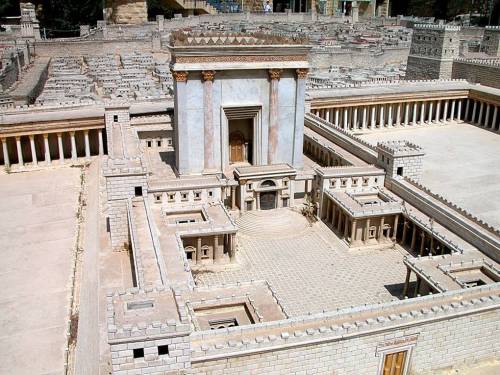
This is a picture of a model of Herod’s Temple:

second temple

But instead of answering their question right away, in vs. 5-13 Jesus talked more generally about how we are to expect  false teachers and persecution as we wait for the end and his return.

Today, we look at Jesus’ answer to the disciple’s specific question of – “When will Herod’s temple be destroyed?” This is where Jesus presents, what I am calling his roadmap to the end.

Stage 1: The destruction of the temple

Jesus talks about four things here:

1. The abomination of desolation.

Mark 13:14a – “But when you see the abomination of desolation standing where it ought not to be (let the reader understand) . . ..”

Jesus is using prophetic – apocalyptic code language – “abomination of desolation.” This is emphasized when Mark invites the reader to understand what is being said. Its like saying – “Do you get it?”

Jesus is drawing on the book of Daniel here. Daniel portrays a pagan king who defiles the temple, most often associated with Antiochus Epiphanes and what he did in 168 BC.

By using this phrase, Jesus is saying that this will happen again (or perhaps he is even saying that this will be the true fulfillment of Daniel’s prophecy).

In Luke 21:20 (Luke’s account of the Olivet discourse) we are given the decoded version of what Jesus means: “When you see Jerusalem surrounded by armies, then know that its desolation has come near.”

This helps us to see that Jesus is talking about events that occurred not long after his death. In 66-70 AD the Roman armies came against Israel.

  • They laid siege to the city and eventually destroyed Jerusalem and the temple under General Titus, who later became emperor.
  • Then they offered up sacrifices to their idolatrous banners on the temple site

In these ways the pagan Roman empire, its armies and emperor, showed itself to be truly an “abomination of desolation.”

In answer to the question – “When will Herod’s temple be destroyed?” Jesus indicates that, it will happen sometime after you see the Roman armies coming ready to attack.

2. Flight to the mountains.

Mark 13:14b-18 – “. . .  then let those who are in Judea flee to the mountains. Let the one who is on the housetop not go down, nor enter his house, to take anything out, and let the one who is in the field not turn back to take his cloak. And alas for women who are pregnant and for those who are nursing infants in those days! Pray that it may not happen in winter.”

The recognition of the Roman armies coming against the city is the cue for the Jewish Christians in Judea to flee. Usually you would flee into a walled city in time of war. But not this time. This time God’s judgment is coming on Jerusalem and the temple. 

Jesus emphasizes the seriousness of the situation. Leave your possessions and extra clothes behind and run! Jesus also speaks to the practical difficulties of fleeing:

  • It will be very hard on women who are pregnant or with small children.
  • He also tells them to pray that it not be in winter, when the rivers are flooded and hard to cross and the mountains have snow.

According to one report the Christians in Jerusalem did in fact flee the city, sometime at the beginning of the war.

3. A great tribulation.

Mark 13:17-20 – “For in those days there will be such tribulation as has not been from the beginning of the creation that God created until now, and never will be. And if the Lord had not cut short the days, no human being would be saved. But for the sake of the elect, whom he chose, he shortened the days.” 

Luke’s version here shows us that this time of tribulation is still speaking of the destruction of Jerusalem and the temple. “For there will be great distress upon the earth and wrath against this people. They will fall by the edge of the sword and be led captive among all nations, and Jerusalem will be trampled underfoot by the Gentiles . . .”  – 21:23b-24.

This was a horrific time of suffering for the Jewish people:

  • They were subjected to the realities of seige warfare being stuck in Jerusalem. Some resorted to cannibalism when the food ran out.
  • Over a million were killed throughout Israel (which was a huge percentage of the population in that day). So many were crucified that it was said that there were few trees left in the region.
  • Almost a hundred thousand were taken away into slavery
  • Their temple was defiled and destroyed, the city of Jerusalem was burned, and their national-political identity was taken away

As Jesus said, if God did not cut short the days for the sake of his chosen ones, followers of Jesus – none would have survived.

Now, when Jesus speaks of suffering beyond what has ever occurred or will occur again:

  • He may be speaking figuratively, as the prophet Joel does in Joel 2:2. This would, then, simply be a prophetic way of describing suffering beyond imagination.
  • With regard to Jerusalem, he could be speaking literally. For it is true that it had never suffered this much before. And, if this is what he meant, then it will never suffer this much again.

4. A time of deception.

Mark 13:21-23 – “And then if anyone says to you, ‘Look, here is the Christ!’ or ‘Look, there he is!’ do not believe it. False christs and false prophets will arise and perform signs and wonders, to lead astray, if possible, the elect. But be on guard; I have told you all things beforehand.”

Jesus already warned of this, as we saw last week. Here he gives a specific warning. During this time of chaos and distress, don’t listen to false messiahs and false prophets. For they will seek to lead followers of Jesus astray through the use of signs and omens.

And this kind of activity – false prophets and talk of omens – did take place during and after the war that destroyed the temple.

This leads us to . . .

Stage 2: An undefined time of geo-political turmoil

Mark 13:24-25 – “But in those days, after that tribulation, the sun will be darkened, and the moon will not give its light, and the stars will be falling from heaven, and the powers in the heavens will be shaken.” 

This is a new section, for he says, “after that tribulation.” We are past the destruction of the temple and that awful time.

But what does all this cosmic language of sun, moon and stars mean? Is it literal? Well, when we look at the rest of Scripture, we find out that this is prophetic speech that was used to describe geo-political change as one empire rises and another falls at the hand of God:

Isaiah 13:10 uses the same cosmic language that Jesus does to speak of God’s judgment of Babylon. “For the stars of the heavens and their constellations will not give their light, the sun will be dark at its rising, and the moon will not shed its light.” As we know, it wasn’t literal here. It was a way of speaking of God’s judgment on this nation.

Isaiah 34:4 also uses some of the same language that Jesus does to speak of God’s judgment on Edom. “All the host of heaven shall rot away, and the skies roll up like a scroll. All their host shall fall . . ..”

The prophets Ezekiel, Joel & Amos  also use cosmic language to speak of judgment on nations.

Luke confirms this understanding. In Luke 21:24 the destruction of Jerusalem is followed by “the times of the Gentiles.” God will be dealing with the Gentile nations now.

Then in verses 25-26 comes the cosmic language with additional statements that help us see what is going on. Jesus speaks of “. . . distress of nations in perplexity because of the roaring of the sea and the wave, people fainting with fear and with foreboding of what is coming on the world.” Why are the nations distressed? Because of “the roaring of the sea and the wave.” And as we saw in our study of baptism this has to do with chaos, turmoil and judgment in the world (see Revelation 17:15).

Jesus here speaks in the most general terms possible about a time when nations will rise and fall in the world at the hand of God.

This section recalls Mark 13:8. “For nation will rise against nation, and kingdom against kingdom.” These are the birth pangs of the end expressed in cosmic language.

This brings us to the last stage . . .

Stage 3: The coming of the Son of Man

Mark 13:26 – “And then they will see the Son of Man coming in clouds with great power and glory.”

After this undefined period of Gentile geo-political turmoil, “then” Jesus will return as ruler and king.

We learn from Matthew’s version that a part of this is that the peoples of the earth will be judged. Matthew 24:30 says “all the tribes of the earth will mourn.” Jesus’ return will bring great woe upon the people of the earth. The book of Revelation expounds on this in some detail.

More hopefully this also involves the resurrection of the righteous.

Mark 13:27 – “And then he will send out the angels and gather his elect from the four winds, from the ends of the earth to the ends of heaven.”

Jesus will send out his angels to gather together his followers. Again, this is a common way of talking about the resurrection of the righteous.

Next we see the connection between . . .

The temple destruction and Jesus’ return

Mark 13:28-31 – “From the fig tree learn its lesson: as soon as its branch becomes tender and puts out its leaves, you know that summer is near. So also, when you see these things taking place, you know that he is near, at the very gates. Truly, I say to you, this generation will not pass away until all these things take place. Heaven and earth will pass away, but my words will not pass away.”

Now notice, the phrase, “these things” in this passage cannot refer to the coming of the Son of Man, for “when you see these things taking place, you know that he is near, at the very gates.” The two are differentiated by Jesus. “These things” must take place first, then we know that “he is near.”

The phrase, “these things” connects back to the original question of 13:4 – “When will these things be and what will be the sign when all these things are going to be fulfilled?” In other words, the phrase “these things” refers to the temple destruction and the beginning of the times of the Gentiles.

Jesus gives us more information about “when” in this section:

1. “These things” will happen within the span of a generation. That is, the destruction of the temple through to the ushering in of the times of the Gentiles will occur in the lifetime of Jesus’ hearers. Jesus said, “Truly, I say to you, this generation will not pass away until all these things take place” – v. 30.

And Jesus stakes his prophetic authority on this prediction. He said, “heaven and earth will pass away, but my words will not pass away” – v. 31. And, in fact, “all these things” did happen by 70 AD, within a generation of Jesus’ words!

2. Once the temple is destroyed, Jesus’ return is imminent. That is, no other event must happen before he returns. Which means he could come at any time!

But, lets be clear as we end . . .

No one knows when Jesus will return

Mark 13:32-33 – “But concerning that day or that hour, no one knows, not even the angels in heaven, nor the Son, but only the Father. Be on guard, keep awake. For you do not know when the time will come.”

Although the other events will be fulfilled in the generation of Jesus’ listeners, no one knows when the Son will come in glory and power.

He could not emphasize this point more. Not even Jesus himself knows when! Only the Father knows.

So if anyone tells you that they know, ask them if they know more than Jesus! Then tell them what Jesus said, “you do not know when the time will come.”

We currently live somewhere in stage two – the times of the Gentiles. And Jesus could come at any time.

Since we don’t know when, as Jesus said, we should “be on guard” and “keep awake.” We should be ready at all times!

William Higgins

Read Full Post »

We have begun a series on Jesus’ second coming and today we start to look at the Olivet discourse of Mark 13. It’s called the “Olivet” discourse because Jesus spoke these words as he sat on the Mount of Olives.

This is Jesus’ primary teaching on his second coming.

  • There are other places where he talks about this, but not in as much detail.
  • And we have this same Olivet discourse in all three of the first Gospels, with slight differences. So we can use all three of them to help us make sense of what Jesus is saying, which is a real help.

Now, when I look at all the debates and discussions about the end times today, much of which revolve around trying to make sense of the book of Revelation, which is the hardest book to interpret because of its symbolism (because you can read into it pretty much whatever you want), when I look at all this . . .

  • My choice is to start with what Jesus said. And to look at his main teaching on this.
  • And then move from there to make sense out of other passages that speak of his second coming.

So, we start with Mark 13:1 and . . .

Jesus’ prediction of the destruction of the temple

Mark 13:1 – “And as Jesus came out of the temple, one of his disciples said to him, ‘Look, Teacher, what wonderful stones and what wonderful buildings!’”

The temple here is Herod’s temple. It is usually called the second Temple. The first temple was Solomon’s and it was destroyed by the Babylonians. So when the exiles returned to Jerusalem they built another, second temple.

And it was this temple that Herod had extensively remodeled and turned into a wonder of the ancient world. It was justly famous for its size and beauty. The stones were massive – 25’ x 8’ x 12.’ The disciples were certainly impressed by it.

Mark 13:2 – “And Jesus said to him, ‘Do you see these great buildings? There will not be left here one stone upon another that will not be thrown down.’”

He predicts its destruction. Now, this isn’t the only time that Jesus predicted impending doom for Jerusalem:

  • Jesus says in Matthew 23:34-38 that Jerusalem will be judged and its temple (or “house”) left desolate.
  • In Luke 19:43-44 Jesus talks about judgment on Jerusalem for rejecting him – “For the days will come upon you, when your enemies will set up a barricade around you and surround you and hem you in on every side and tear you down to the ground, you and your children within you. And they will not leave one stone upon another in you, because you did not know the time of your visitation.”

Mark 13:3a – “And as Jesus sat on the Mount of Olives opposite the temple . . ..”

After his prediction, Jesus and the disciples went out of Jerusalem and onto the Mount of Olives. It’s just across from Jerusalem and you could see the Temple from there.

The disciples must have been thinking about Jesus’ prediction and so when they got there, they ask Jesus –

When will it happen??

Mark 13:3b-4 – “. . . Peter and James and John and Andrew asked him privately, ‘Tell us, when will these things be, and what will be the sign when all these things are about to be accomplished?’”

The phrase – “these things” refers to the prediction of the destruction of Herod’s temple. They are asking, ‘When will Herod’s temple be destroyed?’ They want to know about the timing of this prediction by Jesus.

In Matthew 24:3 (Matthew’s version of the Olivet discourse) there is the additional phrase “ . . . and what will be the sign of your coming and of the end of the age?”

The disciples saw the destruction of the temple as an event connected in some way to the end of all things. This idea would have been understandable for any Jew. Today we just don’t understand how important the temple was for their faith. For it to go must mean the end of all things.

Well, Jesus does answer their question and he confirms that there is a connection between the destruction of Herod’s temple and the end.

As we will see In vs. 14-33 he tells them:

  • when this temple will be destroyed and
  • the connection of this to the end – his second coming

He gives them what I call – “Jesus’ Roadmap to the End.” But that’s for next week!

Today our focus is on vs. 5-13, which contain Jesus’ initial answer to them, before he answers their specific question. This initial response gives some general teaching on what to expect as we wait for Jesus’ return.  For an outline of Mark 13:5-13 click here: Two Parallel Warnings About The End

The first thing Jesus tells us is to –

Expect false teachers

Mark 13:5-8 – “And Jesus began to say to them, ‘See that no one leads you astray.  Many will come in my name, saying, ‘I am he!’ and they will lead many astray. And when you hear of wars and rumors of wars, do not be alarmed. This must take place, but the end is not yet. For nation will rise against nation, and kingdom against kingdom. There will be earthquakes in various places; there will be famines. These are but the beginning of the birth pains.’”

Jesus is giving us a warning, which we need to hear today. Deceivers, false messiahs will come:

  1. They will use troubling events in the world to alarm people – wars, earthquakes and famines
  2. They will say that the end is here – “Can’t you see it! All these events are taking place!”
  3. They will call people to follow them. And in this way they will lead people astray.

This has happened throughout history, from a Samaritan false prophet who gathered quite a following before the destruction of Jerusalem, all the way to the present and David Koresh and the Branch Davidians.

In contrast to all this – Jesus, the real Messiah tells us:

  1. These things must happen – there will be troubling events – but don’t be alarmed
  2. The end is not yet
  3. So don’t listen to them! They are deceivers who will lead you astray from your faith in him.

Just as a point of emphasis because we don’t always get it: These things (wars, earthquakes, famines) are not signs of the coming of the end. They are simply the beginning of the end. That yes, we are in the last days, (which began in New Testament times) but not that the last day is here, or even around the corner.

Christians today are often the first ones to be alarmed by events in the world. But we of all people should be calm, because we know this stuff must happen, but the end is not yet. Jesus has told us so. And he said “do not be alarmed.”

Jesus says of these in v. 8 – “these are but the beginning of the birth pains.” The metaphor is that of a new world being born out of the ashes of the old. And so the kinds of things we see in newspaper headlines are simply the first hints of labor. The full birth pains will come when Jesus returns.

The second thing Jesus highlights is that we should –

Expect persecution

Mark 13:9-13 – “But be on your guard. For they will deliver you over to councils, and you will be beaten in synagogues, and you will stand before governors and kings for my sake, to bear witness before them. And the gospel must first be proclaimed to all nations. And when they bring you to trial and deliver you over, do not be anxious beforehand what you are to say, but say whatever is given you in that hour, for it is not you who speak, but the Holy Spirit. And brother will deliver brother over to death, and the father his child, and children will rise against parents and have them put to death. And you will be hated by all for my name’s sake. But the one who endures to the end will be saved.”

Jesus gives us another warning: The world will oppose us. Christians will be handed over, betrayed even by relatives. They will be beaten, put on trial, and some will be killed. We will be hated by all people.

This has happened all throughout history since the coming of Jesus.

  • In the first century the Roman emperor Nero persecuted and killed Peter and Paul and many others in the city of Rome.
  • In the 1500’s the first Mennonites suffered one of the most devastating examples of persecution in all of church history.
  • Today there are more martyrs than ever, and persecution abounds in various parts of the world even as we speak.

But he not only told us it would happen, Jesus tells us how to respond:

  1. We must endure, for the one who endures to the end will be saved. He’s saying, don’t let persecution cause you to renounce your faith; to turn away from him.
  2. We must fulfill God’s purpose of spreading the gospel to all nations. Even turning our persecution into an opportunity to witness for him.
  3. We must rely upon the Spirit to help us. For the Spirit will give us the words to say when we are put on trial; when we are put on the spot; when we are afraid.

[Just a note here: Jesus says, “The gospel must first be proclaimed to all nations” and as Matthew’s versions says, “then the end will come.” What I want to say is that this doesn’t set a time for Jesus to return that can be measured, so that we can say, “Hey, its done Jesus has to return now. Lets go sit on a hill and wait for him.” How do you measure this? Is it geographical, is it political – to every nation state, is it social – to every specific tribe? Its unclear. Paul said in Colossians 1:23 that in his own day the gospel had “been proclaimed in all creation under heaven.” So it’s unclear.]

Alright, summing up Jesus’ initial response to the disciples –

What should we expect? The testing of our faith

Scripturally, the danger of living in the last days, like we do, is that we will lose our faith.

  • As Jesus says in Matthew 24:10 (Matthew’s version of the Olivet discourse) – “Many will fall away.”
  • As Paul says in I Timothy 4:1 – “Now the Spirit expressly says that in later times some will depart from the faith . . ..”

As our verses today have shown us:

  • We can lose our faith if false messiahs, prophets or teachers lead us astray, and
  • We can lose our faith if persecution causes us not to endure

So Jesus warns us and encourages us in these verses to:

 Resist false teachers who raise alarm

And remain true to share the gospel amidst persecution

Next week – the “when” question. When will the temple be destroyed, and what is the connection of this to the end and Jesus’ return.

William Higgins

Read Full Post »

I spent a lot of time in school in my life, probably too much. But its left me with a certain mentality. In any class I wanted to know, “What am I responsible for?” “What’s going to be on the final exam?”

And so when I think about my faith and about the last day; the final judgment, I think in a similar way – “What am I accountable for?” “How will I be judged?” I want to know what really matters, so that I can be prepared.

And so this morning I want us to look at the Scriptures to help us all to know how to be prepared for when Jesus returns. What is it that will really and truly matter on the final day?

And let’s just get to the point here:

Jesus said in Matthew 16:27 – “For the Son of Man is going to come with his angels in the glory of his Father, and then he will repay each person according to what he has done.”

Paul says it this way in 2 Corinthians 5:10 – “For we must all appear before the judgment seat of Christ, so that each one may receive what is due for what he or she has done in the body, whether good or evil.”

And again in Romans 2:6-8 – “He will render to each one according to his or her works: to those who by patience in well-doing seek for glory and honor and immortality, he will give eternal life; but for those who are self-seeking and do not obey the truth, but obey unrighteousness, there will be wrath and fury.”

The answer is quite simple. We will each be judged based on what we have done, whether good or evil. What we have done is the only thing that will matter on the final day. This is what we are accountable for.

Let’s look at this more closely by noting what will not matter . . .

1. It won’t matter what you have said about your faith; your religious professions. “I’m a Christian.” “I believe.” You have prayed the sinner’s prayer. You have confessed that “Jesus is Lord.”

Jesus says in Matthew 7:21 – “Not everyone who says to me, ‘Lord, Lord,’ will enter the kingdom of heaven, but the one who does the will of my Father who is in heaven.”

This is talking about the final day when we all stand before Jesus. There will be some who confess Jesus as Lord, but they will not make it in.

Who will enter into the eternal salvation of the kingdom of God? Jesus said, “the one who does the will of my Father who is in heaven.”

  • What matters is not what you say by way of religious profession, it is your deeds of obedience.

2. It won’t matter how correct your beliefs are. You may well know all about Jesus’ second coming. You may know the Bible better than anyone else. You may know the historic creeds of the church. But that doesn’t get you very far.

James talks about correct beliefs in part when he talks about “faith” in  James 2:14; 18-19 – “What good is it, my brothers and sisters, if you say you have faith but do not have works? Can faith save you? . . . But someone will say, ‘You have faith and I have works.’ Show me your faith apart from your works, and I by my works will show you my faith. You believe that God is one; you do well. Even the demons believe – and shudder.”

The demons have correct beliefs. They know that “God is one,” that is, that there is one God; the Shema. But they do not have correct behavior, and so they shudder.

The same is true for us, if we only have correct beliefs, such a faith won’t save us.

  • What matters is not how orthodox your beliefs are, what matters is your deeds based on these beliefs.

3. It won’t matter if you exercised gifts of the Spirit in Jesus’ name. Jesus said in Matthew 7:22-23 – “On that day many will say to me, ‘Lord, Lord, did we not prophesy in your name, and cast out demons in your name, and do many mighty works in your name?’ And then will I declare to them, ‘I never knew you; depart from me, you workers of lawlessness.’”

Here we have people who have gifts of the Spirit (prophesy), who have cast out demons and have done miracles in Jesus’ name.

But Jesus focuses in on the fact that they were disobedient; they were “workers of lawlessness.” They will not make it in.

  • What matters is not manifestations of the Spirit, it is your obedience to God.

4. It won’t matter if you did what is right according to the standards of others – so that others can look on and say, “What a good person!” “What a religious person!” So that the world can say, “What a clean-cut, straight-laced person!” “What a decent moral person!”

You can spend your whole life living up to human-made standards, and miss the mark that God sets.

In a context of talking about God’ will, Jesus said in Matthew 23:10 – “You have one teacher, the Messiah” Jesus teaches us what God’s will is and we are to do what he says.

Remember the rich young ruler? He kept all kinds of commands, and must have come across to others as very righteous. But he did not do what Jesus asked of him, and according to Jesus, would not enter the kingdom of God.

  • What matters is doing the will of God according to Jesus

5. It won’t matter if you used to do the deeds of Jesus, but stopped. Ezekiel 18:24 – says it about as clearly as you can – “But when a righteous person turns away from his righteousness and does injustice and does the same abominations that the wicked person does, shall he live? None of the righteous deeds that he has done shall be remembered; for the treachery of which he is guilty and the sin he has committed, for them he shall die.”

In the New Testament, in Matthew 24:45-51 in a parable about his second coming, Jesus teaches that the disciple who is doing his will when he returns will be blessed. But the disciple who changes and then acts wickedly will be thrown into hell.

  • What matters is not what you used to do, it is that you continue on in doing the will of God according to Jesus.

6. It won’t matter if you did the deeds of Jesus – if you did them without love. Paul says in 1 Corinthians 13:3 – “If I give away all I have, and if I deliver up my body to be burned, but have not love, I gain nothing.”

These are deeds of Jesus: Jesus talks about selling your possessions and giving to the poor in Luke 12:33. And Jesus talks about taking up your cross and losing your life in Mark 8:34-35.

But if you don’t do these out of love for God and others, Paul tells us, then you gain nothing.

  • What matters is not just doing empty outward actions, it is doing the deeds of Jesus out of love.

As you can see from all these different angles, when you stand before God and the Lord Jesus to give an account for your life, the only thing that will matter is that you have continued to do what Jesus taught out of love for God and others.

Now if you ask . . .

Why does God look at our deeds?

Why doesn’t God just look in our hearts to see if we have faith; to see if we have been born again; to see if we have received the grace of his salvation? The answer is that what is in our hearts, is what comes out in our deeds. What is within is what comes out in our words and actions.

It is just as Jesus said in Matthew 7:16-17, “You will recognize them by their fruits. . . . Every healthy tree bears good fruit, but the diseased tree bears bad fruit.” All God has to do is to look at our deeds and he knows what is in our heart.

And since you can’t continue to do what Jesus teaches out of love without God’s work of salvation, and God’s continuing grace, and God’s continuing forgiveness when we fail, because its impossible to do all this in our own strength – the deeds are the evidence of God’s grace working in our lives.

A Plea

If you are a Christian here this morning, hear what the Scriptures clearly teach us – God will judge your deeds. Are you ready?

Don’t be deceived thinking that because you have said the right things, or you have correct beliefs, or you have amazing spiritual gifts, or you are a decent person by the world’s standards, or you used to be faithful, or you can look like a Christian to others – that you are OK.

Deal with the sins in your life that you knowingly choose to do over and over again!

Let the grace of God work its work in you so that your life will bear forth the fruit of righteousness; the fruit of continuing to do what Jesus has taught us, out of love for God and others. Turn from your disobedience and let God do his work in you.

And if you’re here and are not yet a Christian, turn from your unrighteousness and receive God’s grace of forgiveness and new life. And let God transform you from within so that the fruit of righteousness begins to spring forth in your life; so that you too can be ready to give an account on that final day.

William Higgins

Read Full Post »

« Newer Posts - Older Posts »