Feeds:
Posts
Comments

Give it all up

 I want to share some words today that I hope will help us to understand and remember how significant it is to receive the Lord’s supper. When we partake, we not only remember Jesus; we not only proclaim his death; we not only give thanks for the salvation he gives  – we are also called to do something. We are called to follow Jesus in his self-sacrifice. And we need to know and remember this as we partake. Our text is –

Luke 9:23-24

 23And Jesus said to all, ‘If anyone would come after me, let him deny himself and take up his cross daily and follow me. 24For whoever would save his life will lose it, but whoever loses his life for my sake will save it.’”

In this passage Jesus calls us to sacrifice; to give it all up for him. And he describes what this means with three phrases:

1) He said “deny yourself.” That is, say ‘no’ to your own desires, ambitions and plans. Say ‘no’ to what you want to do with your earthly life.

2) He said “take up your cross.” A cross, of course, was an instrument of death, a particularly cruel means to enact capital punishment. To take it up is to carry the cross beam to the execution site where you are to die. This means that you accept that your earthly life is over.

3) And in line with this last thought, he said, “lose your life.” Give up your earthly life.

Now let’s look at our Lord’s example for he lived this out.

Jesus gave it all up for us

1. He gave up his place with the Father. Philippians 2:6-7 says that Jesus, “ . . . though he was in the form of God, did not count equality with God a thing to be grasped, but emptied himself . . . being born in the likeness of men.”

Paul says in 2 Corinthians 8:9, “For you know the grace of our Lord Jesus Christ, that though he was rich, yet for your sake he became poor, so that you by his poverty might become rich.”

The gospel of John tells us that Jesus left “the glory that (he) had with (the Father) before the world existed” in order to dwell among us. (John 17:5; 1:14).

He gave up all privilege, power and place. He gave up things beyond what we can even begin to understand, to come to earth.

2. He gave up a normal life. When he grew up he left his family. And he also incurred their disapproval. At one point Mark tells us that his family “went out to seize him, for they were saying, ‘He is out of his mind.’” – Mark 3:21

He gave up the joy of having a wife and children. As he said in Matthew 19:12, he made himself a eunuch “for the sake of the kingdom of heaven.”

He gave up having a normal home. Jesus said, “Foxes have holes, and birds of the air have nests, but the Son of Man has nowhere to lay his head” – Matthew 8:20.

He gave up a normal pattern of living – with a normal job, regular friends, and free time for himself. He gave up his earthly life.

3. He served others. He gave all of his time and energy to ministry. He gave his love and concern and compassion. As he said in Mark 10:45, “the Son of Man came not to be served, but to serve.”

He made himself available to minister to people’s needs, traveling almost constantly, healing, casting out demons and teaching. And then there was the arguing with the religious leaders who always tried to find ways to discredit him.

And he did all this to the point of exhaustion. Mark 6:30-32 tells the story how Jesus sought to get away for a time of rest with his disciples, but the crowd learned of this and beat him to the place where he was going. But when he saw this, he still had compassion on them and fed the 5,000.

He bore with people’s weaknesses. For instance when the disciples didn’t get what he was teaching them. Mark 8:17-18 says, “And Jesus . . .  said to them, ‘Why are you discussing the fact that you have no bread? Do you not yet perceive or understand? Are your hearts hardened? Having eyes do you not see, and having ears do you not hear? And do you not remember?’” These were the ones he had invested his time in to train to take over after his death.

He was also frustrated by people’s failures. When his disciples couldn’t cast out a demon, he said, “O faithless generation, how long am I to be with you? How long am I to bear with you?” – Mark 9:19. And Jesus had to do it. Again, these were the ones he was leaving in charge.

In love, Jesus served others with his life and bore with those he ministered to.

4. He suffered. He suffered rejection from the Pharisees and Sadducees, his opponents. John tells us that, “he came to his own, and his own people did not receive him” (John 1:8). He endured the rejection of his own disciples who abandoned him in the end. Even Peter denied him with curses and oaths – Matthew 26:74.

He suffered the loss of honor as he was mercilessly mocked by the Jewish leaders and Romans. He was put to shame.

He suffered physically through extensive torture and crucifixion, being nailed to the cross, and eventually unable to breathe due to exhaustion. Jesus suffered.

5. He died. As Mark 15:37 says, “Jesus uttered a loud cry and breathed his last.”

This is a five-fold portrait of what it means to deny yourself, to take up your cross and to lose your life. This is what these things mean. Jesus shows us fully and truly.

And if you think that it was easy for Jesus to give it all up because he was the Son of God – you’re mistaken. Just look at him in Gethsemane. Scripture tells us that Jesus “began to be greatly distressed and troubled. And he said . . . ‘My soul is very sorrowful, even to death.’” – Mark 14:33-34. He struggled in prayer, “Is this the only way, God?”

His giving up everything is portrayed in the Lord’s supper. Here we see represented his broken body and his poured out blood. Here we see that he denied himself, he took up his cross and he lost life. He gave it all up for us.

Jesus call us to give it all up for him

 He is saying, I denied myself for you. I took up the cross for you. I lost everything for you. Now you deny yourself for me. Take up your cross for me. Lose everything for me.

1. We are to give up our privilege, power and place. This is the commitment. It has to all be on the altar. Even if Jesus says to me, like the rich young ruler,  “Sell all that you have and distribute it to the poor . . . and come, follow me” – Luke 18:22, this is what I will do.

Now God doesn’t call everyone to do this. But whatever God specifically calls me to in my life circumstances, this is what I will do. And God calls us each of us to give up something, as we lower ourselves like Jesus and come to a place where we can be used by God.

2. We are to give up a normal life. He might call you to give it all up like he did with Paul. To leave family behind (Mark 10:28-30), to give up marriage and children (Matthew 19:11-12), a normal home (Matthew 8:19-22), a normal job, regular friends, and free time. Each of us commit to do this. It has to all be on the altar.

But even if we are not called to literally give all this up, we must accept the disruption of normal family ties due to our faith.

  • Even if it seems that we hate them in comparison to our love for Jesus, and they react to it (Luke 14:26).
  • Even if we are married, with children and normal jobs, as Paul says, because of the coming kingdom, “let those who have wives live as though they had none . . . For the present form of this world is passing away.” – 1 Corinthians 7:29-31.
  • Even if we have free time, we regularly give it up for God and to do God’s work.
  • Even if we are blessed with resources we don’t hold on to them for ourselves, we use them to further the kingdom.

3. We are to serve others with our time and resources. In love we are to minister to their needs. This will depend on our gifts and callings, but each of us is to serve, whether in this congregation  or beyond it.

So find your place, plug in and get to work. And don’t be surprised if this is hard work bearing with people’s weaknesses and failures. But we continue to serve others in love, as Jesus did.

4. We are to suffer. We must be willing to suffer rejection, from family, friends and coworkers (Luke 14:26). We must be willing to suffer the loss of honor, even if it is only ridicule or slander for our connection to Jesus (Matthew 5:11). We must be willing to suffer physically as well.

5. We are to die. We take up our cross “daily” (Luke 9:23) in all these ways that we have looked at so far -#1-4. But here we are to literally die, if it comes to this; if this is what it means to be faithful to God.

Again we have a five-fold portrait of the cross. And each of us are to live this out in our own situations, according to God’s will and purpose for us. But our commitment is all the same – it has to all be on the altar. For anything that isn’t, family, job, home, will become an idol that will disrupt and destroy our Christian life.

So let’s remember

When we partake of the Lord’s supper – we don’t just see Jesus having given it all up for us in the bread and cup, we renew our commitment to give it all up for him and to live this out in whatever way God calls us to do this.

But let’s also remember the promise. When we do this, we will be blessed. It isn’t all just sacrifice. We give up this life in order to gain the next life – something both better and enduring.

As Jesus said in Luke 9:24, “whoever loses his life for my sake will save it.” We will enter into the eternal kingdom. Just as Jesus was raised, honored and blessed, so we will be raised, honored and blessed.

William Higgins 

(See below for the literary structure of this Psalm)

This Psalm is full of sorrow and pain, but also faith.

The inscription connects it to David. It says, “A Maskil of David, (perhaps a musical or liturgical term) when he was in the cave. A Prayer.” This gives us a helpful life-setting for reading this Psalm as a prayer of David in a very difficult situation. There are two instances where Scripture speaks of David being in a cave – the cave of Adullam and at Engedi. The first is the more likely setting for out passage.

Let’s remember this context: 1) With the help of Jonathan, David now knows for sure that Saul has determined to kill him. So, he quickly flees (1 Samuel 20).

2) He stopped at Nob and got some food and a weapon (Goliath’s sword) from the priest there, because he didn’t have anything given his quick departure. (1 Samuel 21:1-9)

3) He then went to Philistia; into enemy territory where Saul couldn’t reach him. But because of his reputation as an Israelite warrior, his life was in danger there also. In fact, he went to the city where Goliath was from – carrying Goliath’s sword. >So he feigned insanity. He started drooling and scratching at the door and then fled. (1 Samuel 21:10-15).

1 Samuel 22:1 then says, “David departed from there and escaped to the cave of Adullam.” Adullam was in the no-man’s land between Israel and Philistia. An apt place for him to be given his rejection by both groups. [He’s basically alone. Although the priest at Nob said, “Why are you alone, and no one with you?” (1 Samuel 21:2) apparently he did have a few young men with him (1 Samuel 21:4-5, maybe four since he asked for five loaves of bread. Also Mark 2:25-26.) Perhaps these were David’s personal attendants.]

Psalm 142 begins with –

David’s desperate prayers

1 With my voice I cry out to the LORD; with my voice I plead for mercy to the LORD. 2 I pour out my complaint before him; I tell my trouble before him.

This is no casual prayer. He’s distressed. He’s crying out; he’s pleading for mercy. This is intense praying.

He has a complaint – a concern or even a grievance. And he talks about his “trouble” – his adversity, anguish and affliction

3 When my spirit faints within me, you know my way!

He’s overwhelmed. He’s got nothing left; no strength within. As he says in v. 6 – “I am brought very low. You can certainly see why as we think of what’s going on in David’s life at this time.

And he’s saying to God, “You know what I am going through! You see all this!” Well, even though God knows what’s happening –

He lays out all his problems anyway

In the path where I walk they have hidden a trap for me.

“They” are described in v. 6 as persecutors who are too strong for him. As we saw, Saul is trying to find and kill David, and all the resources of the kingdom are being brought to bear on this task.

The phrase, “hidden a trap” conjures up hunting imagery. And he is being hunted. To understand how much danger he’s in Saul had all the priests at Nob killed, along with their families simply because one of them helped David (1 Samuel 22:6-23). His life is in serious danger.

4 Look to the right and see: there is none who takes notice of me

David speaks of looking to the right because this is where a witness for the defense would stand (Psalm 109:31) or one’s protector would be (Psalm 16:8; 110:5). He’s saying that no one is standing up for him.

no refuge remains to me

He has nowhere to find shelter. Saul rejected him and is trying to kill him and the Philistines didn’t give him a safe haven. All he has is a cave.

no one cares for my soul

He’s without anyone to support him.

Although previously he may have had some personal attendants with him, perhaps now he has sent them out to tell his family and friends where he was, since they came to him here later (1 Samuel 22:1-4). [This was before those who would become his mighty men gathered to him here – (2 Samuel 23:13).] He was truly alone.

David continues to pray

5 I cry to you, O LORD; I say, “You are my refuge, my portion in the land of the living.”

Although he’s cut off from Israel, and Philistia has rejected him God has not rejected him. Here we see David’s faith.

  • God is his refuge – his place of shelter; God has taken him in; God has taken him under his care to protect him.
  • God is his portion – he’s like the Levites who were not given a portion of land in Israel, but were supported by God. So, David has no place, but God will provide for him.

“6 Attend to my cry, for I am brought very low!”

He’s saying, “Listen!!! I can’t hang on much longer!!! You have to answer soon. God, this is urgent!”

Next, he gets more specific:

“Deliver me from my persecutors, for they are too strong for me!”

This refers to Saul and his men. This is the core of his problem.

“7 Bring me out of prison, that I may give thanks to your name!”

Death and Sheol (Hades) are often pictured as a prison. And he was also stuck in the prison of the cave he was in. And his cave – which was dark and underground – would have reminded him of Sheol. It’s like he’s on death’s door.

He promises that if God helps him, he will give thanks to God.

He ends by saying –

“The righteous will surround me, for you will deal bountifully with me.”

He is confident that God is going to act for him and deliver him. He will no longer be in danger and thus he will no longer be alone.

  • This was fulfilled in part, fairly soon. His family and others gathered to him at Adullam, including what would become his army (1 Samuel 22:1-2; 2 Samuel 23:13).
  • And later it was completely fulfilled when Saul was defeated. [David talks about this in 2 Samuel 22 in a way that echoes some of the language of this Psalm]

Some Lessons from this Psalm

1. God allows us to go through very difficult trials. God let David go to his breaking point. David said, “my spirit faints within me” (v. 3) and he said, “I am brought very low” (v. 6).

In David’s case, his life was in danger by an army and a king. These were his circumstances. And even though it is unlikely that any of us are running for our lives, God allows us to go through really difficult times, where we feel alone and threatened, where we are in a dark place, with no one standing up for us or caring about us. We too can be brought so low that our spirit faints within. We too can come to our breaking point where we are barely hanging on. God allows this.

2. Tell God about your troubles. Even though David understands that God knows what’s going on in his life he still tells him all about it in prayer.

In a similar way Jesus tells us, “your Father knows what you need before you ask him” – Matthew 6:8. But he tells us this precisely in the midst of teaching us to pray.

So like David, we need to pour out our hearts to God. We need to tell God about our pain and sorrow. We need to let our tears flow before the Lord. We need to unburden ourselves because we can’t carry the weight. Even though he knows, tell God all about your needs.

3. God can be our refuge and portion. May it never be that we truly have no one to care for us. But even if we find ourselves in an extreme situation like this we learn from this Psalm that God can protect us and provide for us, just as he did with David.

The literary structure of Psalm 142

A. His prayers

1 With my voice/ I cry out/ to the LORD;

with my voice/ I plead for mercy/ to the LORD.

2 I pour out/ my complaint/ before him;

I tell/ my trouble/ before him.

3 When my spirit faints within me, you know my way!

B. His problem

In the path where I walk they have hidden a trap for me. 4 Look to the right and see: there is none who takes notice of me; no refuge remains to me; no one cares for my soul.

A1. His prayers

5 I cry to you, O LORD; I say, “You are my refuge, my portion in the land of the living.” 6 Attend to my cry, for I am brought very low! Deliver me from my persecutors, for they are too strong for me!7 Bring me out of prison, that I may give thanks to your name!

B1. The solution

The righteous will surround me, for you will deal bountifully with me.

 ————————————

  • A and A1 both use the word “cry” and the name Yahweh (LORD). Both are about his prayers.
  • B and B1 deal with the problem and then the answer.
  • A contains two sets of three parallels – vs. 1 and 2.
  • A and B are connected by “path”  and “way”
  • B and A1 are connected by “no refuge” and “refuge”

Stacey and I were at a social event a number of years ago, and we ended up seated for a meal at a table with a couple who were involved in obvious and well known wrongdoing, at least from our point of view as Christians. And they knew about our Christian views and that I was a pastor. So . . . we’re sitting across from each other, knowing all this, but where does it go from here?

Have you ever been in a situation like this? You don’t want to give the impression that you agree with or approve of what they are doing, but you also know that God loves them. So there is a tension. As Christians, sometimes we get ourselves tangled up in these situations and end up either cutting off relationship, staying away or being rude (that is, we don’t act in love) or we end up minimizing or excusing the wrong behavior so that we don’t have to feel the tension anymore. What I want to show you today is that you can be clear about your convictions concerning God’s will and still have a loving and kind relationship with those who don’t practice God’s will.

Let’s look to our example here –

Jesus combined two things

1. He was clear about God’s will and that people need to do God’s will. He preached to all who would listen, “Repent, for the kingdom of heaven is at hand” – Matthew 4:17. And he didn’t do this is a vague way. He talked about some very specific things that people needed to give up in order to do God’s will. And he preached that there would be judgment for sin. There was nothing wishy-washy about Jesus.

But also, and at the same time, 2. he related to those who didn’t do God’s will in a loving way. He didn’t stay away from them or avoid them. He didn’t condemn them or see them as beyond hope. He didn’t hat them, call them names or ridicule them.

Rather, he sought them out; he initiated relationships with them. He was kind to them. And he did this because he was genuinely concerned for them. He was trying to open doors for them to be blessed by God because he knew that they would only find freedom and joy in knowing God and in doing God’s will.

He said in Mark 2:17, “Those who are well have no need of a physician, but those who are sick. I came not to call the righteous, but sinners.” How can he help if he is staying away from them? Or if he simply wants to condemn? Or if he is treating them like a leper?

Let’s look now at –

Three examples of this in Jesus’ ministry

1. Jesus associated with tax collectors. Mark 2:13-15 says, “Jesus saw Levi the son of Alphaeus sitting at the tax booth, and he said to him, ‘Follow me.’ And he rose and followed him. And as he reclined at table in his house, many tax collectors and sinners were reclining with Jesus and his disciples, for there were many who followed him.”

Jesus sought out a relationship with these tax collectors. And this wasn’t a one-time thing. In fact, he did this so often that he had the reputation of being “a glutton and a drunkard, a friend of tax-collectors and sinners.” – Matthew 11:19.

And this was scandalous to many. Tax collectors were considered to be traitors working with the Romans. And they earned much of their money by overcharging, thus enriching themselves.

The Pharisees certainly didn’t approve of Jesus doing this. Mark 2:16 tells us that they asked Jesus’ disciples, “Why does he eat with tax collectors and sinners?” Their approach was to keep separation from sinners. But Jesus associated with them.

But let’s also be clear that Jesus didn’t condone their behavior. In Mark 7:21-23 Jesus said that “theft” is evil and sinful. In Luke 12:15, Jesus teaches against greed and seeking more and more wealth. And as Mark relates here, they are called “sinners.”

And that’s why Jesus called them to “follow me.” That is, leave your old life behind and learn from me a new way to live. This comes out clearly in the story of Zacchaeus, another tax collector, in Luke 19. He stood up at the meal with Jesus and said, “Look, half of my possessions, Lord, I will give to the poor; and if I have defrauded anyone of anything, I will pay back four times as much” (v. 8). He was repenting of theft (he gave back four times as much according to Old Testament law) and greed (he gave to the poor).

So in this example we see in Jesus both a clarity about God’s will, but also, at the same time, a loving relationship with those who don’t do God’s will.

2. Jesus associated with the sexually immoral. Luke 7:36-39 says, “One of the Pharisees asked him to eat with him, and he went into the Pharisee’s house and reclined at the table. And behold, a woman of the city, who was a sinner, when she learned that he was reclining at table in the Pharisee’s house, brought an alabaster flask of ointment, and standing behind him at his feet, weeping, she began to wet his feet with her tears and wiped them with the hair of her head and kissed his feet and anointed them with the ointment. Now when the Pharisee who had invited him saw this, he said to himself, ‘If this man were a prophet, he would have known who and what sort of woman this is who is touching him, for she is a sinner.’”

Jesus related to this woman, who was most likely a prostitute. He didn’t scold her or turn her away. He wasn’t embarrassed by her. In fact this encounter is evidence that they had talked before, and she is now returning grateful for his ministry and expressing her devotion and evidencing her repentance.

Well certainly society looked down on prostitutes. And the Pharisees did not approve of Jesus’ association with her, as we see from Simon’s response. One should keep apart from such sinners!

But let’s be clear here as well, Jesus strongly disapproved of her behavior. In Mark 7:21-23 he declares that “sexual immorality” is evil and sinful. And in Matthew 19:4-6 Jesus teaches that sex is reserved for a life-long relationship between a man and woman in marriage.

We find a similar situation in John 4. You know the story. In v. 6 Jesus was weary and sitting beside a well. In v. 7 a Samaritan woman comes and Jesus initiates a conversation with her, asking her to give him some water from the well. And it turns into an opportunity for him to share about the living water that he can give to her.

All the while Jesus knows she is involved in sexually immorality. In v. 18 he said, “You have had five husbands, and the one you now have is not your husband.” This is probably why she came to the well alone. The other women in her village avoided her.

And as we saw, Jesus does not approve of this by any means. But he related to her anyway. And through this conversation she and many others came to faith in Jesus.

In both of these instances, Jesus has at the same time a clarity about God’s will, but a loving relationship with those who don’t do God’s will.

3. Jesus associated with people that held different religious views. We are staying in John 4 for this one. This time the focus in on the fact that she was a Samaritan.

The Samaritans came from Jews who intermarried with Gentiles after the destruction of the northern kingdom of Israel. They were seen by Jews as “heretical.” They only adhered to the first five books of Moses and had their own temple for a time on Mt. Gerizim.

Once again, Jesus initiates a relationship with her. He is kind to her and engages in conversation. But the woman brings her religious views up in v. 9. “’How is it that you, a Jew, ask for a drink from me, a woman of Samaria?’ (For Jews have no dealings with Samaritans.)” She goes on to say in v. – 20, “Our fathers worshiped on this mountain, but you say that in Jerusalem is the place where people ought to worship.” There are some real differences here.

Yet Jesus was clear about the truth. He responds in v. 22, “You worship what you do not know; we worship what we know, for salvation is from the Jews.” He was clear but still associated with her. And again, she and many others came to faith in him as the Messiah.

Here we see once again a clarity about God’s will and truth, but a loving relationship with those who don’t do God’s will or accept his truth.

Well what about us?

  • How would you respond to the person who just got out of jail for stealing the local little league’s money and now lives down the street from you, when they wave at you every morning on their way to work? (Like a tax-collector).
  • Or how would you respond to the gay couple next door who has asked you over for dinner and games? (Sexual immorality).
  • How would you respond to your new Muslin neighbor who needs help moving in? (Different religious views).

What Jesus kept together – clarity about God’s will and love for and relationship with those who don’t do this, too often we separate. Sometimes we set aside Jesus’ love for those who don’t do God’s will. We take the route of the Pharisees and seek separation from them. Instead of mercy, we condemn. We express disgust, hatred, call names and ridicule them. And I’m sure that they will just be rushing into our church to find out about God’s love after we do all this.

The simple fact is that, when we do this, we aren’t concerned to express God’s love for them, or to open God’s door of healing and help to them through a relationship with them.

Sometimes we set aside God’s will and the belief that everyone should do this and that there is a day of judgment coming. So we get all vague. Or we outright excuse or even bless people’s sin. Live and let live. Let’s all just get along.

The message today is that we must follow Jesus’ example and keep the tension in place, neither setting aside Jesus’ love or his holding to God’s will and truth. We must follow Jesus’ example and have in our lives, at the same time both a clarity about God’s will and a love for those who don’t do God’s will.

A final thought. We are to have genuine love for those who don’t do God’s will. So even if they don’t respond to our relationship or change their views, we still have love for them and their well-being. We are not offering a pretense of love just to get them converted or whatever.

If you struggle with offering genuine love,  remember these things: 1. You are only a forgiven sinner yourself.  2. Your sin was disgusting in the sight of God. 3. God was patient with you in your sin.

William Higgins

Genesis 1:1-5

I want to share with you today on the topic of overcoming the chaos in our lives. Chaos is defined as a state of disorder and confusion, even total disorder and confusion. It means to be in disarray, to be in turmoil. To say it another way, it means that your life lacks order, peace and calm. Do you ever feel like your life is chaotic – that you yearn for order, peace and calm?

We are in Genesis chapter one today because, as we will see, this is where God overcomes the chaos at the beginning of creation. So we want to learn from this how God can overcome the chaos in our lives.

Let’s read Genesis 1:1-5, as a sample of what is going on in the whole chapter.

“1In the beginning, God created the heavens and the earth. 2The earth was without form and void, and darkness was over the face of the deep. And the Spirit of God was hovering over the face of the waters.

3And God said, “Let there be light,” and there was light. 4And God saw that the light was good. And God separated the light from the darkness. 5God called the light Day, and the darkness he called Night. And there was evening and there was morning, the first day.”

Chaos in Genesis 1

In vs. 1-3 we see several indicators of chaos:

1. The earth was “without form and void.” This is basically the definition of chaos.

2. “Darkness” was everywhere. Both darkness and formlessness are negative things in the Hebrew way of thinking.

3. “The deep” or “the waters” cover the earth. In the Scriptures “the waters” and “the deep” represent chaos and turmoil. They are associated with hard times (Psalm 69:14), evil or Satan (Yam, Rahab, Leviathan, Revelation 12:9), judgment (Psalm 104:6-7) and death (Psalm 18:16).

4. There is no life. Rather the earth is barren, bleak and desolate.

Next we see in this passage –

How God overcomes the chaos

 And he does this in two ways. First, through his Word. v. 3 – “And God said . . .” This phrase is used 10 times in Genesis 1. From our example, on the first day, God said, “Let there be light.” He is saying, ‘this is my purpose and will. This is what I want.’

By his word of command, God speaks out his will and his way to give order and structure to his creation.

From the New Testament we know that God’s word is God’s Son. In Colossians 1:16 Paul says this about him, “For by him all things were created, in heaven and on earth, visible and invisible, whether thrones or dominions or rulers or authorities – all things were created through him and for him.”

In John 1:1-3 John speaks of him in this way, “In the beginning was the Word, and the Word was with God, and the Word was God. He was in the beginning with God. All things were made through him, and without him was not anything made that was made.”

God also overcomes the chaos through his Spirit. v. 2 says, “And the Spirit of God was hovering over the face of the waters.” The Spirit is the power of God that brings God’s will into being.

So on the first day, God spoke out his will concerning the light, and then, “there was light. . . . And God separated the light from the darkness” – vs. 3-4. This is the working of God by his Spirit/power bringing to pass his word/will.

From the New Testament we know that God’s Spirit or power is God’s Holy Spirit. A person, not an impersonal force. The Holy Spirit acting to make God’s will come into reality.

How does God overcome chaos? God speaks out his will through his Word. And God brings it into reality by his Spirit. And because of his Word and Spirit there is:

  • order, not chaos
  • light, not darkness
  • victory over the waters and evil
  • life, not lifelessness

Now despite all this, there is still chaos in the creation. Our job as humans was to finish what God began. We were to subdue the earth (Genesis 1:28). After all Satan was still loose. And then our rebellion against God (Genesis 3) introduced more chaos into the world. And so –

God is still working to overcome chaos

God is working to bring forth a new creation. This is going on at the cosmic level, and it certainly plays out in our individual lives.

We all have times of testing. We go through difficult life circumstances that bring us inner turmoil. These are times when:

  • our lives are disordered; they seem to be without direction or purpose
  • the darkness closes in on us.
  • the deep waters flood in and overwhelm us.
  • We feel lifeless, barren, bleak, hopeless

Well, just as God has acted for the whole world, so also he works in us. The same creative Word of Genesis 1, God’s Son, has become a human – Jesus, to teach us and to model for us God’s will and way. And the Holy Spirit has come to live within us to strengthen us and help us.

And so when your life is in chaos, when things around you are spinning out of control, when the deep waters are churning, look to the Word, to the Scriptures, to Jesus the living word made flesh. Learn from his teaching and example. He shows us God’s will and way.

As the Psalmist says to God, “Your word is a lamp to my feet and a light to my path” – Psalm 119:105. God’s Word shows us the way when things around us are chaotic.

And so ask yourself, ‘Is my life in line with God’s Word?’ If you are knowingly walking in sin you’re opening the door wide to chaos – darkness, deep waters, lifelessness. Walk according to the Word.

And also, are you walking  in the path God has for you individually? We may not know all the details of God’s will for our lives, but he shows us the direction he has for us. Are you walking in that direction?

Look to the Word. This is what gives order and structure to your life when the world is chaotic. This is what gives you a path to walk on.

And also, look to the Spirit who lives within us as Christians. When we feel like we are being overwhelmed, the Spirit can strengthen us to move forward in God’s path for our lives. The Spirit can empower us to endure testing and trials, with God’s peace within us whatever is going on around us.

We can’t do this in our own strength. We can’t do it by ourselves. We have to rely on the Spirit to help us. As Zechariah 4:6 says, “Not by might, nor by power, but by my Spirit, says the Lord of hosts.” This is how we can overcome.

When we allow the Word to guide us and the Spirit to help us, just as in Genesis 1, God will bring:

  • order out of our chaos
  • light out of our darkness
  • victory over our trials, Satan and death
  • new life out of lifelessness

We not only learn how God does all this in Genesis 1. We learn that he can do this. And if he can overcome the chaos of all creation, surely he can do this in your life and mine. God is able and we can thank God for this and take courage wherever we find ourselves.

William Higgins

Series: Paul to the Thessalonians

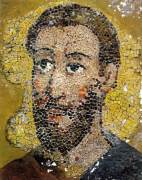
Paul mosaicWe are finishing up our series on Paul to the Thessalonians today. There is much more we could cover, especially if we went on into 2 Thessalonians, but that will have to wait for another time. As we close, I want us to focus in on a theme that is in the background of 1 Thessalonians and can be easily overlooked. There is a strong contrast here between God’s kingdom and Rome’s; between the empire of God and the empire of Rome.

First a bit of background connected to –

Thessalonica’s devotion to Rome

Culturally, Thessalonica was a Greek city, although it held onto its local Macedonian political traditions and structures. In its religious life it had many different gods that were worshipped, and many temples, priests, and rituals. And this was entirely ordinary outside of Israel. It distinguished itself, however, in its devotion to emperor worship.

Thessalonica had taken the right side in a Roman civil war – siding with Augustus, and was handsomely rewarded for this. It was made a free city. It benefited economically from is close association with Rome. And it enjoyed the Pax Romana – the peace and security that the Empire brought to their region. So their relationship with Rome was important and actively cultivated by its citizens and leaders. It was a very pro-Roman city.

As I said, this was expressed through the cult of Emperor worship, specifically focused on Caesar Augustus. He was deified and worshipped as a god. There was both a statue of him and a temple dedicated to him in Thessalonica at the time Paul was there.

God versus Rome in 1 Thessalonians

This contrast comes out in several key words and phrases:

1. God’s “kingdom” – 2:12. To give it a bit more context, it says, we “charged you to walk in a manner worthy of God, who calls you into his own kingdom and glory.”

This language of kingdom and empire, was well known in the Roman world. Rome claimed to have the most powerful and glorious kingdom ever. Yet here Paul’s speaks of God’s kingdom; of “his own kingdom and glory.”

2. “The Lord” – 2:19. This was used as a title for Roman emperors, and it is a general description of what they claimed with other terms. They had authority and power and ruled the world.

Paul’s use of this title is rooted in Biblical sources, but it also makes the counterpoint to Caesar clear. It is used often in 1 Thessalonians in reference to a different Lord, the Lord Jesus.

3. “Son” of God – 1:10. The full phrase is, “you turned to God from idols to serve the living and true God, and to wait for his Son.” (vs. 9-10).

Augustus claimed to be the son of god. His father was Julius Caesar who, after his death was revered as a god. And so Augustus called himself “the son of god” and was worshipped as such in Thessalonica. There are coins that proclaim this, which were minted in Thessalonica at the time of Paul.

But in 1 Thessalonians Jesus is the true Son of God, the Son of the “living and true God,” not of a dead Roman leader.

4. “Good news” – 1:5, or gospel. This word has roots in Scripture, but also in the culture of that day. It was used in reference to Roman emperors to talk of their birth, their ascension to the throne and their good deeds that helped the empire. So for instance one could speak of the good news that Augustus had brought in a new era of peace and security.

This word is used six times in 1 Thessalonians in each case talking about the good news of Jesus, the true Lord and Son of God.

5. “Peace and security” – 5:3. This was a slogan associated with Rome and Caesar Augustus. He ended the civil war and had brought law and order to the region through military might.

Paul critiques this as a false security, for when Jesus returns, while they are saying “peace and security” there will be sudden destruction. That is, the security of Rome will not protect it against the coming judgment of God. True peace and security only come through Jesus, and it will cover the earth when Jesus returns and deals with all evildoers and evil.

6. The “coming” of the Lord – 4:15. The word for coming here was used for the visit of a god, an emperor or some dignitary to a place. The Thessalonians would have known this, since kings and dignitaries would have visited their city. Here it is applied to the coming of Jesus. He is the true emperor and Lord and will come to them.

7. “Meet” – 4:17. The phrase is we “will be caught up together with them in the clouds to meet the Lord in the air.” This was a term used for the welcoming committee that goes out to greet a visiting dignitary or emperor and escort them back into the city (Acts 28:15-16). Here it is applied to Christians going up to meet the Lord Jesus in the air when he comes, presumably to escort him to the earth.

One other note from 2 Thessalonians 2:3-4. However you understand the man of lawlessness, he is modeled on a Roman emperor (with Greek rulers also in the background; e.g. Antiochus Epiphanies. For instance the incident in 40 where Caligula tried to place a statue of himself in the Jerusalem temple, not too long before Paul wrote 1 and 2 Thessalonians). The day of the Lord will not come until, “the man of lawlessness is revealed, the son of destruction, who opposes and exalts himself against every so-called god or object of worship, so that he takes his seat in the temple of God, proclaiming himself to be God.” These are very plausibly the actions of a Roman emperor with their arrogant claims and titles.

Paul’s point

 In all of these contrasts (and there are more) Paul is redefining their political identity in light of Jesus and the kingdom of God. His point is that God’s kingdom, ruled by the Lord Jesus, his Son is the real kingdom. And this is the community that the Thessalonians are now a part of. His point is that God’s gospel about Jesus and the salvation he brings is true salvation. And this is the salvation that the Thessalonians have received.

Rome is simply a parody of God’s kingdom (N.T. Wright). Despite its glory and power it is frail, feeble and flimsy in comparison to God’s kingdom which is eternal in power and glory.

The political implications of Paul’s claims were not lost on his opponents in Thessalonica or on the rulers of the city. This comes out in Acts 17:6-8. His opponents said, “’These men who have turned the world upside down have come here also, and Jason has received them, and they are all acting against the decrees of Caesar, saying that there is another king, Jesus.’ And the people and the city authorities were disturbed when they heard these things.”

They were disturbed because Paul’s teaching would upset the relationship they had with Rome. None of the Thessalonians wanted to lose their benefits and privileges. And this was certainly a source of the persecution directed at the Thessalonian believers. So they got these political implications and the subversiveness of his message, and they and reacted negatively.

Well, whether you think of it in these terms or not –

We live in an empire . . .

– perhaps the greatest, most powerful, most wealthy one ever. What does Paul’s message to the Thessalonians say to us?

1. Beware of nations or empires that assume a divine status. The more powerful the country, the more the temptation to take on an identity that only belongs to God’s kingdom.

This happens in our country when politicians of all stripes and of all ages apply Christian terms and categories to this nation. For instance calling this country “the light of the world. A city set on a hill (that) cannot be hidden” from Matthew 5:14. Well I’m sorry, but this phrase is already taken! It is talking about the people of God and the kingdom of God, not this country. Or seeing our country as the savior of the world come to unite people of all backgrounds into one under our banners and ideals. Again, this is what the kingdom of God will do as people of all tribes and tongues come to submit to Jesus and honor him.

When we mix Christian faith and our national identity, through what is called civil religion – a very watered down version of Christianity, we always get into trouble, biblically considered. Whatever God’s purpose is for a given country, it is not to be his kingdom. He has already chosen a nation for this – his church! It is arrogant to say that it is otherwise. In fact, it is idolatrous.   Certainly we as Christians should not be so foolish as to take part in this. Rather we need to remember our true, separate identity as members of God’s kingdom:

  • We are “the light of the world. A city set on a hill (that) cannot be hidden” – Matthew 5:14.
  • We are “a chosen race, a royal priesthood, a holy nation, a people for his own possession” – 1 Peter 2:9.
  • “Our citizenship is in heaven, and from it we await a Savior, the Lord Jesus Christ” – Philippians 3:20.
  • Ours is a nation made up of people “from every nation, from all tribes and peoples and languages, as Revelation 7:9 says.

Just as Paul worked to transform their political identity, so we need to remember this as well in our situation. Our country is one thing, the kingdom of God is an entirely different and better thing.

2. Beware of looking to your country for salvation. Don’t look to it for your security and peace and for meaning in life. There are a number of ideas and philosophies in our culture that come to us as alternative gospels; that promise us peace and happiness.

Financially there is the gospel of the American dream, of free market capitalism and consumerism where if we just keep buying more and more things we will be happy. This, even though we are taught to pray for daily bread and are to share with the poor.

Militarily there is the good news of peace and security via the US military and intelligence communities, even though such peace and security is only about preserving our lives in this world and we are called to lose our lives in this world in order to gain them in the next.

Politically there is the good news of democratic freedom, which is the equivalent of salvation, and we are to spread this by all means throughout the world. Even though freedom for the Christian is the freedom we have in Christ to serve God and to live under his theocracy.

Personally there is the gospel of autonomy and self-fulfillment; the casting off of restraints so that you can do whatever you want. Even though we will never find our true selves until we find ourselves in Christ by submitting to him.

Don’t look to these false gospels and the idols that they promote. True salvation only comes from God, through our Lord Jesus. And it will only fully come when our Lord comes and we meet him, as Paul told the Thessalonians. This is the good news. This is how we find peace, meaning and blessing.

(For the background material here I benefited most from Ben Witherington’s commentary on 1 Thessalonians)

William Higgins

We are looking at Jesus’ parable of the sower this morning. I want us to focus on the central theme of the parable by asking the question, ‘What kind of dirt are you?’

I will be using Mark’s version in chapter 4, but will be bringing in Matthew 13 and Luke 8 as well. We will look at both the parable itself in vs. 2-9 and the interpretation of the parable given by Jesus in vs. 14-20.

Some basics 

The seed is “the word” (v. 14). In Matthew 13:19 it is the “word of the kingdom,” so we’re talking here about the gospel that Jesus proclaimed.

As we learn in Mark 1:15 Jesus preached, “The time is fulfilled, and the kingdom of God is at hand; repent and believe in the gospel.” Jesus is saying that with his coming, all the promises and purposes of God are coming to completion for the salvation of the world and of all who will receive the word with repentance and faith. [In Luke it is “the word of God.” This may simply refer to the gospel as from God, or it may refer to reading all of Scripture in light of the coming of Jesus and the kingdom.]

This seed/gospel can produce this life/salvation in our lives. As it says in Luke 8:12 the purpose of sowing the seed is that people may “believe and be saved” (also v. 13) So there is no salvation without the gospel and the life it gives. We are just dirt in the imagery of this parable. But we do have to receive and hold onto the word through faith and repentance.

In this life, salvation is pictured as the seed growing in us. And at the resurrection it is pictured as the seed bearing fruit on the day of harvest, a common image for the final day.

The point of the parable is that not everyone who hears the word, receives it and holds onto it until the final day. And it’s not because there is something wrong with the seed or the sower that some don’t receive it. The only difference in each case is the dirt, or the people who hear it. Some dirt is receptive and some is not. 

So this parable teaches us how to be the right kind of dirt – that can receive and hold onto the gospel so that we have life and salvation both now and into eternity.

If you will pardon the pun, let’s dig deeper into this by looking at-

Three wrong kinds of dirt

These may characterize different people throughout the course of their lives, or it may characterize each of us at different times in our lives. In either case these are three obstacles to receiving and holding onto the life and salvation that the gospel brings.

1. The dirt along the path. From the parable we learn that the seed lands on a walking path next to, or through a field. As the phrase “trampled underfoot” in Luke 8:5 indicates, there is a lot of walking here. So the soil is packed down and hard. The seed can’t get into the dirt. It lays on top of the ground, gets walked on and the birds eventually eat it.

From the interpretation Jesus gives, we learn that these are people whose hearts (Matthew 13: 19; Luke 8:12) are hardened to the gospel. They aren’t interested in God. They might be religious, but they aren’t open to hearing God’s word concerning the kingdom.

Because their hearts are hard, the seed of the gospel can’t penetrate. As Matthew says, they don’t understand the word (Matthew 13:19; 23). It gains no entrance into their minds and hearts. The result is that Satan takes away the seed, so that they “may not believe and be saved” (Luke 8:12).

So here there is no germination. There is no belief and thus no salvation.

2. The rocky dirt. From the parable we learn that this soil is too shallow (“it did not have much soil” – v. 5). The idea seems to be some dirt laying on top of a large rock in the ground. (Luke has “on the rock” – 8:6). The seed can germinate quickly because it doesn’t have a lot of dirt to break through. But it can’t sustain itself because the soil is not deep enough for roots. (Luke has “it had no moisture” 8:6 that is, from a lack of roots.)  When the sun comes out it withers away.

From the interpretation we learn that these are people who “immediately receive the word with joy” – 4:16. As Luke puts it “they believe” the gospel – 8:13.

But there’s a problem. They have “no root in themselves” (Mark 4:17). The gospel doesn’t penetrate deep into their lives; it doesn’t become deeply rooted in the heart. And so when testing and persecution come they fall away from their faith. As Luke puts it, “they believe for a while, and in a time of testing fall away” – 8:13.

So here there is genuine faith and there is germination and life, but only for a time.

3. The thorny dirt. From the parable we learn that this soil is productive because the seed grows. But there are other seeds/plants in the soil that grow to choke out the good seed so that there is no fruit.

From the interpretation we learn that these people believe and grow for a time, but other concerns and pursuits “enter in” (4:19) to their lives. These are “the cares of the world and the deceitfulness of riches and the desires for other things.” These are the thorns.

The result is that these worldly concerns choke the new life of the gospel in their lives and no fruit is produced. 

So here there is real faith, there is germination and life, but the life is cut short so that there is no ultimate salvation at the time of harvest.

Notice the progression here, from no germination, to a sprout that quickly dies, to a growing plant that eventually withers away. Only the last soil actually bears fruit.

So then let’s look at –

How we can be good dirt

In contrast to the hardened dirt along the path, we need to receive the word into our lives. All the soils hear the word. But the word must be “accepted” (4:20) into our hearts and lives. The receiving here refers to accepting it in faith (Luke 8:12). It has to do with “understanding it (Matthew 13:23). Letting it penetrate into our minds and hearts. Luke says we have to “hold it fast in an honest and good heart” (Luke 8:15).

In contrast to the shallow soil, we need to let the word go deep into us. The word has to have roots within us. We can’t just receive it and that’s it. We have to nurture it; cultivate it. We need to learn it, study it, meditate on it. Then we can endure in times of testing because the word has gone deep within. It is well rooted and grounded in us.

In contrast to the thorny dirt, we need to weed our lives. The word may well be in us and growing, but if we allow other seeds in they will grow and choke out the word.

We must beware of “the cares of the world and the deceitfulness of riches and the desires for other things” (4:19). Luke has it this way, “the cares and riches and pleasures of life” (8:14). If these enter in they will take over and kill our life with God.

Jesus is talking about getting caught up in maintaining our earthly lives with all the business and going in all directions at once that this involves. He is talking about seeking security and comfort in getting more and more wealth. And he is talking about pursuing the pleasures of this life – the good things of life, entertainment, leisure. All these things come in and distract and overwhelm us so that our commitment is no longer solely focused on the Gospel and the Christian life.

We need to get these weeds out of our hearts, or whatever life and transformation we have will not last to bear fruit on the final day.

Let me end by asking –

What kind of dirt are you?

  •  Is your heart open and responsive to receive God’s word?
  • Do you let God’s word go deep into your life so that is firmly rooted by learning it; by studying it?
  • Are you putting the kingdom of God above all of this life’s activities and concerns and pleasures?

As Jesus says at the end of parable, “Let anyone with ears to hear listen!” – v. 9. We must listen to what he is saying! Be the dirt that receives and holds onto the word and the life it brings at all costs. Is there anything more important? And then you will bear fruit – “thirtyfold and sixtyfold and a hundredfold.”

William Higgins


Someone asked me the other day if I was ready for Christmas, by which they meant – have I finished my shopping yet? Well the answer was no and still is. I a last minute shopper. And I also have my lovely wife’s birthday on the 27th and our anniversary on the 20th. So I have a lot to do to get ready for the season.

But even if you’re just getting presents for Christmas, we can easily miss the point that we are actually celebrating Jesus’ birthday.

Now I don’t know where the tradition began of giving gifts on birthdays, but we do know that the Magi came bearing gifts – gold frankincense and myrrh, to honor the birth of Jesus as a great king. And since Christmas is the time set aside to celebrate this, maybe we shouldn’t be thinking so much about getting gifts for others or receiving them ourselves, but rather on giving to him.

What gift can you give to Jesus? Have you thought about this yet? What do you think that he would like this year? Well I have some suggestions this morning to help you.

1. Your life

Give the most valuable thing you have. Perhaps you’re here today and have never done this. Jesus loves you and came to be in relationship with you. He is the Lord of the universe, but he desires to know you; to transform you; and to bless you. Will you give your life to him? He doesn’t force us to love him, we each have to do this for ourselves. Will you make that choice?

Or perhaps you are here today and you know him, but you have been holding out in an area of life – you aren’t giving him your full obedience, service and devotion. Will you choose to give yourself fully to him?

Jesus calls us to “lose our lives” for his sake – Mark 8:35. We are to give up our life to him. We are to love and follow him above our family, our possessions and even our own earthly lives – Luke 14:26; 33. Give your life to Jesus this Christmas and live for him in every area of your life.

Here is a gift idea that comes from Jesus himself –

2. Give to the needy

Jesus said, “Sell your possessions and give to the poor” – Luke 12:33. Instead of giving more luxuries to people who already have luxuries, give of your excess; of your luxuries to help those who can’t even meet their basic needs.

Instead of buying the newest and the best for ourselves and others; instead of obtaining comfort on top of comfort for ourselves and others – be generous with the resources God has given to you to help the truly needy.

As Jesus said, “one’s life does not consist in the abundance of possessions” – Luke 12:15. Let’s act like we believe this is true.

Here’s another gift idea from Jesus that will surely please him.

3. Give mercy to someone

Let me paraphrase Luke 6:37-38 – “Don’t judge . . . don’t condemn . . . forgive . . . give . . .” mercy. All of these phrases are examples of what he had just said in the verse before this one, “be merciful, even as your Father is merciful” (v. 36). We are merciful when we don’t judge and condemn, to say it negatively. We are merciful when we forgive and give mercy, to say it positively.

So let’s say someone has hurt you or offended you or failed you in some way and you are stuck in a cycle of condemning them and holding bitterness and resentment against them. Jesus is saying, choose instead to give the gift of mercy. Break the cycle. Treat them like your Father in heaven has treated you – mercifully.

If they haven’t dealt with what they did to you, choose to show love to them in some appropriate way, instead of hate. If they have dealt with the issue and have sought forgiveness, by all means give the mercy of forgiveness. Let them off the hook; don’t hold it against them anymore.

4. Minister to the lowly

You remember how once the disciples were arguing over who was the greatest. And then Jesus took a young child and said, “Whoever receives one such child in my name receives me . . .” – Mark 9:37.

His point here is that instead of seeking status; seeking to be the greatest, they are to lower themselves to serve those who have no social status. Paradoxically this is how you become great in the kingdom. The child here represents those with no status, at least this was the case in Jesus’ day. Jesus uses the word “receive” here. He means to minister to and help those who have no status. That is, take care of their needs, give them attention, give them hospitality.

And then we come to the point that I am focusing on. When we do this, we are ministering to Jesus. Whatever gift you give to the lowly one – time, help, hospitality, is actually a gift given to Jesus.

Along these same lines –

5. Help Christians who are suffering

This comes from Matthew 25 and the story of the sheep and the goats. Here Jesus talks about helping “the least of these my brethren,” a phrase that refers to fellow believers in tough times because of their faith. And his point is that when you give to and help these, you are actually giving to and helping Jesus.

vs. 36-40 – “For I was hungry and you gave me food, I was thirsty and you gave me drink, I was a stranger and you welcomed me, I was naked and you clothed me, I was sick and you visited me, I was in prison and you came to me.’ Then the righteous will answer him, saying, ‘Lord, when did we see you hungry and feed you, or thirsty and give you drink? And when did we see you a stranger and welcome you, or naked and clothe you? And when did we see you sick or in prison and visit you?’ And the King will answer them, ‘Truly, I say to you, as you did it to one of the least of these my brothers, you did it to me.’”

When you bless and help Christians in dire need, who are hungry, thirsty, a stranger, without clothes, sick, in prison – you are giving gifts to Jesus himself.

So when you help a missionary or a pastor in hostile lands or difficult assignments, you are helping Jesus. When you help Christians who are suffering persecution, you are helping Jesus himself.

6. Give a special act of devotion

This comes from the story of the woman who anointed Jesus with very expensive ointment. The disciples said that this was too much money and it should have been given to the poor. But Jesus said that “she has done a beautiful thing to me” -Matthew 26:10.

Now Jesus is not physically present with anymore so we are in a bit of a different situation. But we can still do something special for him; we can give him something extravagant as a gift. Perhaps you can write a poem to Jesus or a letter expressing your love. Or you could set aside a day where your sole focus in on getting to know him better and adoring him. Or you can do something expensive for Jesus. As in this story give something expensive to help and bless the ministry of a church or a ministry. When done with the right heart, to honor and bless Jesus, these are beautiful gifts to Jesus.

Are you ready for Christmas this year? Have you picked out what gift, or gifts you will give him? I encourage you to think and pray about this, and to make it the chief focus of your Christmas giving.

William Higgins

1 Thessalonians 5:16, 18

Our text today is from 1 Thessalonians 5:16 and 18. v. 16 says “Rejoice always” and v. 18 says, “give thanks in all circumstances, for this is God’s will for you in Christ Jesus.” Our focus today is on why we can rejoice and give thanks “always” or “in all circumstances.”

Now it’s easy to rejoice and give thanks when God answers prayers and delivers us from our problems, although certainly sometimes we forget to do this. But it’s surely more difficult to give thanks when things are going badly for us. But it is possible.

Let’s look at some –

Examples of rejoicing in difficult circumstances

The twelve apostles did this. They were put in prison for their preaching but were miraculously released. Then whey they preached more, they were taken to stand before the governing authorities where they were beaten and warned to stop preaching. Acts 5:41 says, “Then they left the presence of the council, rejoicing that they were counted worthy to suffer dishonor for the name.”

Paul and Silas rejoiced when things were hard. In Acts 16 Paul cast out a fortune telling demon from a slave girl. This made the owners mad because they made money off of her. They promptly caused a stir and got Paul and Silas in trouble with the authorities.

Vs. 23-25 say, “And when they had inflicted many blows upon them, they threw them into prison . . . into the inner prison and fastened their feet in the stocks. About midnight Paul and Silas were praying and singing hymns to God, and the prisoners were listening to them . . ..” They were unjustly beaten, arrested and shackled – but they were singing praises to God.

This happened just before Paul came to Thessalonica, so he knew what he was talking about when he told them “rejoice always . . .  (and) give thanks in all circumstances.”

And the Thessalonians themselves knew about rejoicing in suffering. From the time they first believed they suffered. 1 Thessalonians 1:6 says, “you received the word in much affliction, with the joy of the Holy Spirit.” They suffered, but they had joy.

Finally, the readers of the letter to the Hebrews. They had undergone persecution and the writer reminds them of this in 10:34, “ . . . you joyfully accepted the plundering of your property, since you knew that you yourselves had a better possession and an abiding one.” Can you imagine having all your goods hauled away because of your faith – your big screen TV, your dining set, your couches? Would you be able to keep things in perspective and still be joyful?

They did. And we can too by God’s grace. It’s difficult. But it is possible.

Now let’s look at –

Why we can rejoice in all circumstances

– including when things are difficult. It certainly can’t be based on our feelings, these change all the time. It has to be based on something much stronger and more stable – our faith. So here are four aspects of our faith that show us why we can do this:

1. God is worthy of praise – period. Nothing else needs to be said. Whether we feel like praising God or not – God is worthy. Whether we’re in good times or in bad times, it doesn’t matter. God is still the same – yesterday, today and forever and is still worthy of our praises.

Apart from anything God may or may not do for me; apart from whether God allows me to go through good times or bad, God is worthy of praise for who God is. God is awesome! God is holy! God is good! None of this changes based on our circumstances.

Habakkuk the prophet lived in a difficult time. The people were unfaithful to God. And he knew that judgment was coming – things were going to get worse. But he praised God anyway, because God deserves to be praised. Habakkuk 3:17-18 says, “Though the fig tree should not blossom, nor fruit be on the vines, the produce of the olive fail and the fields yield no food, the flock be cut off from the fold and there be no herd in the stalls, yet I will rejoice in the Lord . . ..” I believe that this is the purest form of praise to God because it’s not dependent on something that we get from God.

2. God has blessed us in many ways. Even in the worst of times, if we’re able to step back and think about it, we can recognize that this is true.

James 1:17 says, “Every good and perfect gift is from above, coming down from the Father . . ..” You have been given the gift of life. Also think about your abilities, your strengths, your family, your friends, your home – whatever good thing you are or have is from God.

And this includes our salvation – God’s grace and mercy to us in Jesus Christ, forgiveness of our sins, new life by the Spirit, a relationship with God, fellow believers who walk with us, strength and peace in difficult times – all these are gifts from God as well.

And so despite whatever else may be going on we can give thanks for God’s blessing to us.

3. God gives us hope for the future. God allows each of us to go through hard times, and a part of this is simply living in this sinful and broken world where evil is normal. But in the midst of this as Christians we have a hope for something better. This life is not all that there is. In fact, we are to live for the life that is to come, not this one.

When Jesus talked about suffering for our faith; being reviled and slandered, he said, “Rejoice and be glad” Why? “For your reward is great in heaven . . .” – Matthew 5:12.

In 1 Peter 1:6 Peter tells his readers that “now for a little while . . . you have been grieved by various trials.” Just before this he said, “in this you rejoice.” Why do they rejoice in their trials? It’s because of what he had just mentioned in vs. 4-5. They have “an inheritance that is imperishable, undefiled, and unfading, kept in heaven . . . a salvation ready to be revealed in the last time.”

This hope puts things in perspective for us as Christians. Yes, we will suffer in this life. But we will be blessed in the world to come. And in fact the blessing will outweigh the sufferings. Paul says, “For I consider that the sufferings of this present time are not worth comparing with the glory that is to be revealed to us” – Romans 8:18. Similarly he says, “For this light momentary affliction is preparing for us an eternal weight of glory beyond all comparison” – 2 Corinthians 4:17. Our suffering may well be great, but what awaits us is far greater. God gives up hope for the future.

4. God harnesses trials for our good. We go through fiery trials. This is an image that is used in Scripture (Isaiah 48:10; 1 Peter 1:7). And it makes a point. Fire can consume or it can refine. If we go through the fire in faith we will not be consumed. Rather, God uses the flames to refine and purify us.

God is able to bring good out of pain, suffering and tears. This doesn’t mean that God causes the pain, only that God is greater than whatever evil befalls us.

Paul makes this point in Romans 8:28. “And we know that for those who love God all things work together for good, for those who are called according to his purpose.” God is able to work in and through all that happens to us to bring some good to us.

James tells his readers, “Count it all joy” when you suffer various kinds of trials. Why? “for you know that the testing of your faith produces steadfastness. And let steadfastness have its full effect, that you may be perfect and complete, lacking in nothing.” – James 1:2-4.

Along the same lines, Paul says, “. . . we rejoice in our sufferings.” Why? “knowing that suffering produces endurance, and endurance produces character, and character produces hope . . .” – Romans 5:3-4.

The world will throw hard times at us left and right. But when we endure them in faith, God brings something good out of them for us. That’s how great God is. And we can give thanks for this. That’s how great God is. And we can give thanks for this.

William Higgins


Series: Paul to the Thessalonians

Paul mosaic

We are in the fifth and final section of the teaching portion of 1 Thessalonians, which Paul began in chapter 4. And so we have looked at relationships with one another in the church, respecting Christian leaders, living in peace with one another, and helping those who struggle in various ways. We have also looked at relationships with everyone, inside and outside the church. And here Paul taught us not to return harm for harm, but to be patient with all, and to do good to everyone.

Today we look at vs. 16-22, focused on our relationship with God. There are eight statements which are held together by two themes:

– vs. 16-18 have to do with speaking to God in praise and prayer

– vs. 19-22 have to do with God speaking to us by means of prophecy (Ben Witherington)

  Let’s begin with vs. 16-18.

Talking to God: Praise and prayer

 “16Rejoice always, 17pray without ceasing, 18give thanks in all circumstances; for this is the will of God in Christ Jesus for you.”

Rejoicing has to do with expressing our joy. This is quite similar to giving thanks (Psalm 97:12; Philippians 1:4; 1 Thessalonians 3:9), which is the expression of appreciation for benefits and blessings. Given that there is a prayer focus here (prayer comes right between them) these expressions of joy and thanks are given to God. I am calling this praise to God.

Now, rejoicing and giving thanks are a kind of prayer, but here Pau distinguishes prayer from these, so the focus in on petitionary prayer, or making our requests known to God.

  The phrase, “for this is the will of God in Christ Jesus for you” applies to all three of these things. It is God’s will for us to rejoice, give thanks and offer up our requests to him. God wants us to be in relationship with him; for us to communicate with him our praises and our concerns.

But how can we do these thing always? How can we rejoice always? How can we pray without ceasing?

If we take this literally, it doesn’t make sense. We have to sleep for one thing. But more to the point, you can’t both talk to God and also to someone else – at the same time. Or again, you can’t both rejoice with those who rejoice and also weep with those who weep, as Paul says (Romans 12:15) – at the same time

Rather, Paul is referring here to set times of daily prayer according to the biblical pattern. That is, morning and evening prayers, or perhaps also afternoon prayers. We see this all throughout the Old Testament in the Psalms and in Daniel for instance, as well as in the New Testament. In fact, there is a reference to this in 1 Thessalonians 3:10 – “we pray most earnestly night and day . . ..” This was a common Jewish way of talking about daily prayers in the evening and the morning.

Paul is saying, keep to your daily prayers, continue day and night; morning and evening. Always rejoice by coming before God constantly morning and evening. Unceasingly pray by coming before God morning and evening. And, of course, we can also pray and rejoice as we are able throughout each day. 

But there’s another part to this. Paul is saying keep praying even when things are hard. They were going through persecution, so the message is:

  • Keep on rejoicing, as individuals and as a group, not just when things are good, but when things are hard. This echoes Jesus in Matthew 5:11-12. When you are persecuted “rejoice and be glad.”
  • Keep on praying, as individuals and as a group, not just when things are easy, but when you have difficulty after difficulty. This echoes Jesus in Luke 18:1. “And he told them . . . that they ought always to pray and not lose heart.”

This also fits with v. 18 – give thanks “in all circumstances.” It’s easy to give thanks when things are just fine, but we are also to do this when things are not good – that’s what “in all circumstances” means.

But how can we rejoice and give thanks in bad times? Well, it’s certainly not based on our feelings or that we’re having a good day. It’s based on understanding what God is doing in our lives, and the bigger picture of the hope that we have, which is far greater than whatever temporary suffering we may have in this world. And we can do this because the Holy Spirit within us is the source of our joy (1 Thessalonians 1:6).

Some questions to consider . . . How is your prayer and praise life? Rate yourself:

  • Do you only come to God in an emergency?
  • Do you only pray and give thank on Sundays at church?
  • Do you have a private prayer life?
  • Are you constant in your prayer life?

Paul is teaching us here to be in this last category. Think about it. God spared nothing to be in relationship with us. He created us, bore with us, gave his only Son. But often we make little or no effort to spend time in relationship with God. This helps put things in perspective.

Are you overwhelmed by hard times? Paul calls the Thessalonians not to give up in persecution. And his word to us is don’t lose heart. When you have difficulty after difficulty piling up on you and it seems like praying is useless – keep at it. Press through. God will take care of you.

God talking to us: Prophecy

“19Do not quench the Spirit. 20Do not despise prophecies, 21but test everything; hold fast what is good. 22Keep away from every evil kind.” I want us to look first at what is the key to understanding these verses, prophesy. And so I ask what is prophesy? We have to turn to 1 Corinthians since it is just mentioned here in 1 Thessalonians.

  • It consists of words the Spirit prompts you to say. It is a manifestation of the Spirit, like all spiritual gifts, which in this case comes in words – 1 Corinthians 12:7; 14:12. It might be a word of encouragement, insight or even challenge.
  • It is directed “to people,” in contrast to speaking to God – 1 Corinthians 14:3.
  • It is intended for “their strengthening and encouragement and comfort” – 1 Corinthians 14:3.

So prophecy is simply speaking out a word from the Spirit in your own words. It’s a part of the promise of Joel 2:28-29 that all believers will have the Spirit and prophesy. Although some are classified as prophets since they have a specific ministry in this, God can speak through any of his children to say a word of encouragement, insight or challenge.

Prophecy was a completely normal part of the life of the New Testament church. We see references to it throughout the New Testament. And it happens among us as well – from the pulpit, from Sunday school teachers, in our Sunday school classes and small groups and in our praise time. We don’t call it this necessarily, but it happens.

I wanted to give you a specific example today and so I asked God to give me a word for us today. I have actually already said it as a part of my teaching. If I were to say it as a prophecy in the congregation I would say it like this, “I believe the Spirit is asking us today – God spared nothing to be in relationship with us. So why do we make such little effort to be in relationship with him in prayer?”

Now let’s break down these verses and see how they fit together. “19Do not quench the Spirit. 20Do not despise prophecies.” These two phrases basically say the same thing. For it is the activity of the Spirit that animates prophecy. And so to quench the Spirit is to despise prophecies.

Quench is a fire metaphor. It is when you put out a fire. The Holy Spirit is compared to fire in several places (e.g. Matthew 3:11). And so to quench the Spirit is to suppress or restrain the movement of the Spirit among us.

To despise prophecies is to look down on them, reject them, to treat them with contempt. So both of these phrases are about restricting prophecy.

Why restrict prophecy? The answer is simple – it’s easy to abuse. I have seen this and perhaps you have as well. People can speak out their own opinions as if they were God’s, or mix the two together. People can speak out wrong teaching (see 1 Corinthians 12:3; 2 Thessalonians 2:1-2). People can speak out things that come from the flesh, from the world, from the evil one – and not from the Spirit.

  So there is certainly a temptation, perhaps especially by leaders, to suppress it; to look down on it. But Paul’s word to us is don’t quench it or despise it because of abuses, rather the answer is test prophecies (also 1 Corinthians 14:29; 1 John 4:1-3).

He doesn’t’ say anything here about how to do this but certainly testing it against the apostolic message, now written down in the New Testament is foundational (2 Thessalonians 2:15).

Once we test what is said, we are to “hold fast what is good.” That is, receive what is truly from the Spirit. But if it is not of the Spirit we are to “keep away from every evil kind” of prophecy – that is, keep distance from receiving bad or evil prophecies. (Notice the spatial language hold on to the good, keep away from the bad) (Gordon Fee’s discussion of these verses is very helpful).

So any prophecy has to be tested. Any if you want to share I encourage you to test it yourself before you share. It might be a bit embarrassing for me or the Elders to have to correct you in front of the whole group. But I will if necessary.

Some questions to consider . . . Are we OK with people speaking out by the Spirit? (Maybe we are more comfortable when we don’t call it prophecy). We will find out because I want to give you a chance to do this next week during the praise time. Think about this. Can we expect the Spirit to move among us, which is what we pray for and desperately need, but only on our terms and in ways that we dictate? “Oh Spirit come and do your work; give us revival; transform lives among us; bring people into your kingdom. But don’t do anything that we are not comfortable with; don’t use any spiritual gifts; don’t let our routines get messed up. We want you, but only on our terms.” Do you think God hears this prayer?

Finally, do you quench the Spirit in other ways? Do you restrain the work of the Spirit in ways beyond the topic of prophecy. When the Spirit speaks to you, but you don’t like what you are hearing – do you suppress the Spirit? When the Spirit seeks to lead you but you don’t want to go – do you quench the Spirit?

I will tell you plainly – we need the renewal and transformation of the Spirit among us as individuals and as a congregation. But we will only receive this when we open ourselves up fully to the Spirit – no strings attached.

William Higgins

Relationships within the church:

a. With leaders We ask you, brothers and sisters,to acknowledge those who labor among you and are over you in the Lord and admonish you, and to esteem them very highly in love because of their work.

b. With each other – Be at peace among yourselves.

a1. With those who struggle And we urge you, brothers and sisters, admonish the idle, encourage the fainthearted, help the weak.

Relationships with all:

Be patient toward all. See that no one repays anyone evil for evil, but always seek to do good to one another and to everyone.

 Relationship with God:

a. Talking to God: Praise and prayer – Rejoice always, pray without ceasing, give thanks in all circumstances; for this is the will of God in Christ Jesus for you.

a1. God talking to us: Prophecy Do not quench the Spirit. Do not despise prophecies, but test everything.Hold fast what is good. Keep away from every evil kind